

Cui Jinzhe’s work The Nymph of the Luo River was inspired by the ancient Chinese poem by the same name, written by famous poet Cao Zhi 曹植, who lived between 192-232. Cui intricately and tenderly traces this story of a man who falls in love with a water nymph, which follows a familiar narrative arc of an unfulfilled love story. Combining elements of traditional Chinese art with pop culture visual styles, Cui weaves a complex and beautiful mesh, connecting time and culture through the common human experience of love and longing.
Cui Jinzhe is an Edmonton-based multidisciplinary artist whose practice includes drawing, painting, installation and public art. Cui was born in Dalian, China and earned a Bachelor of Art from Dalian University of Foreign Languages and Master of Art at Dalian Polytechnic University. In 2008, she came to Canada where her work has focused on self-enlightenment, community intervention and cultural integration.
Organized by Rhizome
Curated by Artistic Director Michael Connor with Assistant Curator Aria Dean.
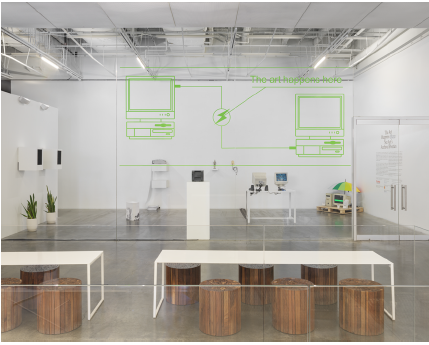
In its decades-long history, net art has served as a testing ground for artists. Through net art, artists have interrogated politics, economies, and material cultures. The Art Happens Here offers a selection of works from Rhizome’s Net Art Anthology. The exhibition restages historical works of net art from its fragments – a timely approach as many institutions now frame the internet as a historical subject, rather than a novelty.
Net art is made up primarily of practices, not objects. This poses problems around how net art is historicized and exhibited. The Art Happens Here explores the new modes of authorship, collaboration, and distribution that have evolved through net art.
Rhizome champions born-digital art and culture through commissions, exhibitions, digital preservation, and software development. Founded by artist Mark Tribe as a listserv that included some of the first artists to work online, Rhizome has played an integral role in the history of contemporary art engaged with digital technologies and the internet. Since 2003, Rhizome has been an affiliate in residence at the New Museum.

Métis artist Leah Marie Dorion shares the moon teachings through her detailed painting and poetry. Important to Indigenous women’s wisdom and traditional cultural knowledge, the moon teachings honour women as vital life-givers. The moon, known by many Elders as “Our Grandmother”, marks the passage of time. It provides wisdom, comfort, protection and strength from its position above us in the sky. Through her work, Dorion restores Indigenous women’s teachings and connects us to the sacred and healing natural law cycles.
Leah Marie Dorion is an interdisciplinary Métis artist, teacher, filmmaker and writer from Prince Albert, Saskatchewan. Dorion holds a Bachelor of Education and a Bachelor of Arts from the University of Saskatchewan and a Master of Arts from the Athabasca University. She has received numerous awards and grants and her work is held in many public and private collections and. Dorion is a published author of books about Métis history, cultural teachings and storytelling.

The artworks of this exhibition bring together elements of trade, treaty and territory to demonstrate ideas of relationship, both Indigenous and colonial. Through sensory engagement with materials, light and shadow, her installations piece together an atemporal space critical of Western ideologies and systems.
Hannah Claus is an intermedia artist of English and Kanien’kehá:ka heritage who has been living and working in Tiohtià:ke [Montreal] since 2001. Within her practice, Claus engages with an Onkwehon:we epistemology to highlight ways of being in relationship with the world and those around us. She completed her undergraduate studies at the Ontario College of Art and Design (1998) and her Master’s of Fine Art at Concordia University (2004). Her work belongs to various public and private collections, including the National Gallery of Canada, the City of Montreal and the Department of Global Affairs. She is a recipient of the 2019 Eiteljorg fellowship. Current exhibitions include Àbadakone| Continuing Fire at the National Gallery of Canada (Ottawa, ON), Blurring the Line at the Eiteljorg Museum (Indianapolis, IN) and Inaabiwin at the Ottawa Art Gallery (Ottawa, ON). Claus is a member of the Tyendinaga Mohawks of the Bay of Quinte, Ontario.
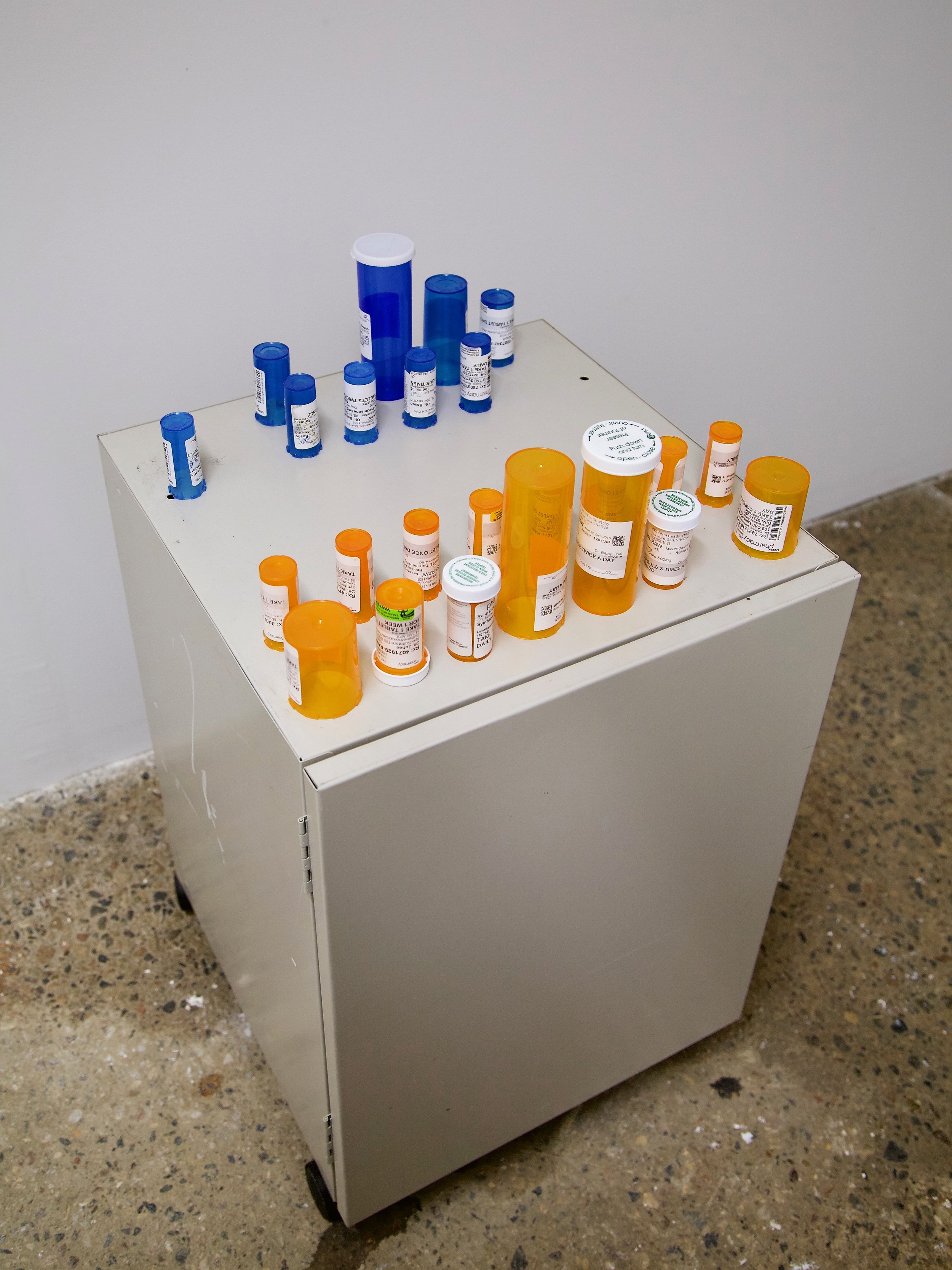
Julie Oh works with photography, video, and installation to examine our understanding of, and relationships with, common objects. By questioning her selected object’s use and nature using intuitive, sometimes nonsensical approaches, Oh positions the viewer to consider the use and values of these objects in new ways.
Julie Oh is an emerging artist from Saskatoon. She completed her MFA as a Fulbright Fellow at the School of the Art Institute of Chicago in 2012 and holds a BFA from the University of Saskatchewan. Her work has been featured in group exhibitions including: Living Architecture (2018), 6018 North, Chicago; Double Gaze (2018), ACRE Projects Gallery, Chicago; Punctured Landscape (2017), Art Museum of the Americas, Washington, DC; The New Normal (2017), Supa Salon, Istanbul, Turkey and The Hanger (an UMAM D&R Project), Beirut, Lebanon.

Marigold Santos’ practice explores the ways in which ideas of self-hood can become multiple, fragmented, and dislocated and then reinvented and recreated through a reflection of movement, migration and change. In particular, she returns to the memories associated with her family’s immigration from the Philippines to Canada in the late 80’s as an auto-biographical point of departure, and considers the experiences of a young person coming to terms with a new sense of self in relation to their new environment. Negotiating narratives of the past and present results in the creation of a personal myth, a visual vocabulary influenced by the hybrid of Filipino and Western folktales of Santos' early youth, the Canadian pop culture of the late 80’s and early 90’s, the science and social politics of that period, and the Canadian geography and landscape.
The imagery within Santos' interdisciplinary work consists of elements that reflect on the notion of a self that is plural and in-process, and takes place within the realms of the otherworldly - where the porous boundaries of reality and the fantastical rupture, overflow, and reconfigure. Persistent in her work is the reference to the creature of fear in Filipino folklore known as the Asuang - a supernatural shape-shifting witch and ghoul who has the ability to self-sever. In her work the narrative is reconfigured; these Asuang speak not of malevolence, but of lived experience, self-awareness, transformation, and empowerment to celebrate and embrace plurality and fragmented identities.

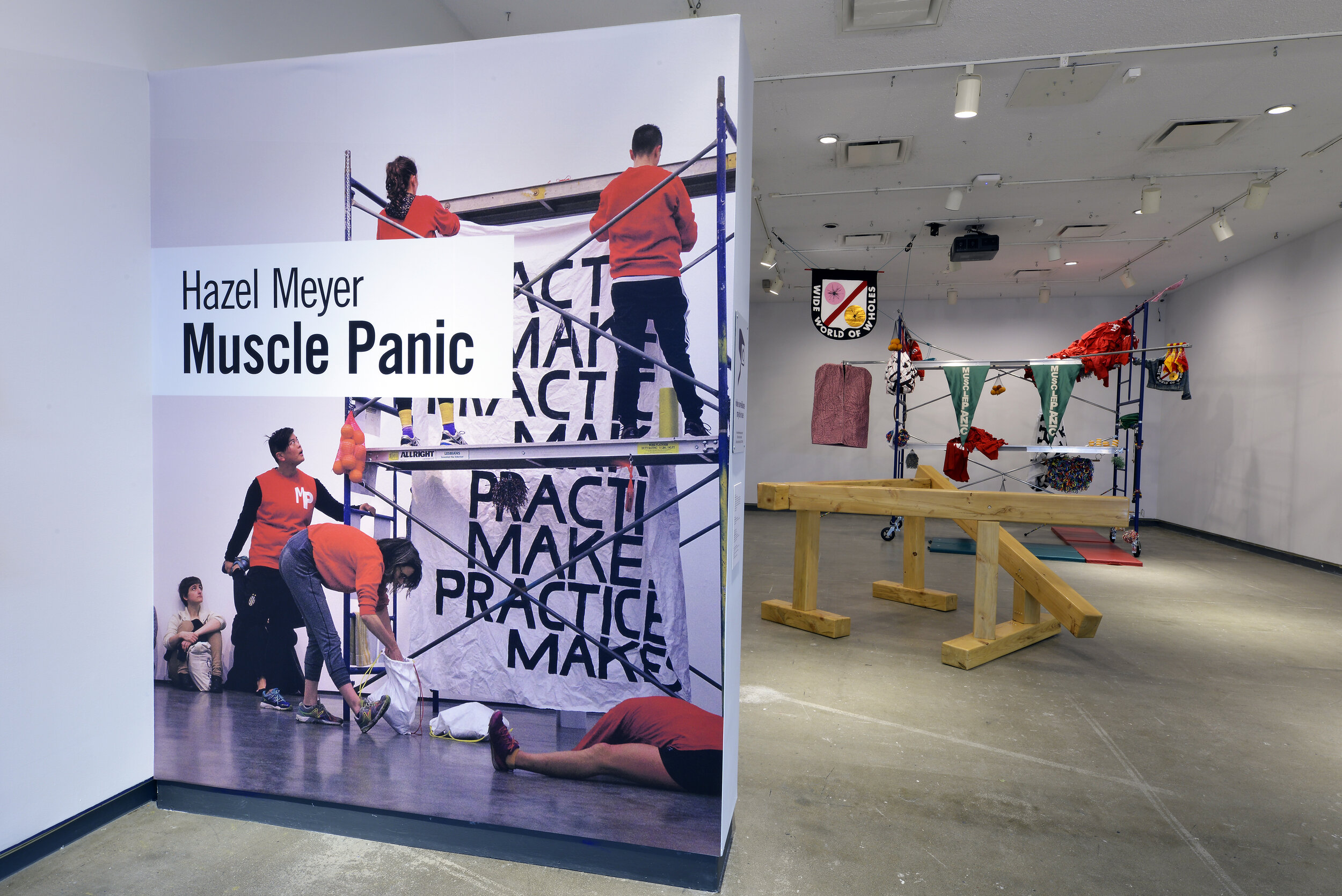
Flags of Unsung Countries charts artist Liz Ikiriko’s process to understand her father’s struggles as an African immigrant challenged with mental illness living in the Canadian prairies. The work asks several questions: What is required of a home? Do we choose to belong or does belonging choose us? Flags of Unsung Countries uses photography to map a path of the African diaspora. Ikiriko’s deeply personal and moving work explores memory, family and identity, and reimagines boundaries between past and present.

Off-Centre is a survey of artworks by queer artists from the Canadian Prairies. The exhibition title describes how this central region is often thought to be in the cultural and political margins. It also speaks to the experience of being queer – particularly in smaller communities.

This group exhibition brings togethers artists who work in collaboration with nature and rely on natural processes to make their work. The selected artists generate conditions where at various points during their artwork’s creation, the pieces begin to develop according to the laws of nature without artist intervention. The Experiment reminds viewers of the existence of entities that are larger and more powerful then human forces, encouraging closer consideration of the natural world.

In his recent paintings, Saulteaux and Cree artist Keith Bird honours Indigenous leaders and warriors of past and present, recognizing historical leaders such as Crazy Horse, Pound Maker, Geronimo, Chief Piapot and many others. Through Spiritual Veterans, Bird sheds light on the spirituality, strength and resilience of Indigenous veterans who have fought and continue to fight to protect land, culture and human dignity.
Keith Bird was raised on Gordon First Nation in Saskatchewan. He received a BFA from the University of Regina in 2008, followed by an MFA in 2013. His work is both privately and publicly collected.
The artist would like to thank the Saskatchewan Arts Board for the generous support of this project.

We want a potential that is wide and ebullient, luminous and spacious, quivering with the hues of a waning day. We like the kind assurance of the exiting sun, a finale to another day lived, ushering in the sweetness of night that falls like a blanket. We’d like a promise of perfect sunsets.

Whether the relationships are close, strained, or absent, being parented (or disconnected from caregivers) is a universal experience. Are You My Mother? considers what is shared about the experience of being raised, while underscoring the less universal, more specific circumstances that shape how we feel about our caregivers – feelings of warmth and love, and in the case of grief, loss and gratitude.
Back to Dunlop Art Gallery or Regina Public Library