
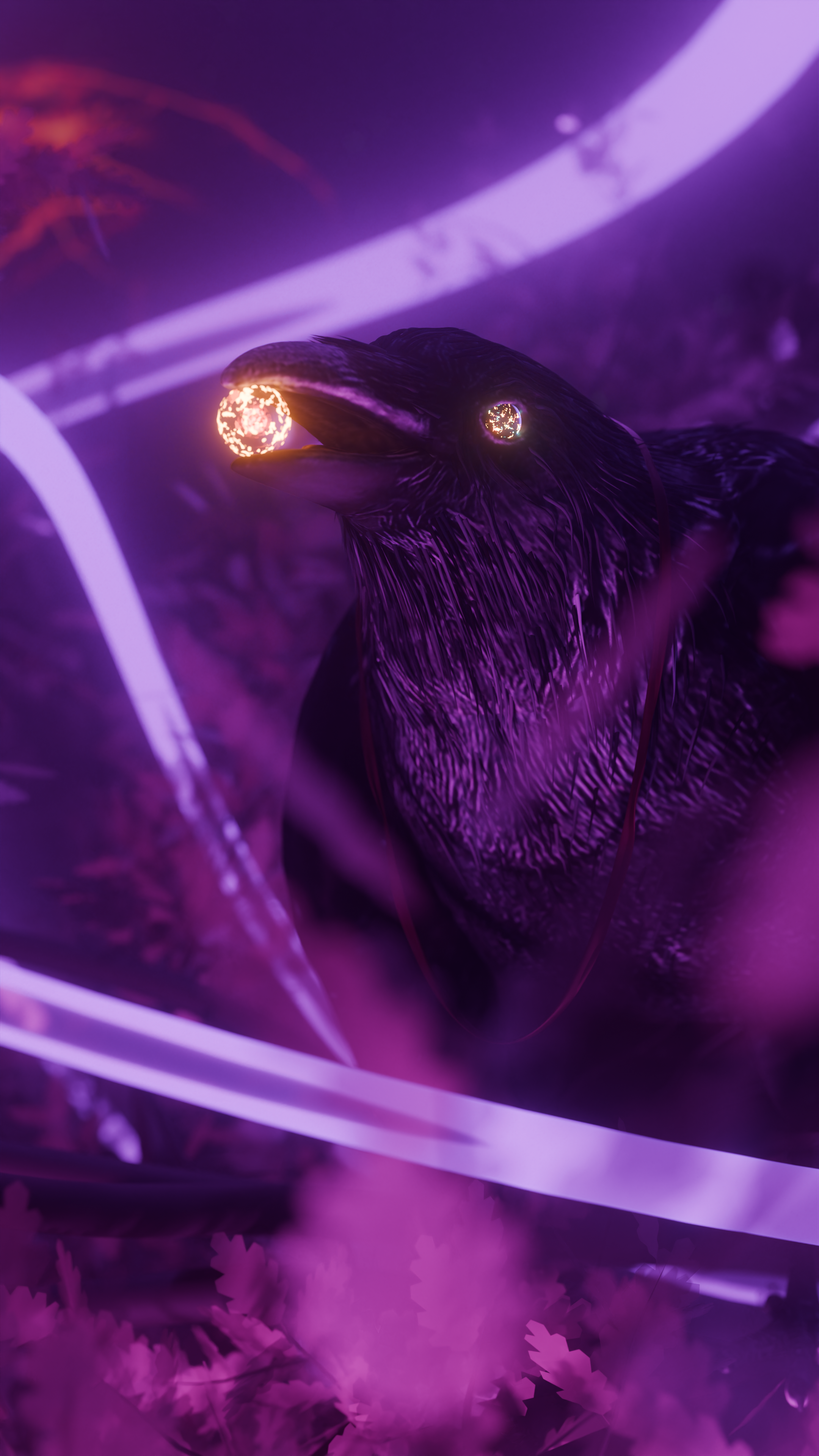
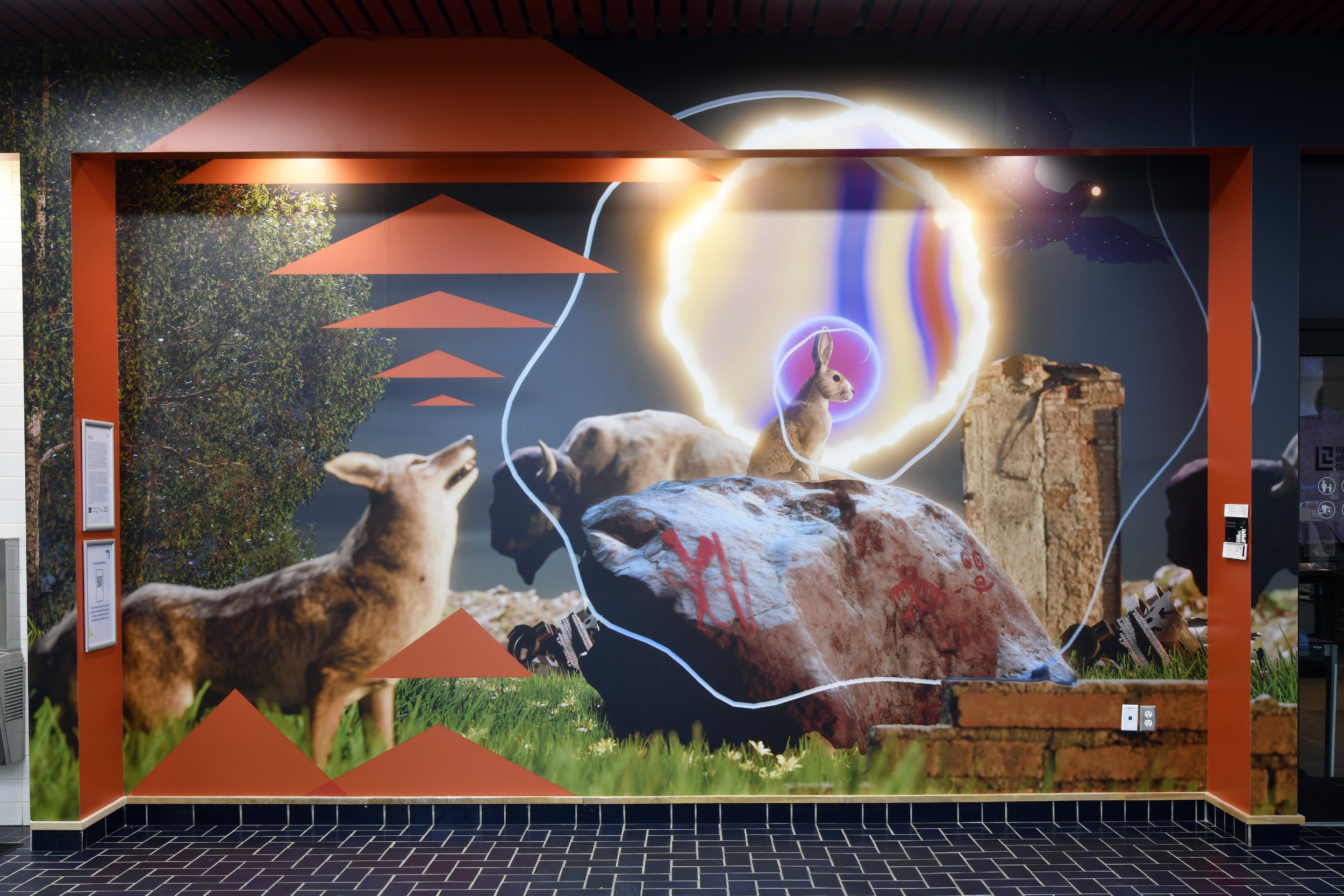
Photo credit: Casey Koyczan
Casey Koyczan - raven: tatsǫ́
Casey Koyczan creates immersive, multisensory installations that bring nature into the gallery, blurring boundaries between the human-made and the natural. Using 3D modelling, fabrication, and organic materials such as branches and raven calls, he constructs mythic environments that feel alive and assertive. This exhibition features mixed-media sculptures and projected animations exploring themes of gossip, grief, blame, and transformation, balancing dark subject matter with subtle humour and playfulness.
Casey Koyczan is a Dene interdisciplinary artist from Yellowknife, NT, that uses various mediums to communicate how culture and technology can grow together in order for us to develop a better understanding of who we are, where we come from, and where we are going. He creates with whatever tools necessary to bring an idea to fruition, and works mostly in sculpture, installation, 3D/VR/AR/360, video, and audio works such as music, soundscapes and film scores.
Essay ↑
Casey Koyczan – raven; tatsǫ́ The Trickster’s Mirror
By Xiao Han
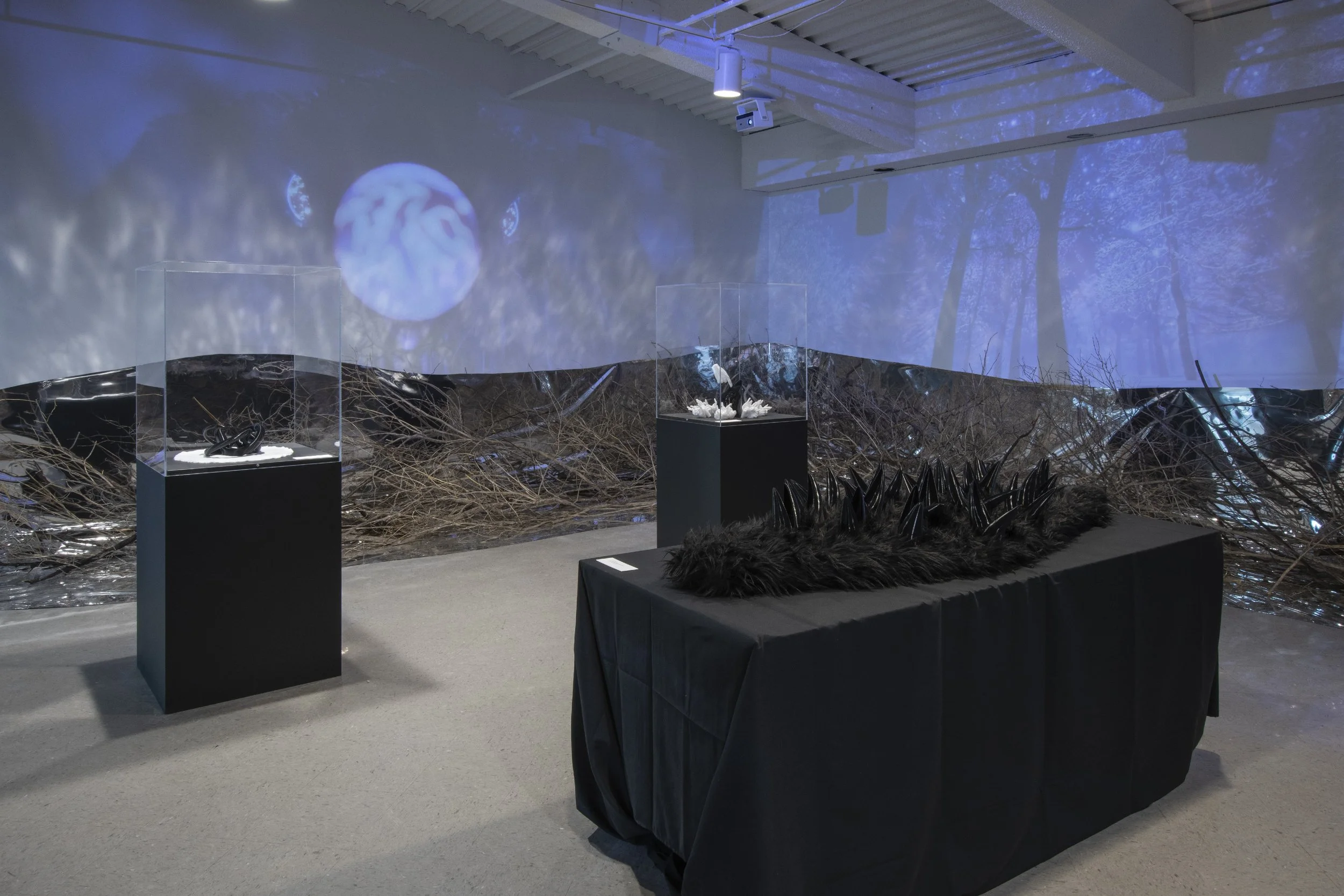
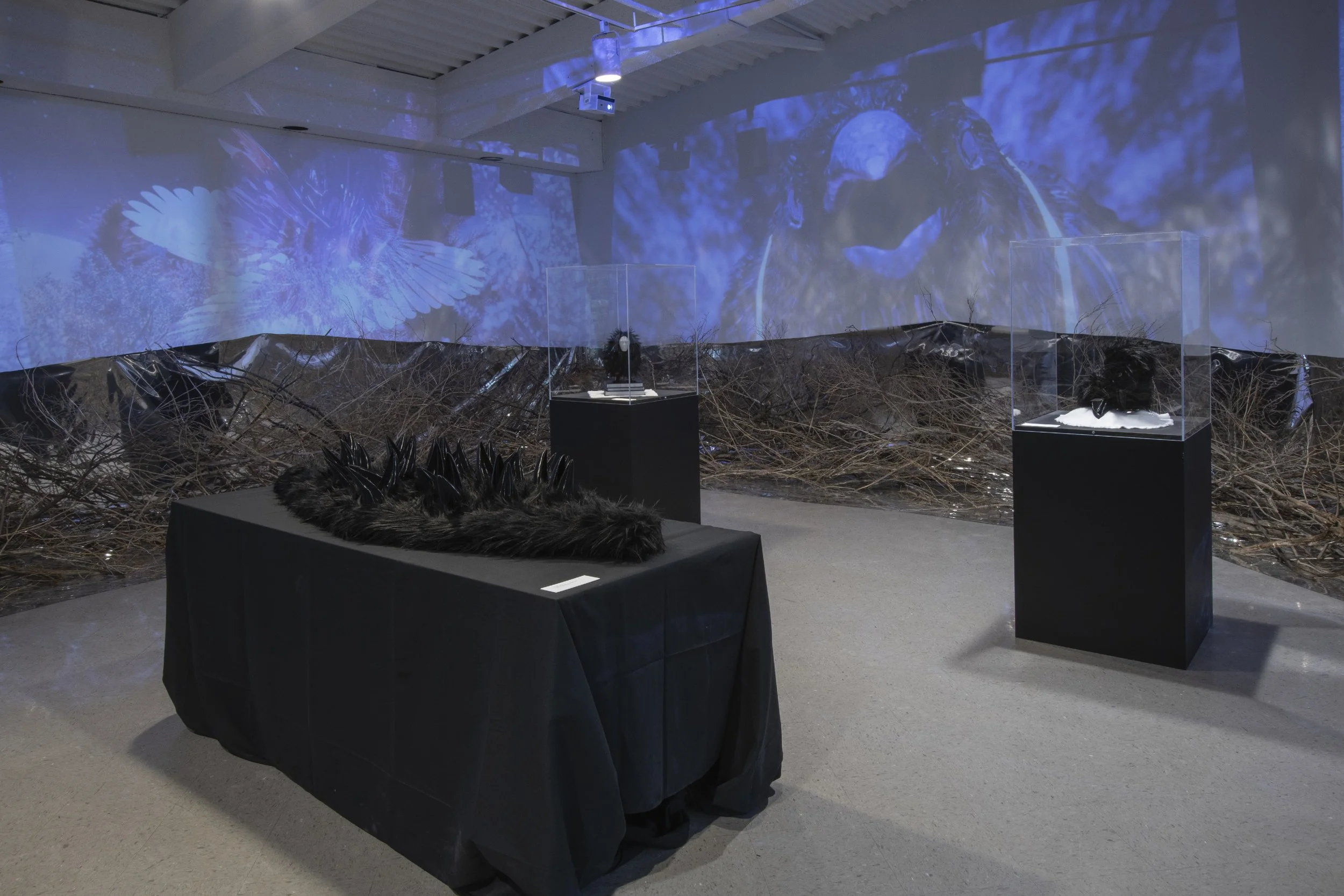
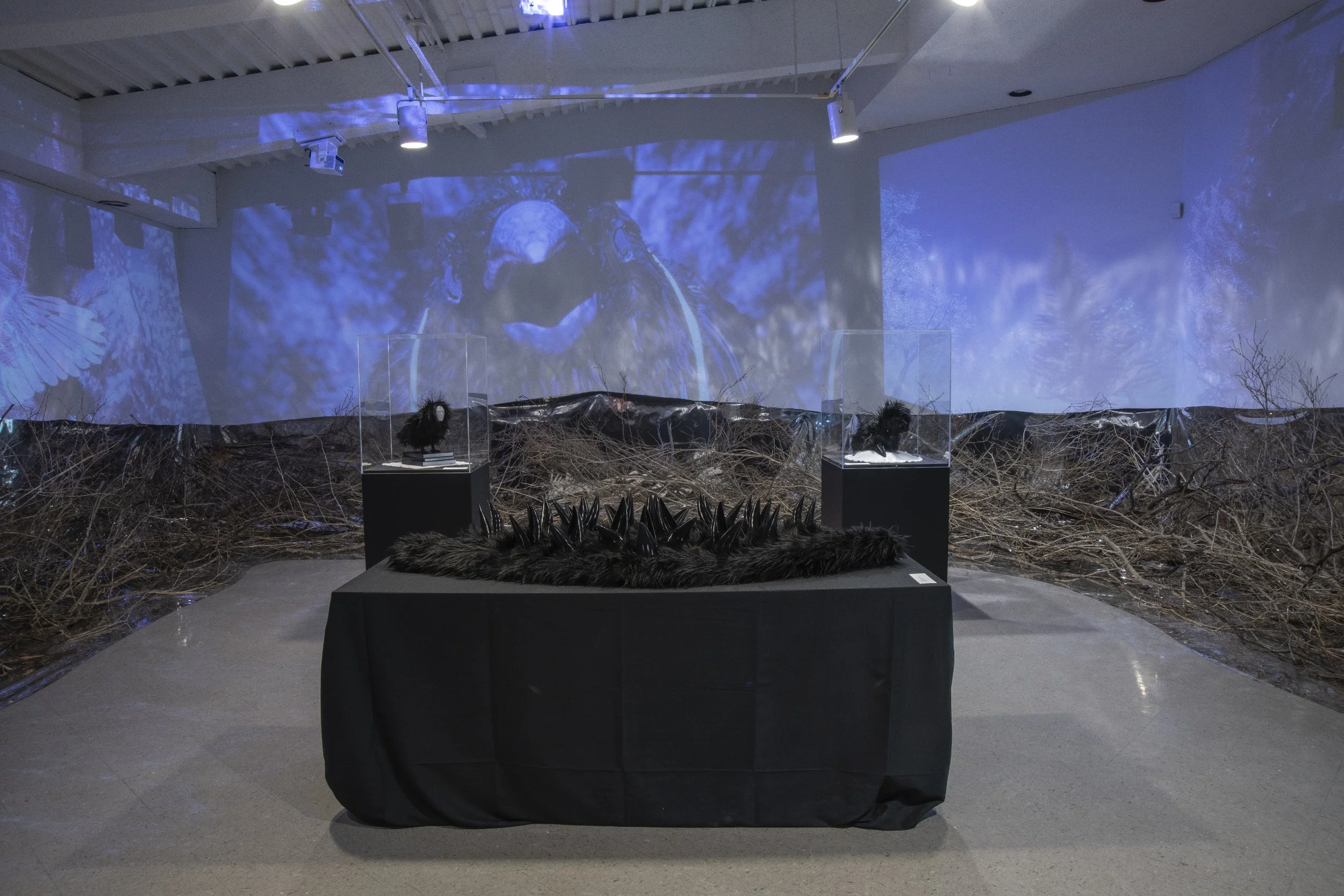
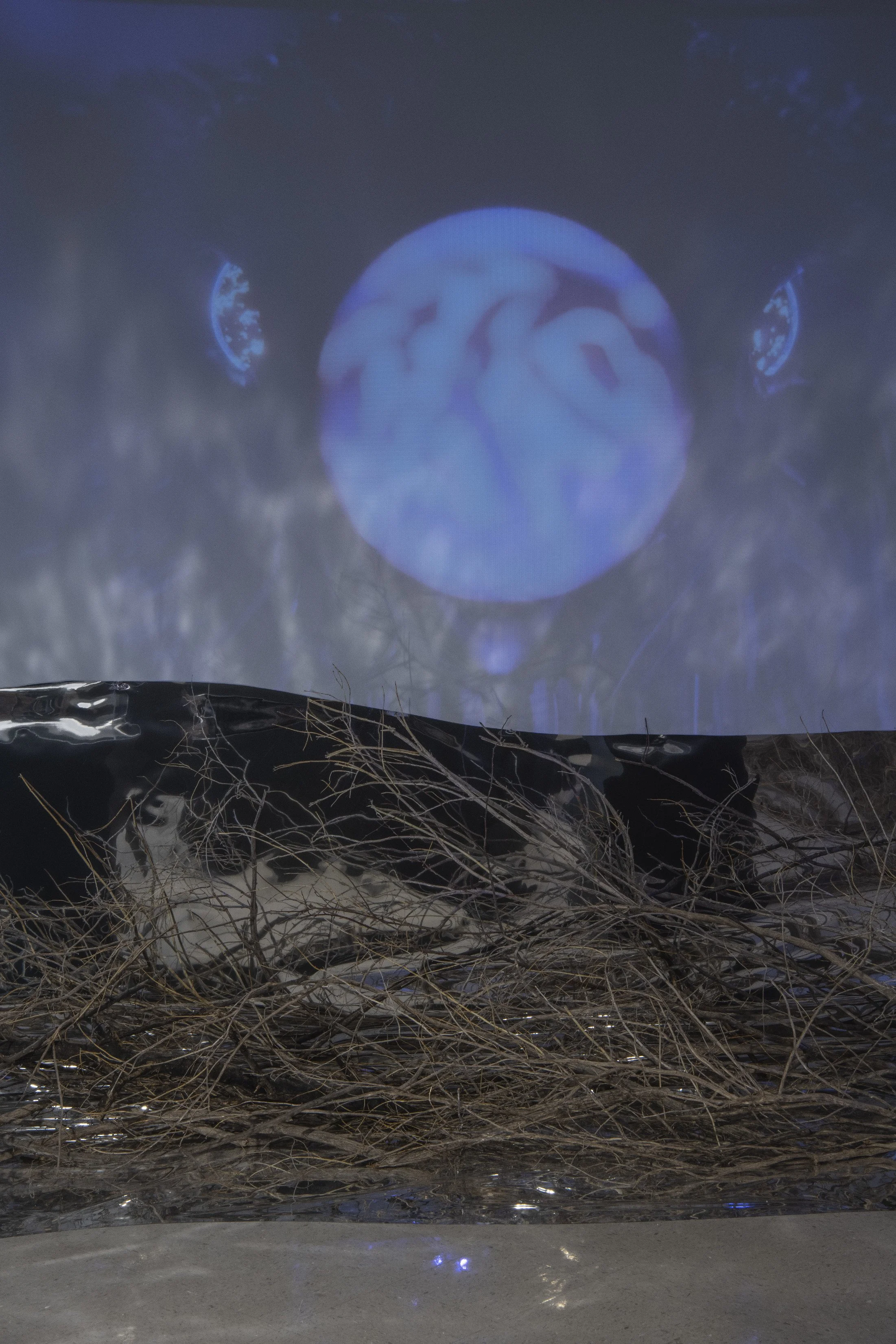
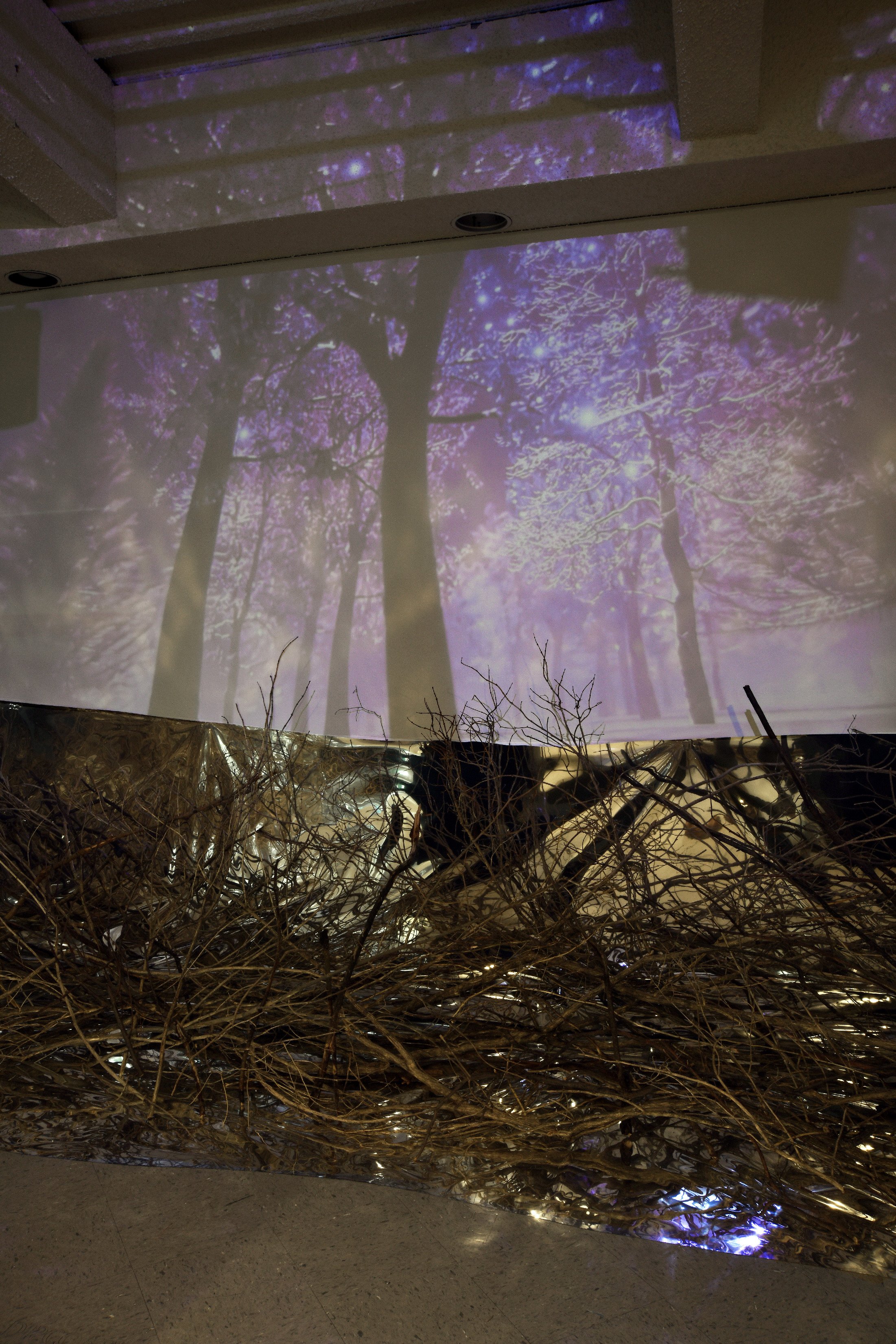
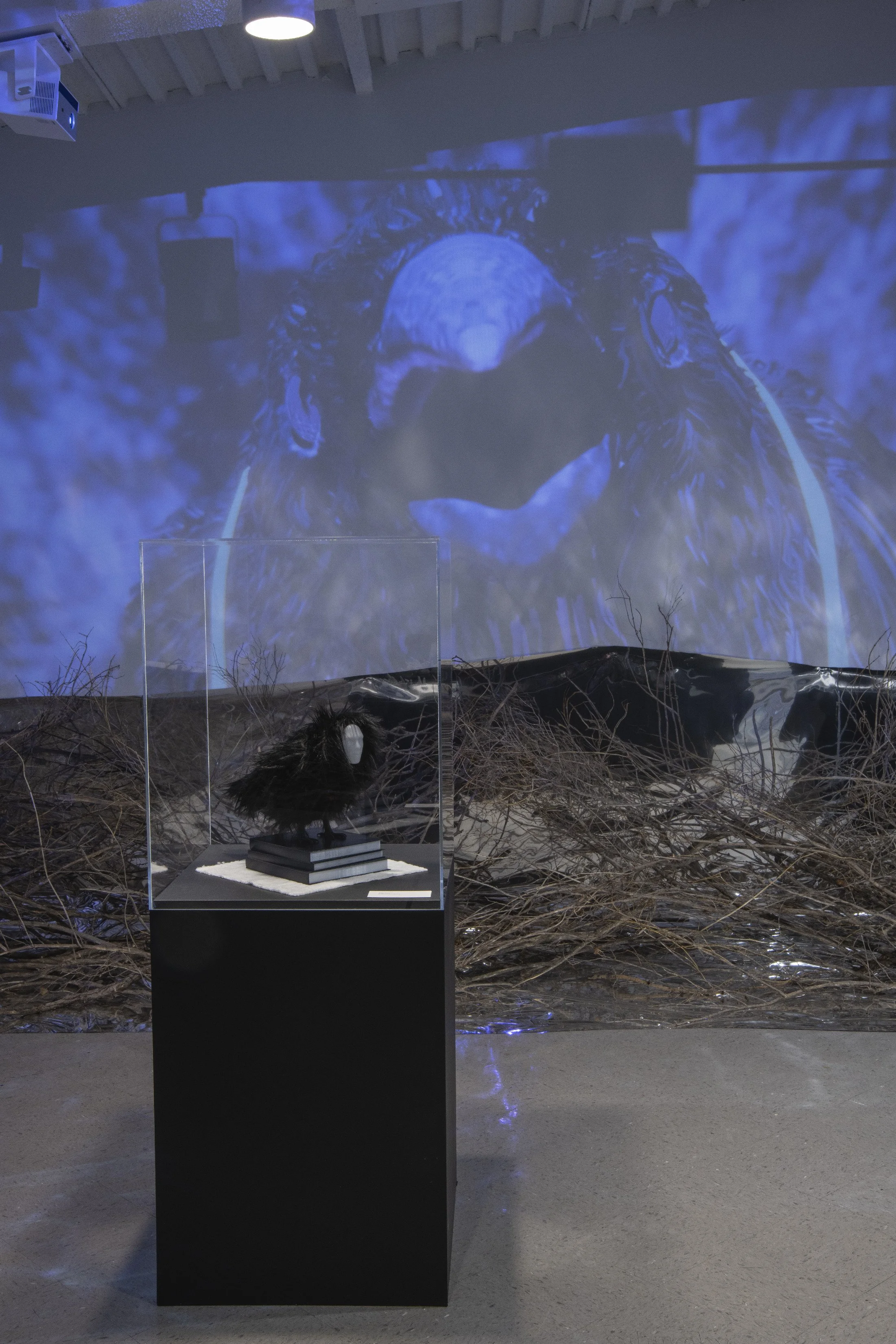
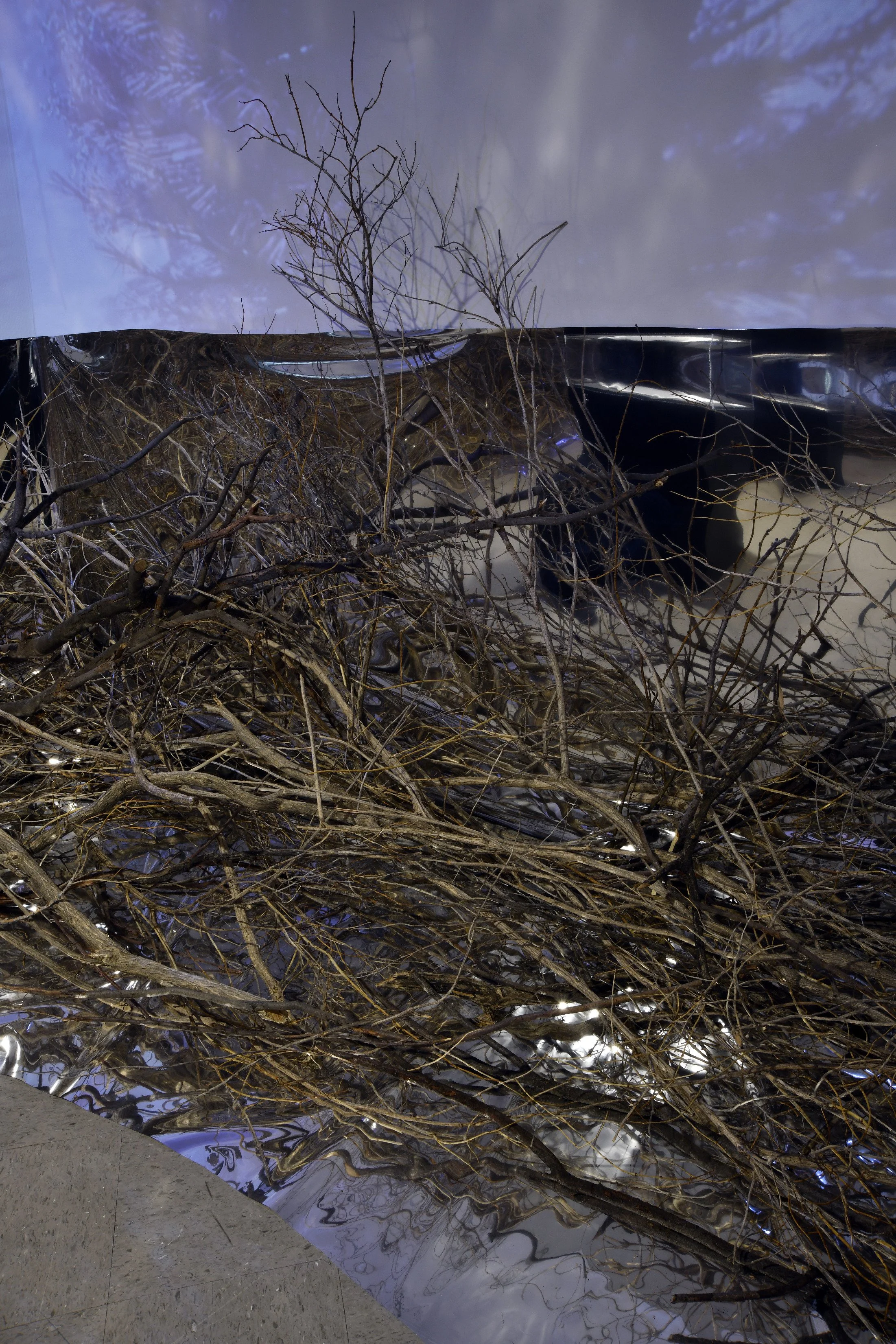
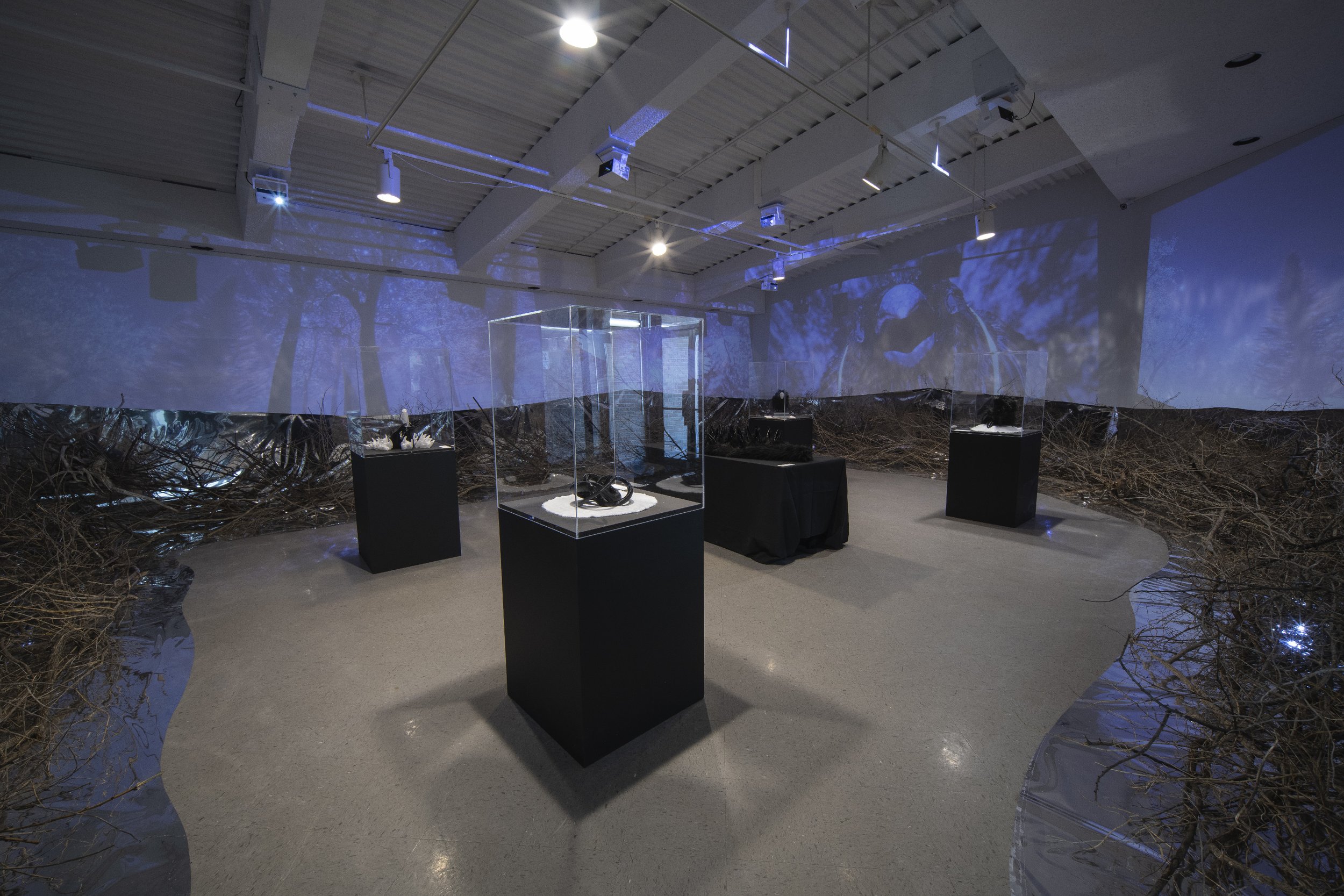
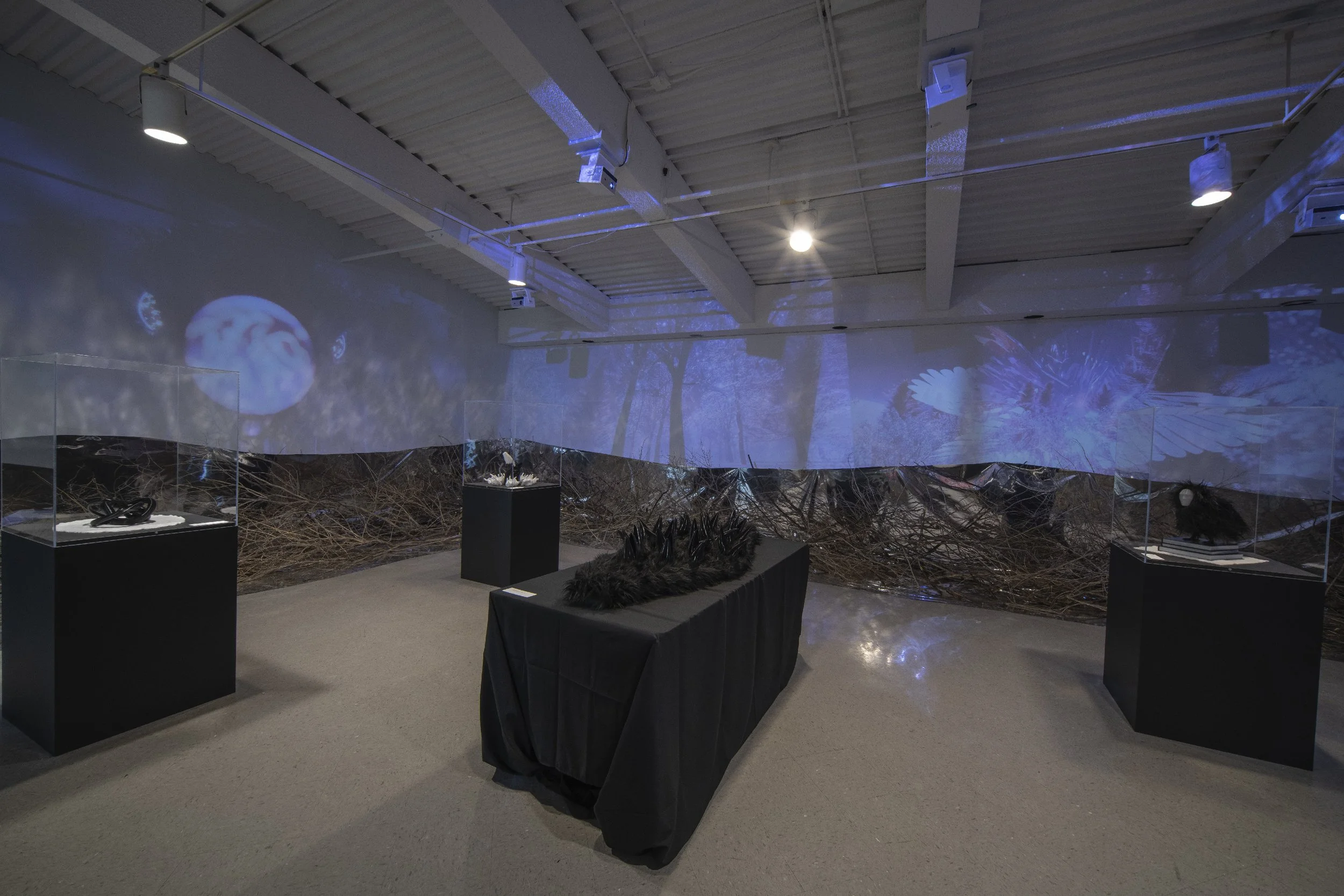
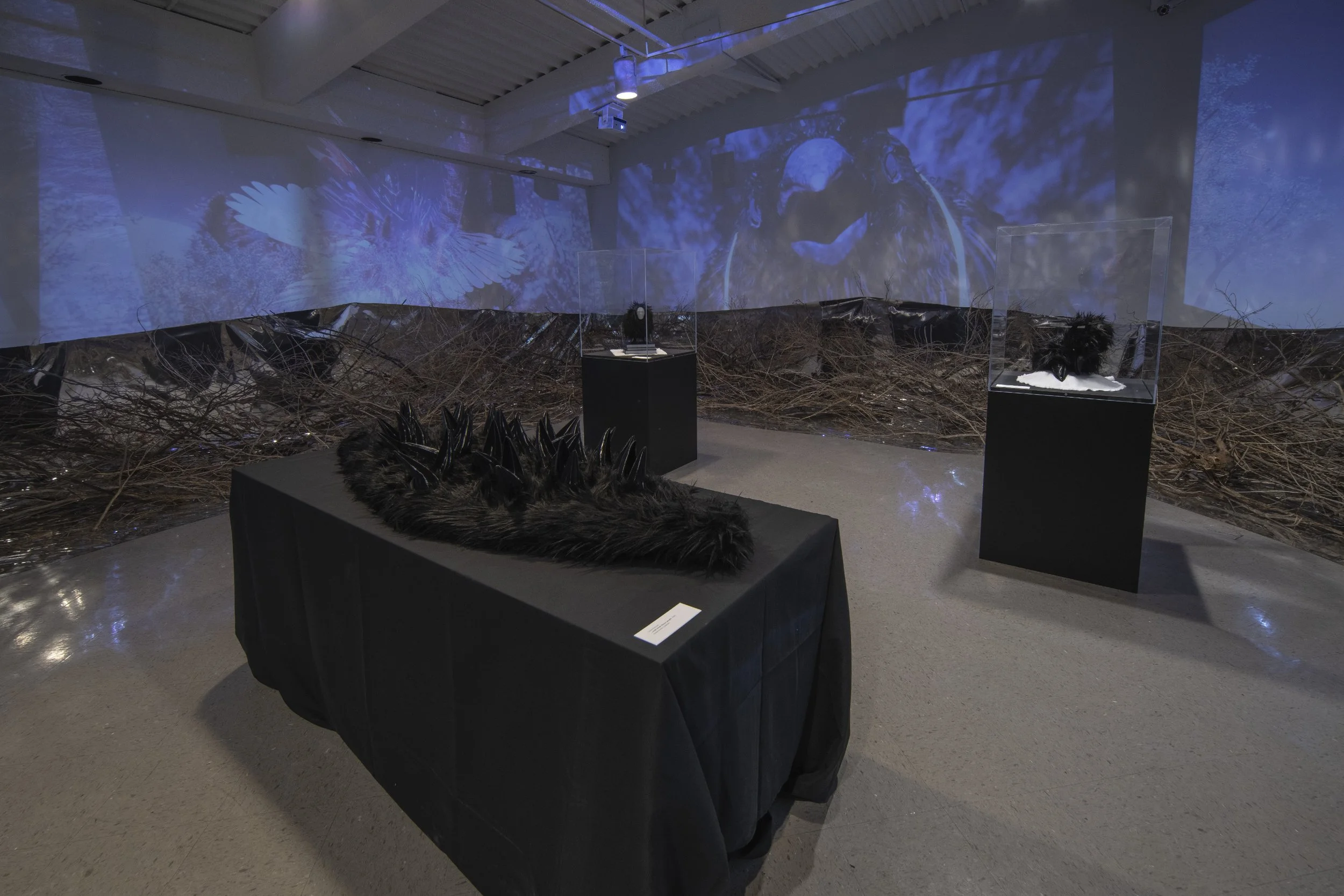
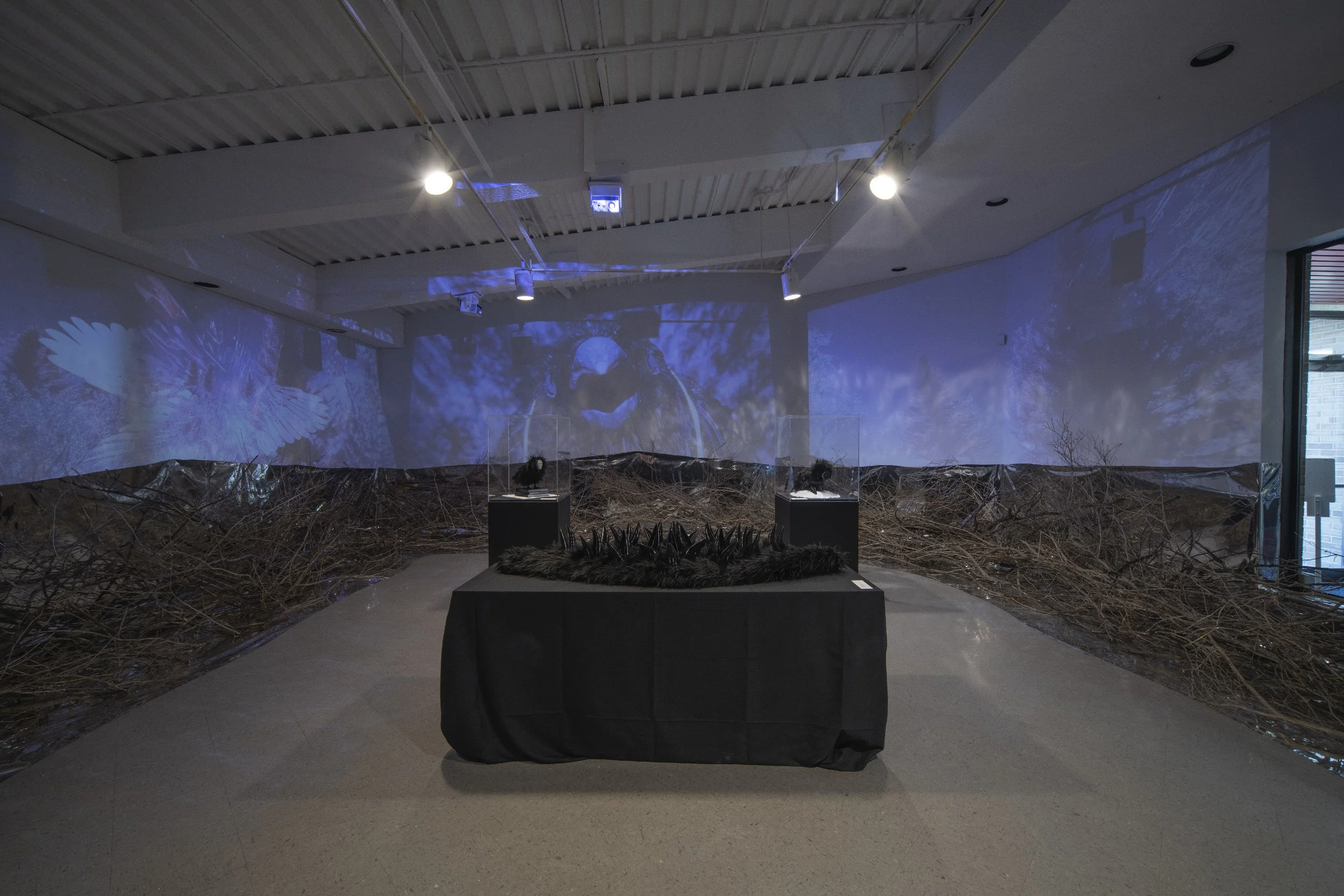
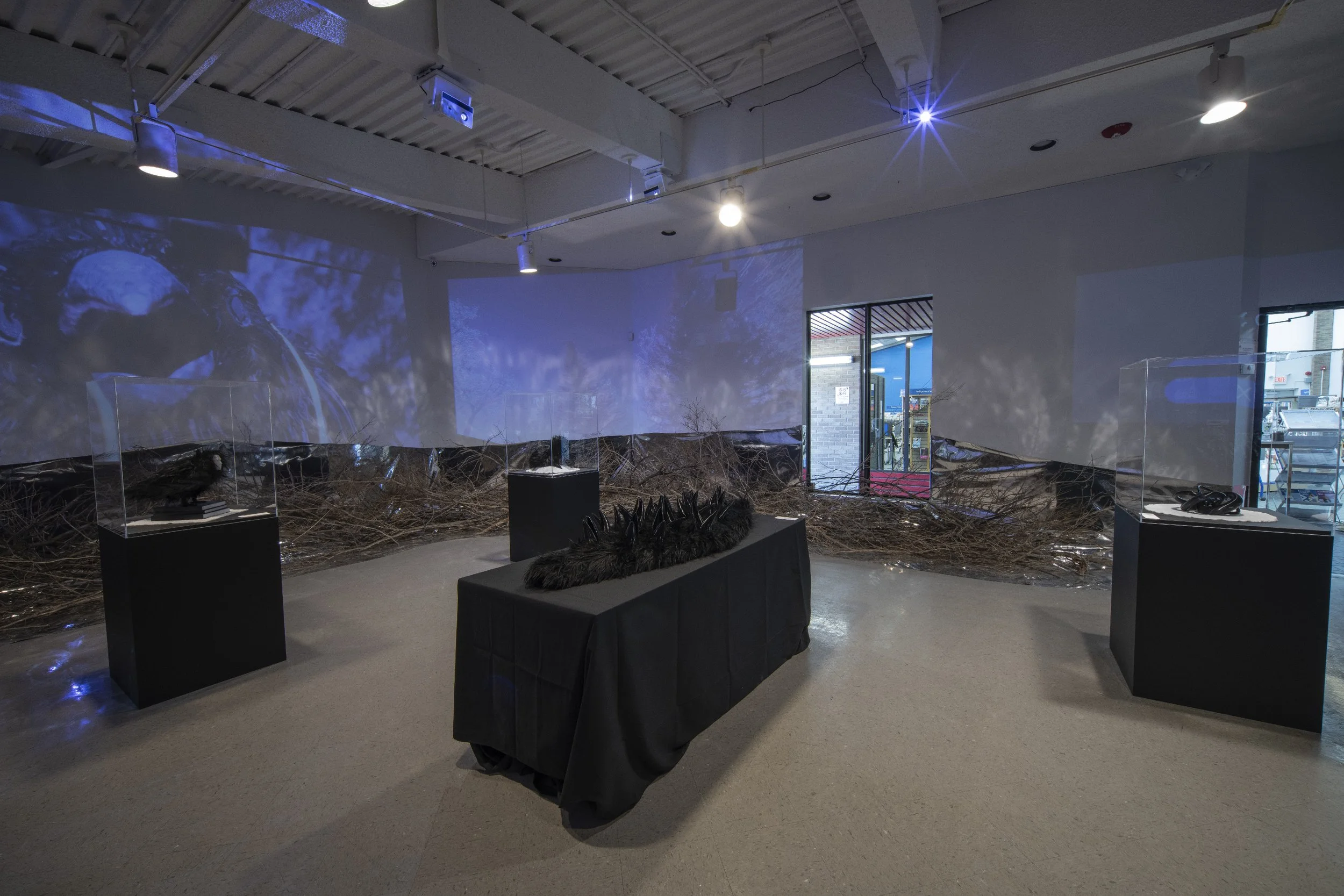
The first thing you notice when you step into raven; tatsǫ́ is the air — it feels charged, as if the room itself is holding its breath. The light is low, and the space is alive with contrasts: the scent of wood and branches mingling with the faint echo of raven calls; the softness of black, feather-like fabric against the cold precision of 3D-printed forms. Six projectors cast shifting animations across the gallery space — feathers dissolving into pixels, a beak emerging from light, eyes glowing like miniature suns. The projections bleed into one another, creating an abstract, dreamlike atmosphere that wraps around you.
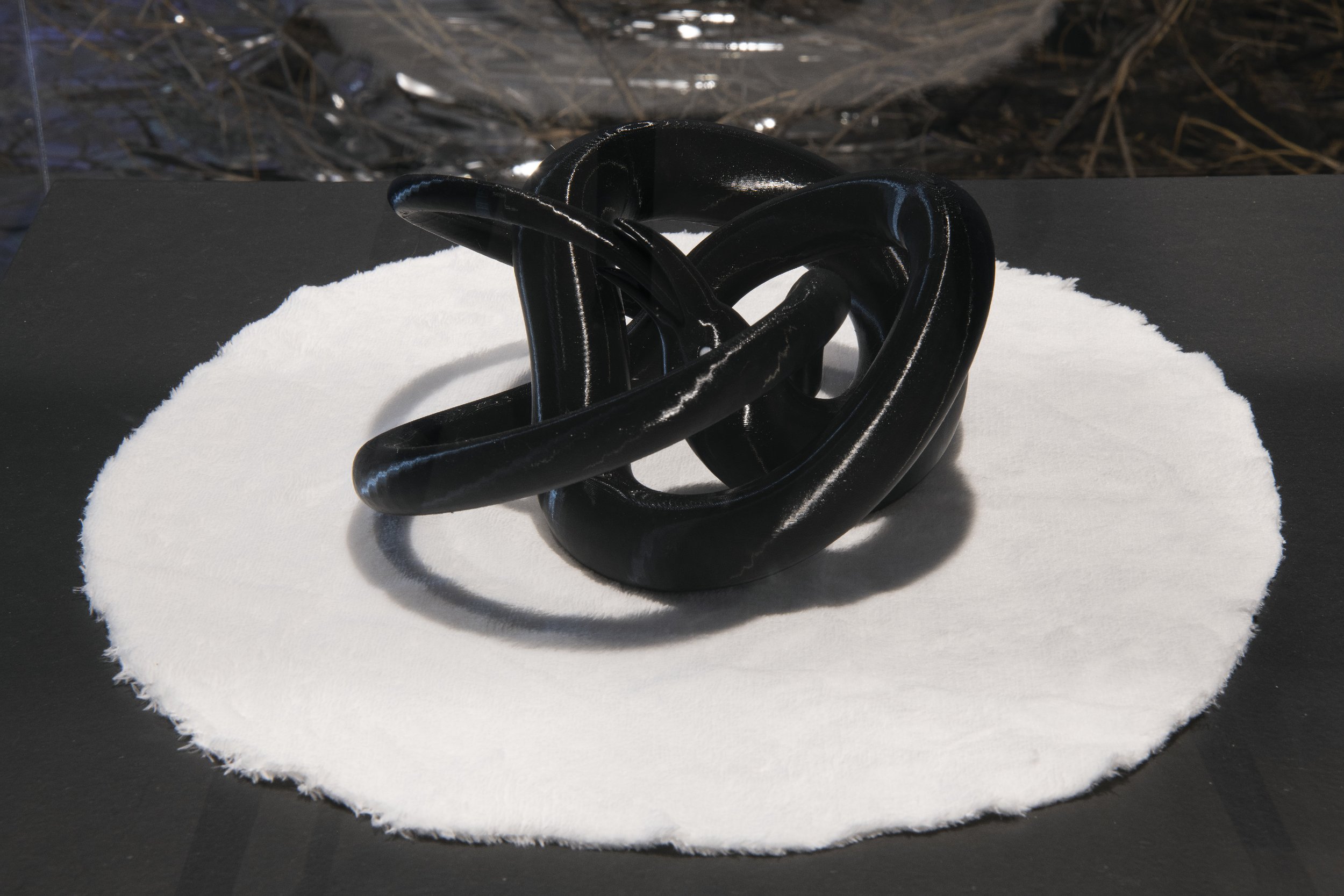
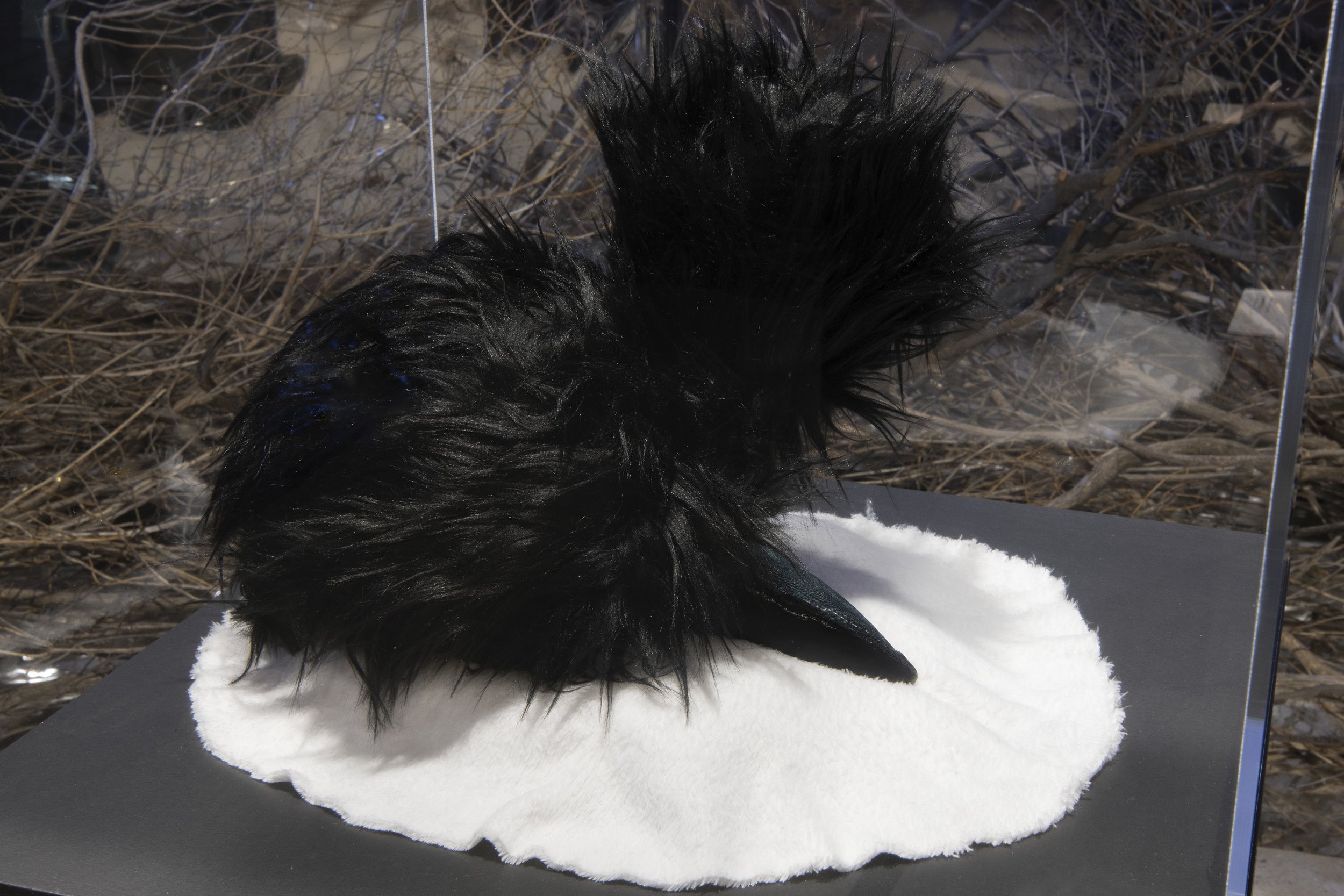
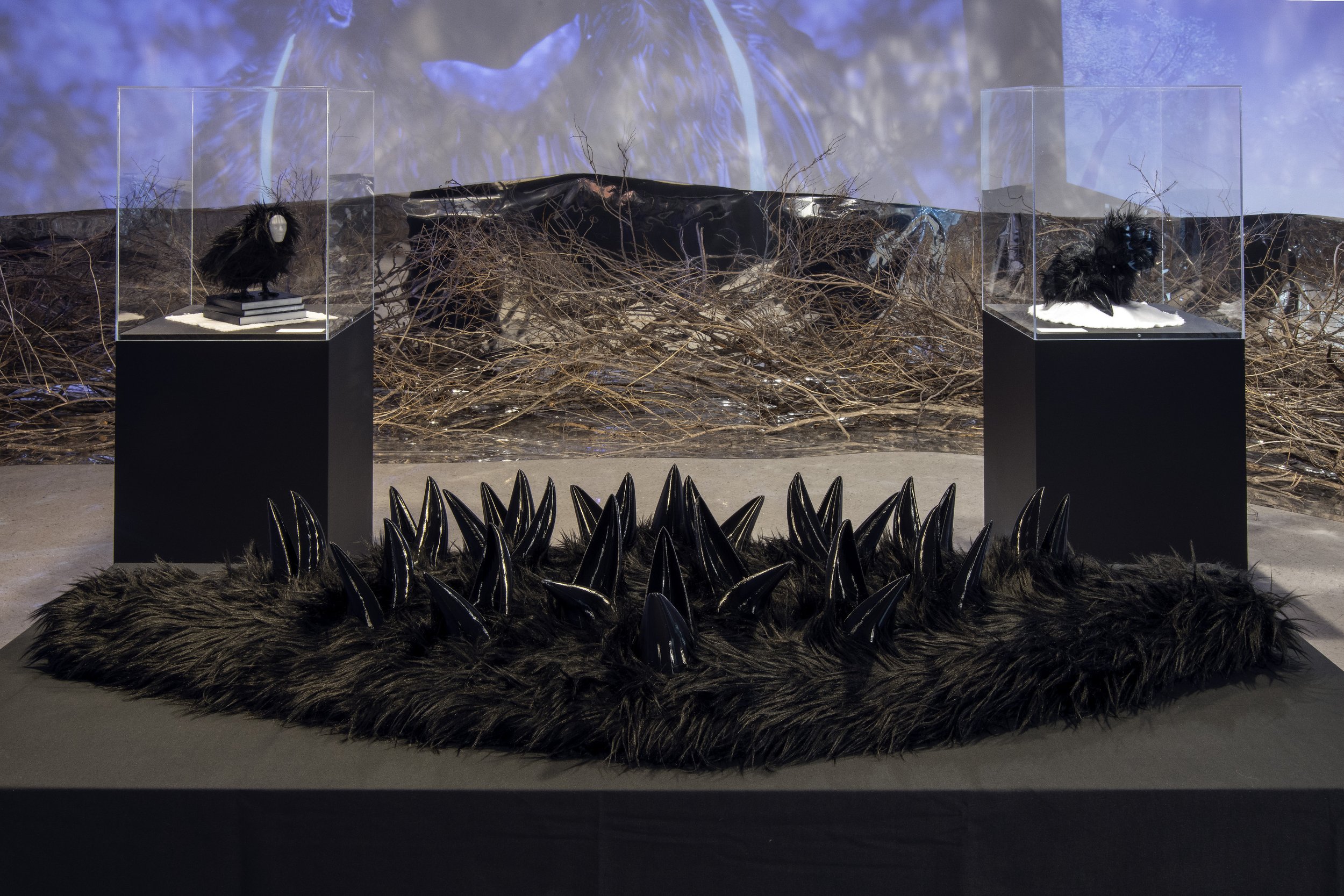
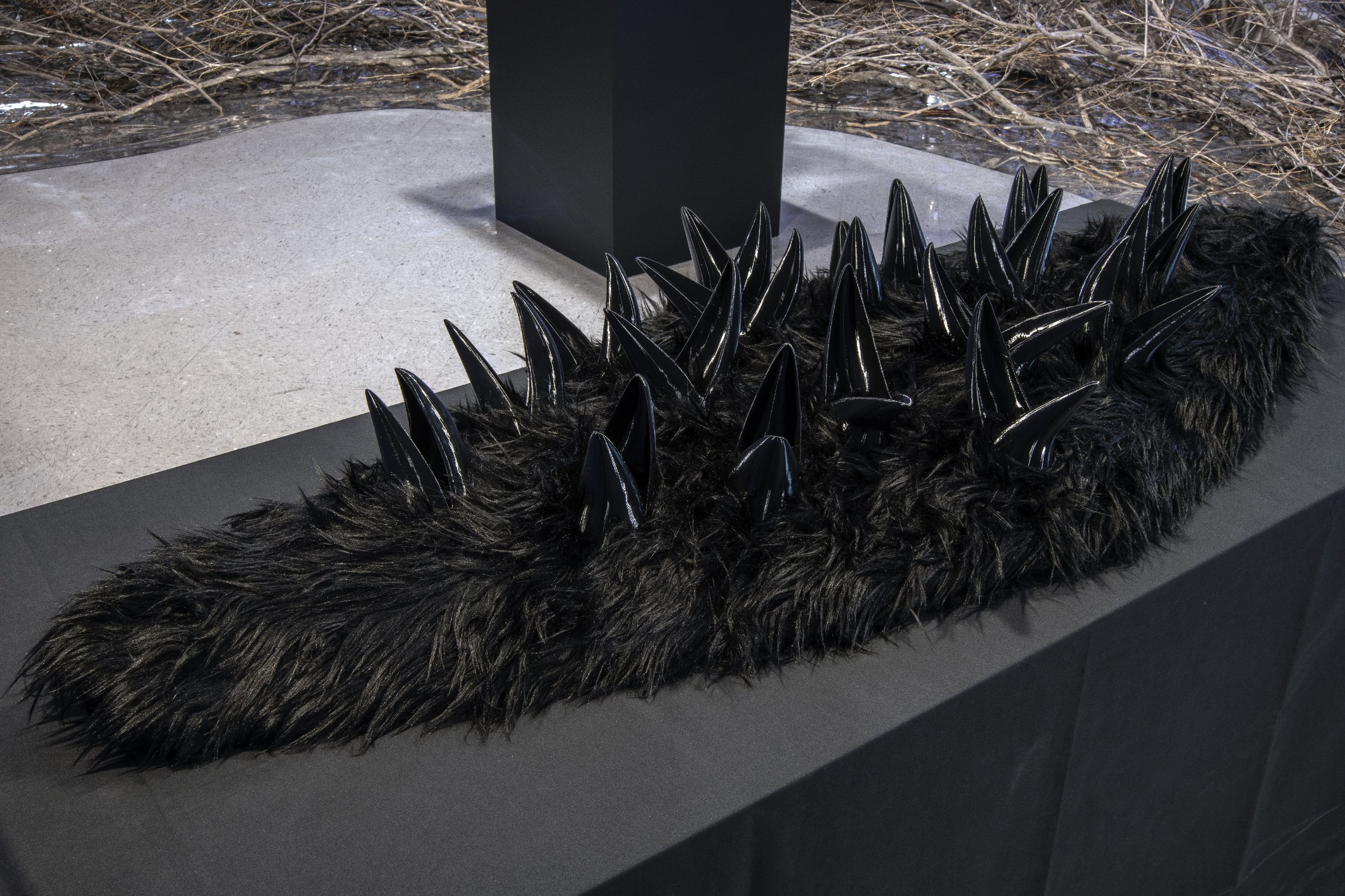
In the centre, sculptures rise like sentinels. Some are sleek and minimal, others textured and tactile. A raven’s head emerges from a pristine white form, its feathers absorbing the light while the white surface reflects it back. Another piece coils into a loop — a raven head with a snake’s body, biting its own tail. The works are not static; they feel like they’re in mid-transformation, caught between worlds.
For Dene interdisciplinary artist Casey Koyczan, the raven is more than a bird. It is a storyteller, a shapeshifter, a national animal of the North, and a mirror for human nature. The title — tatsǫ́, the Dene word for raven — is part of his ongoing journey to learn and reclaim his language.
During the studio visit, Koyczan told me he put trickster as the theme and “the trickster can be understood in so many ways. Sometimes it’s bad, sometimes it’s just someone joking around. I like that space — where you’re not sure if you should laugh or think harder.”
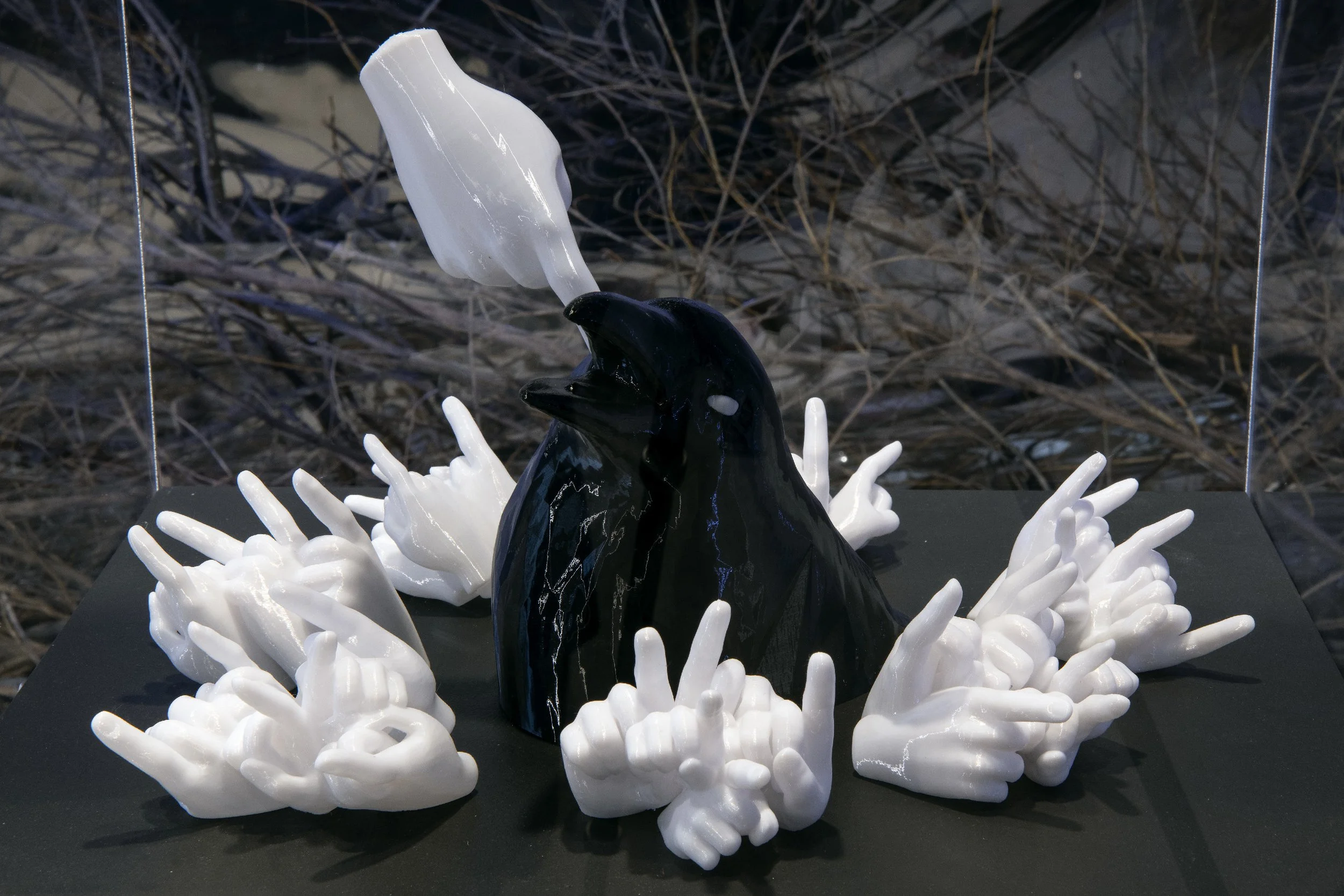
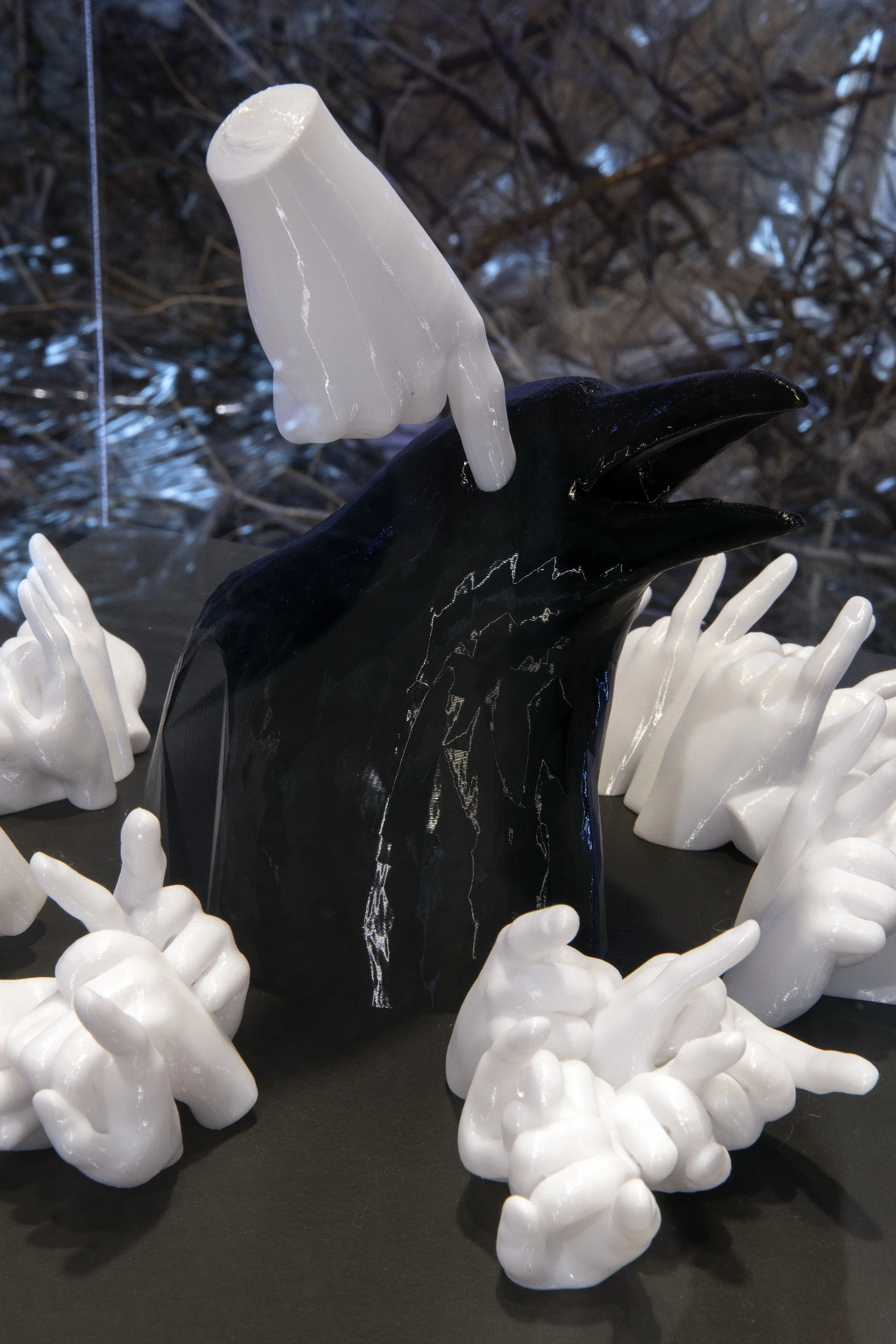
The works in raven; tatsǫ́ draw directly from Koyczan’s personal experiences. Could you not!? features a large hand with an eye in its palm, surrounded by other hands reaching up from the ground. Some point outwards, some inward — but all ultimately turn toward the viewer. “For a long time, I’ve been blamed for things that had nothing to do with me,” Koyczan said. “When you point at someone, one finger is at them, and three are pointing back at yourself.” The piece flips that gesture back on the audience, making them complicit.
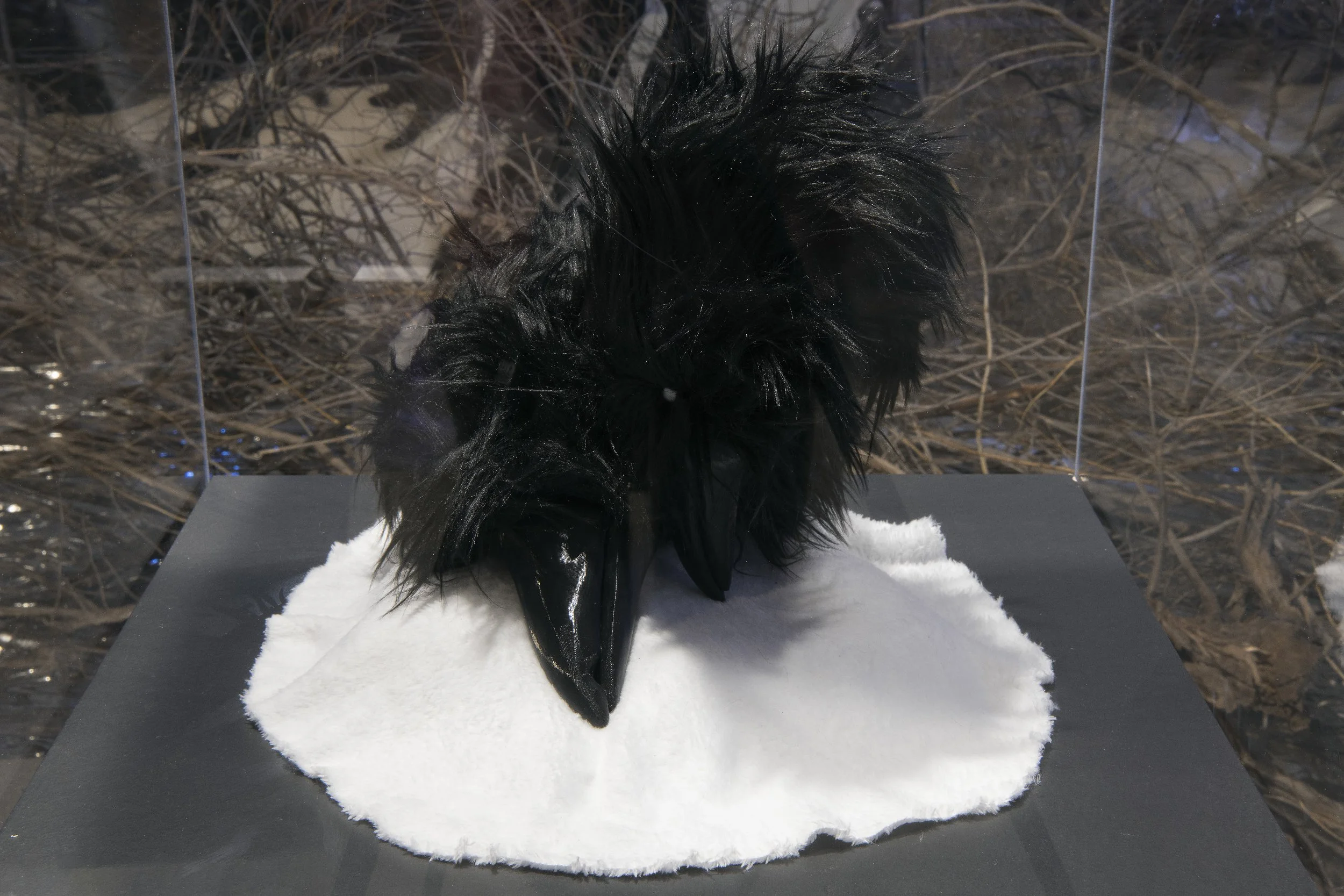
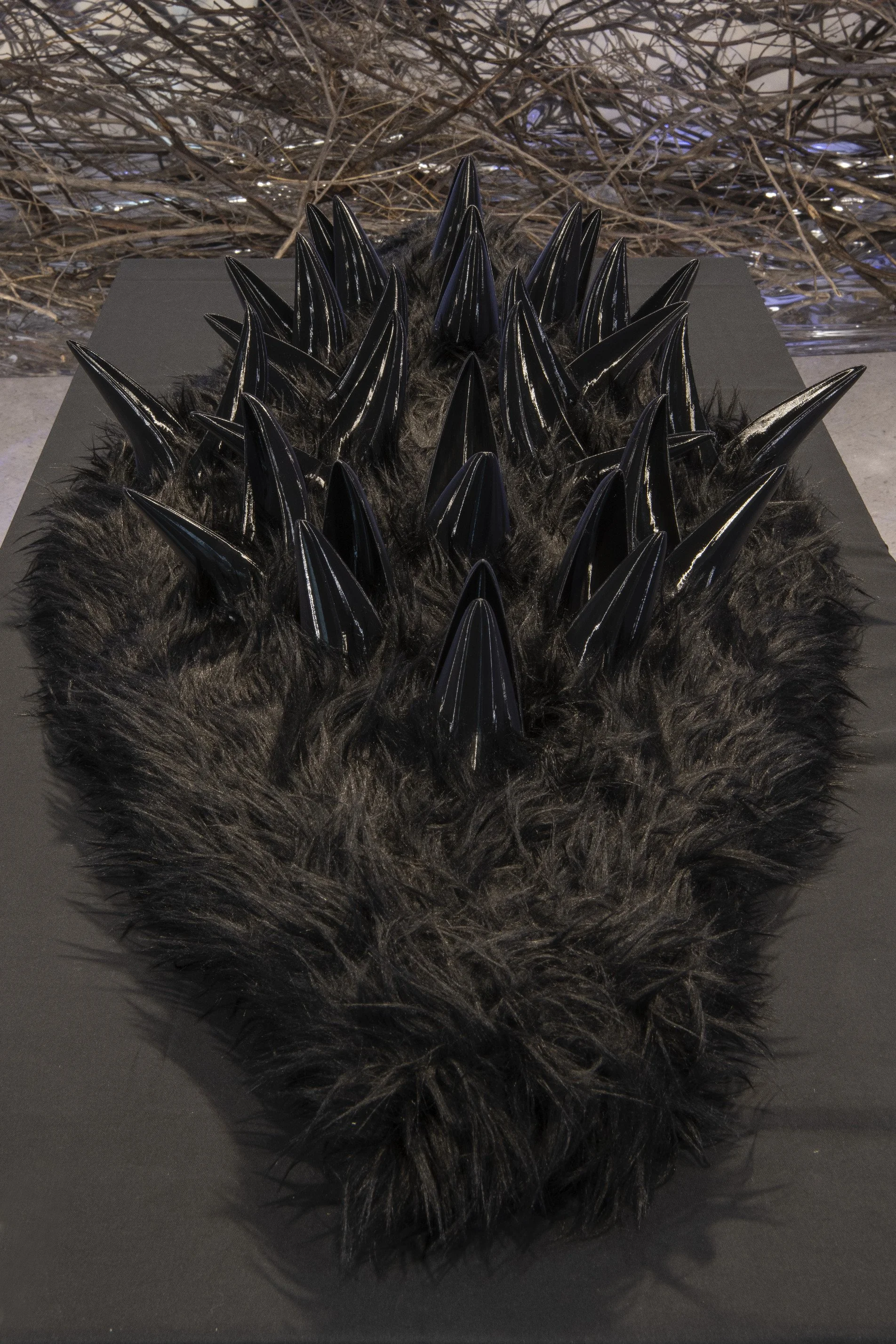
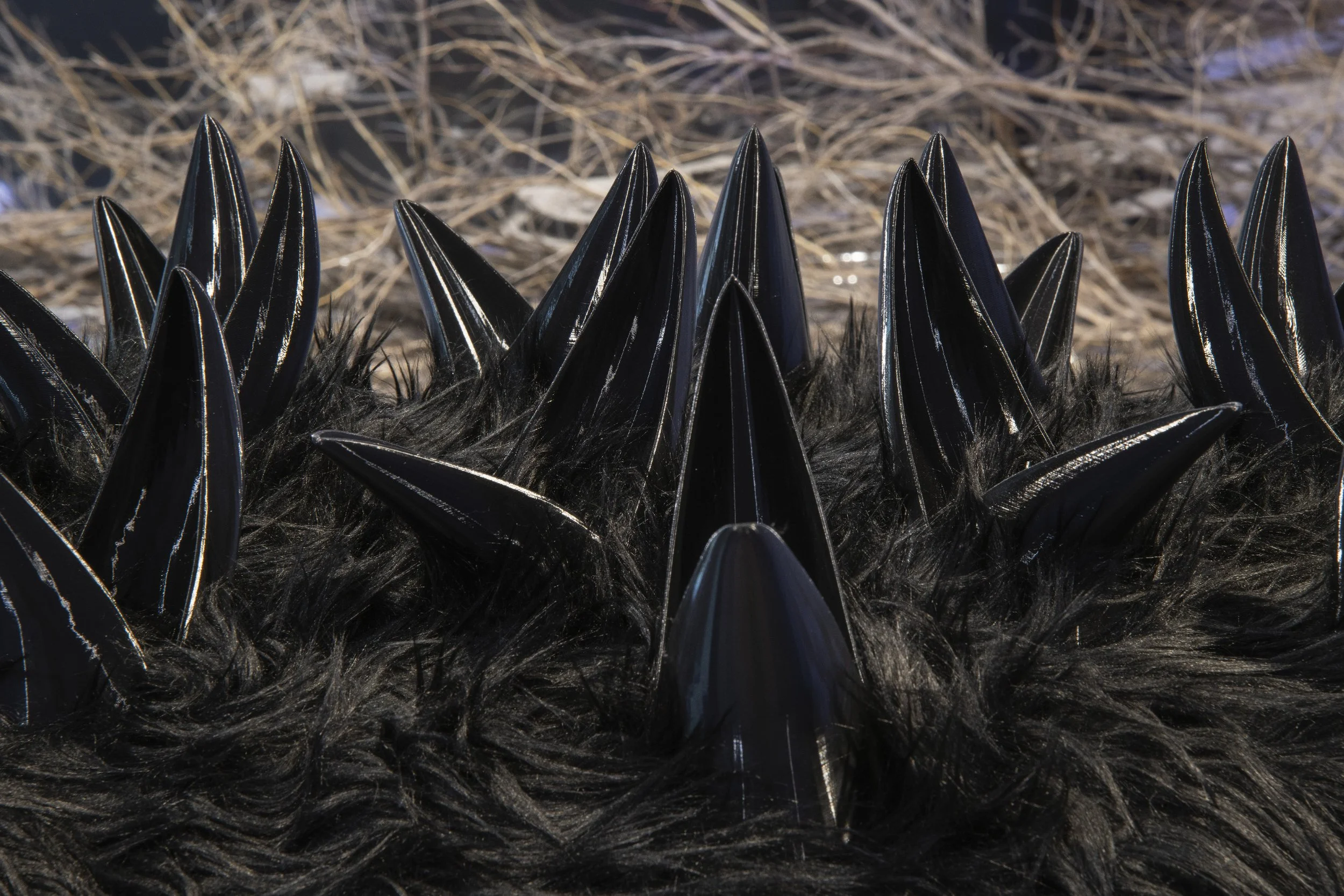
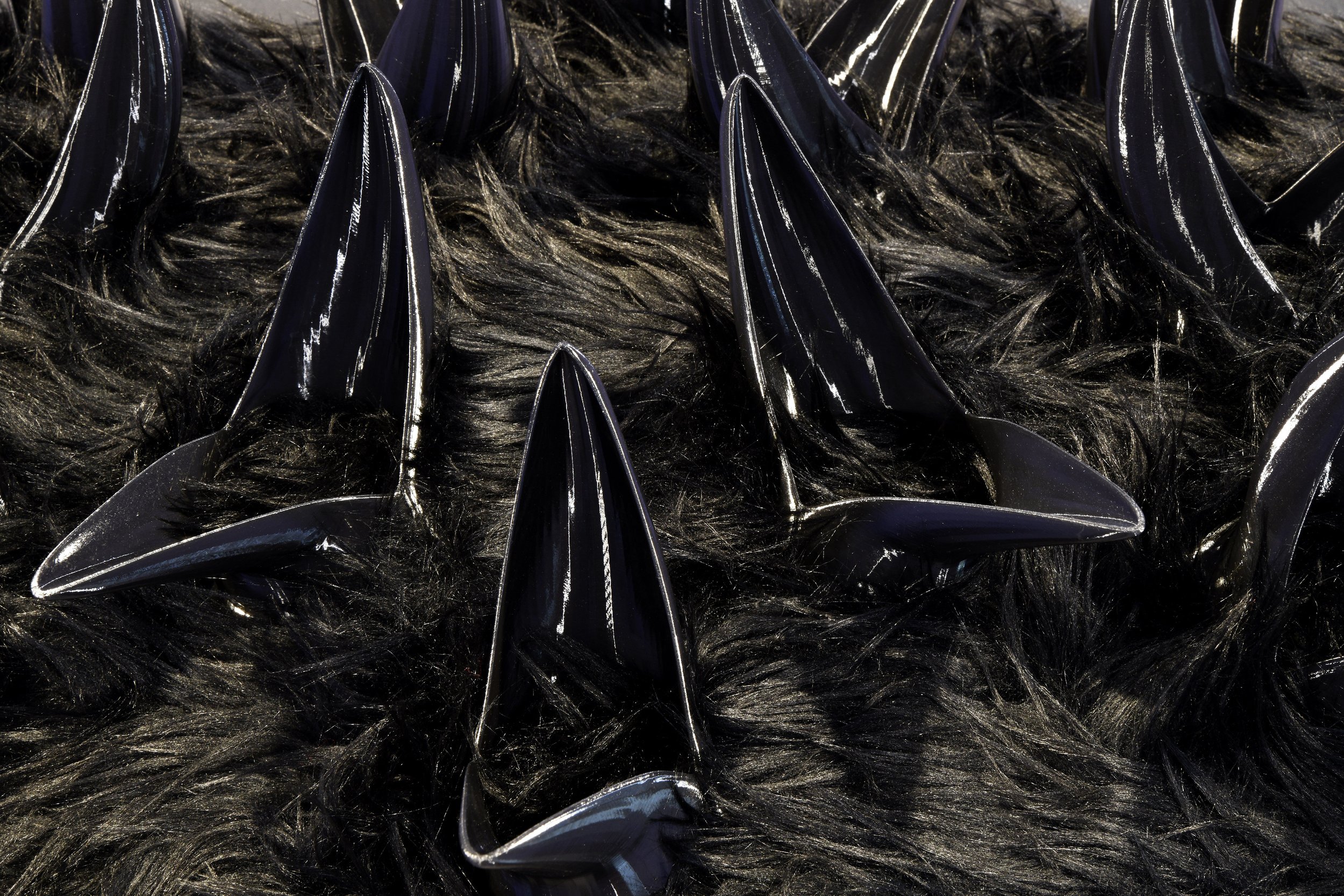
…small minds discuss people is a raven’s beak with a protruding tongue, covered in black fur. There are no eyes, no ears, no brain — only the mouth. “People gossip all the time,” Koyczan said. “It’s harmful. They don’t see, they don’t listen, they just talk.” The work doesn’t demand outrage; instead, it asks for a pause — a moment to consider whether we’ve ever been part of that harm.
The most personal work is Miss you bro — two raven heads, one smaller, one larger, both looking down. The piece is rooted in the loss of Casey’s older brother in 2018. “It was such a strange feeling, seeing him in the coffin,” he told me. “I used to think we were made of soul and vessel. But in that moment, I realized we are just vessel.” The smaller raven looks toward the larger one with white, unblinking eyes. The black-and-white contrast is stark, the silence heavy. Koyczan admitted he cried many times while making it. “That feeling will never go away, but the capacity to deal with it grows bigger.”
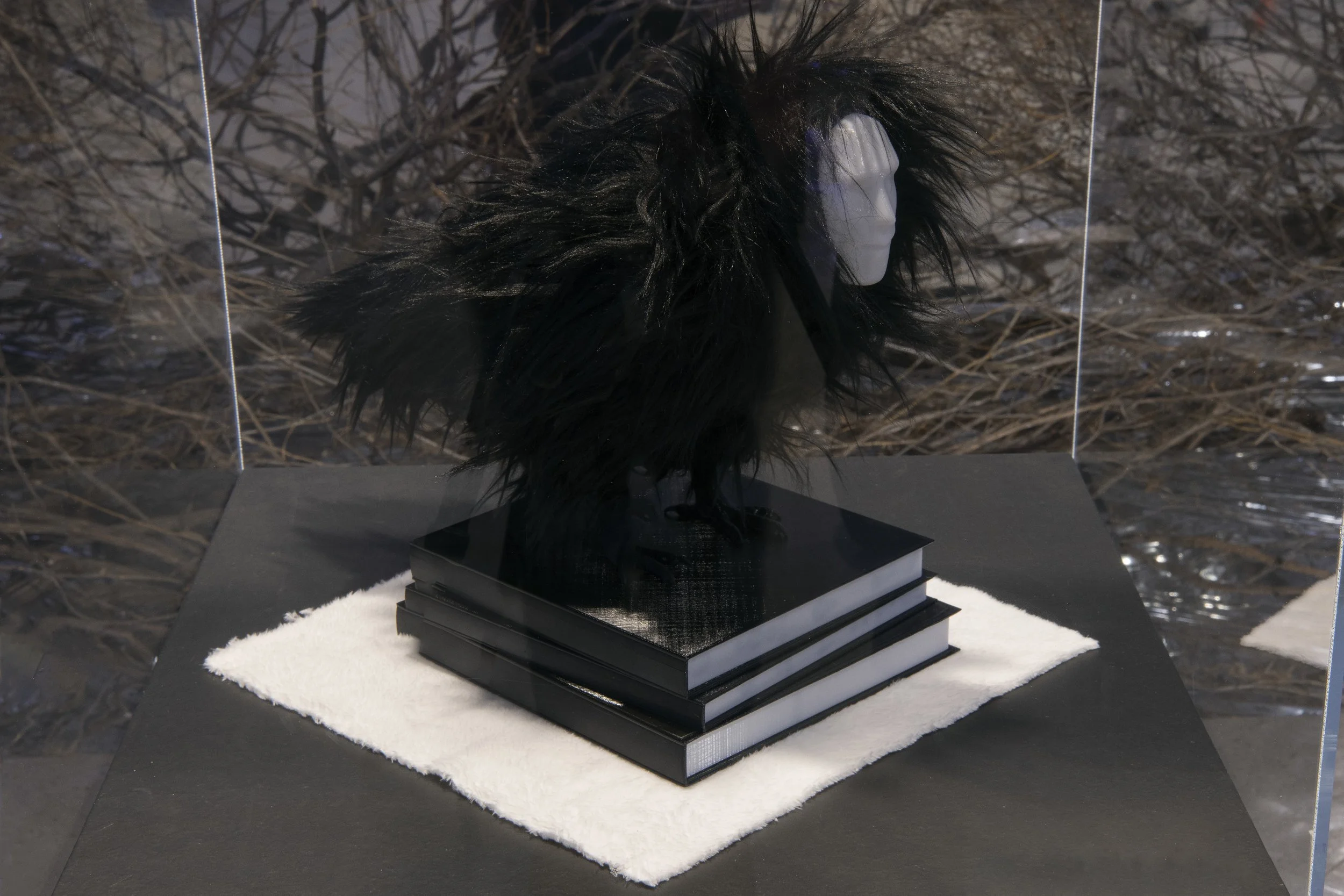
1/16* brings humour and critique together. A raven figure — representing Indigeneity — is paired with a white human face, a nod to non-Indigenous people who “dress up” as Indigenous to access resources and recognition. The figure holds a book, a symbol of privilege and academia, its surface gleaming. There’s a faint smile on the face — not of innocence, but of pride in the act. The humour is sharp, almost uncomfortable, and that’s the point. As Koyczan put it, “They can’t hide their face being white. The costume doesn’t change that.”
I’ve known Casey Koyczan since our BFA days, and I’ve always admired his ability to balance humour with gravity. In raven; tatsǫ́, that balance is at its most refined. The works are deeply personal, yet they speak to broader truths about identity, loss, and the politics of representation. They are also unapologetically beautiful — not in a decorative sense, but in the way they command space and attention.
What strikes most is how the exhibition feels alive. The branches, the scent of wood, the subtle soundscape, the shifting light — they create an environment where the raven is not just a symbol but a presence. You don’t simply look at the works; you move among them, and they look back at you.
This is not an exhibition that offers easy answers. It asks you to sit with discomfort, to laugh at the absurd, to feel the weight of grief, and to question your own place in the stories we tell about culture and belonging. It’s also a reminder that art can be both a form of shedding and of holding — a way to release pain while preserving memory.
Koyczan told me he doesn’t plan to revisit this body of work. “It’s healthy,” he said. “I’ve said what I needed to say, and now I’ll move on.” That makes raven; tatsǫ́ feel even more urgent — a singular moment in his practice, one that won’t be repeated.
If you come to see it — and you should — don’t rush. Let the space work on you. Notice the details: the way a beak catches the light, the way a projected eye seems to follow you, the way a sculpture’s shadow stretches across the floor. Somewhere in that space between laughter and stillness, between the human-made and the natural, you might just find the trickster looking back.
Xiao Han is an artist and curator born and raised in Wuhan, China. Han’s creative practice focuses on photography, lens-based performance, and the visualization of emotion within community-based contexts. Alongside visual work, Han maintains an art writing practice that explores process, embodied experience, and storytelling as critical tools for reflection and knowledge-sharing within artistic and diasporic communities. Han’s research investigates diasporic identity, relationships between immigrants and Indigenous land, and contemporary gender issues through a decolonial lens. Han has produced numerous projects examining Chinese Canadian immigrant identity and the aesthetics of community relationships.
Artist ↑
Images ↑
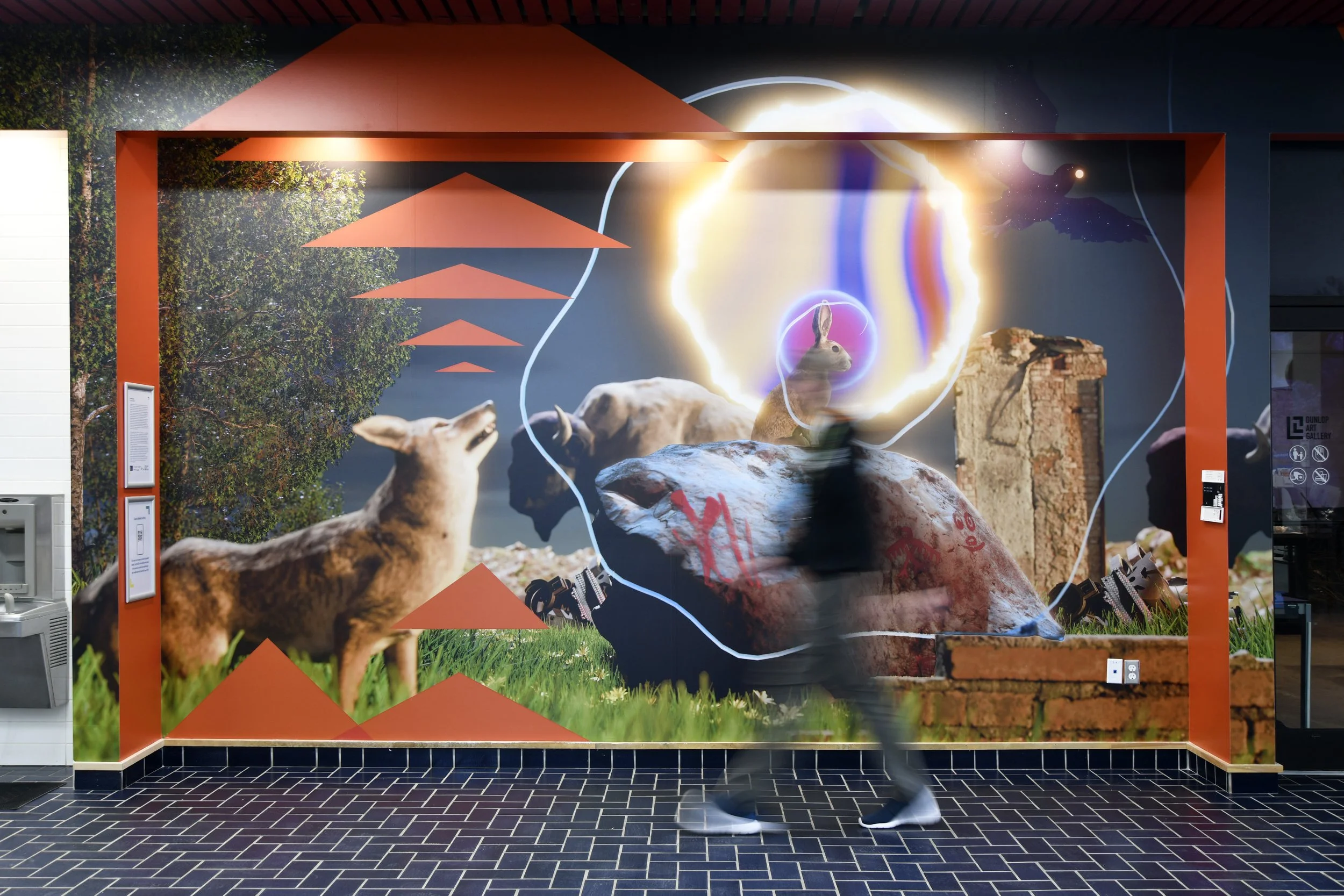
Photos by Don Hall
Media ↑