
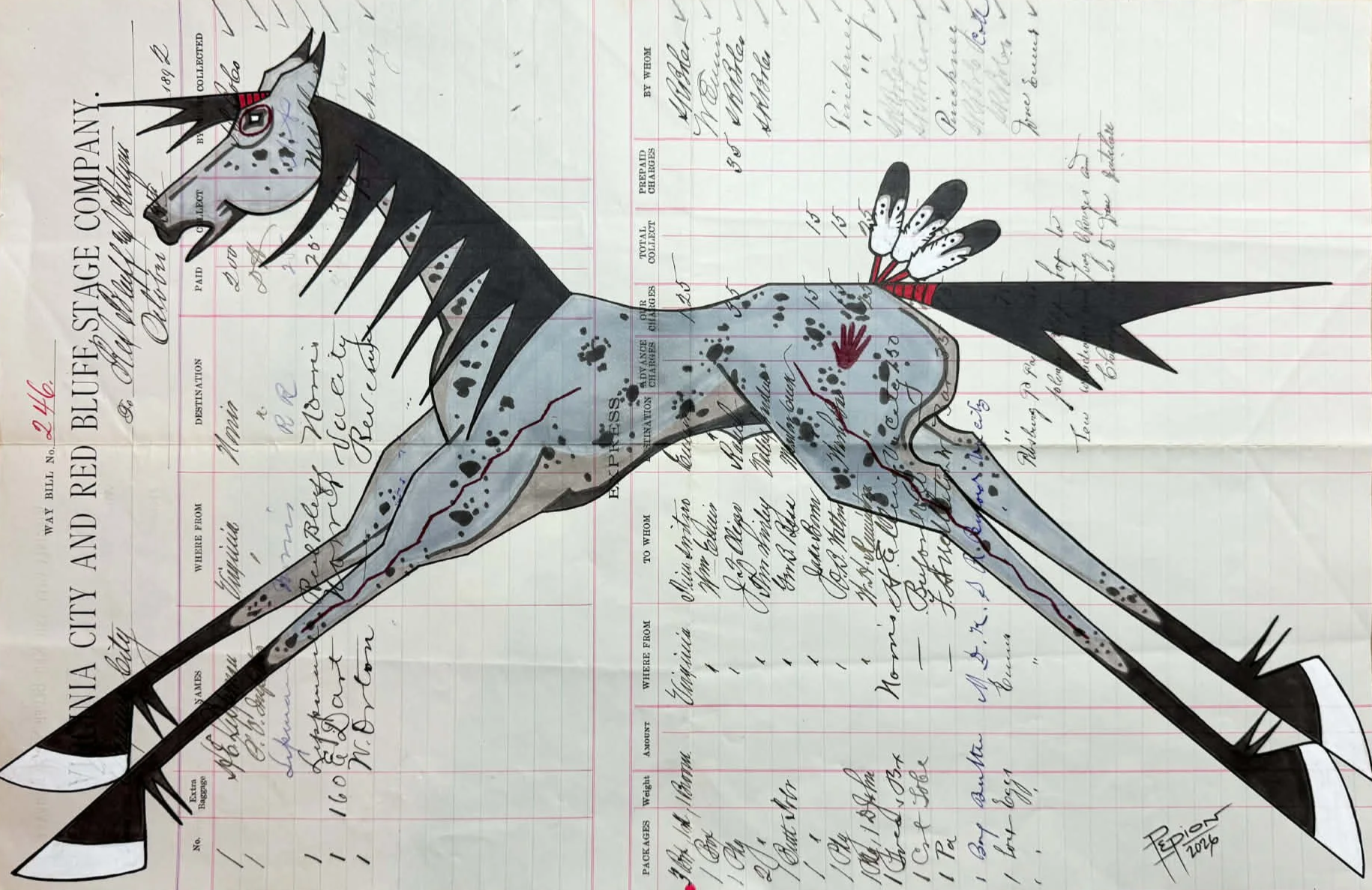
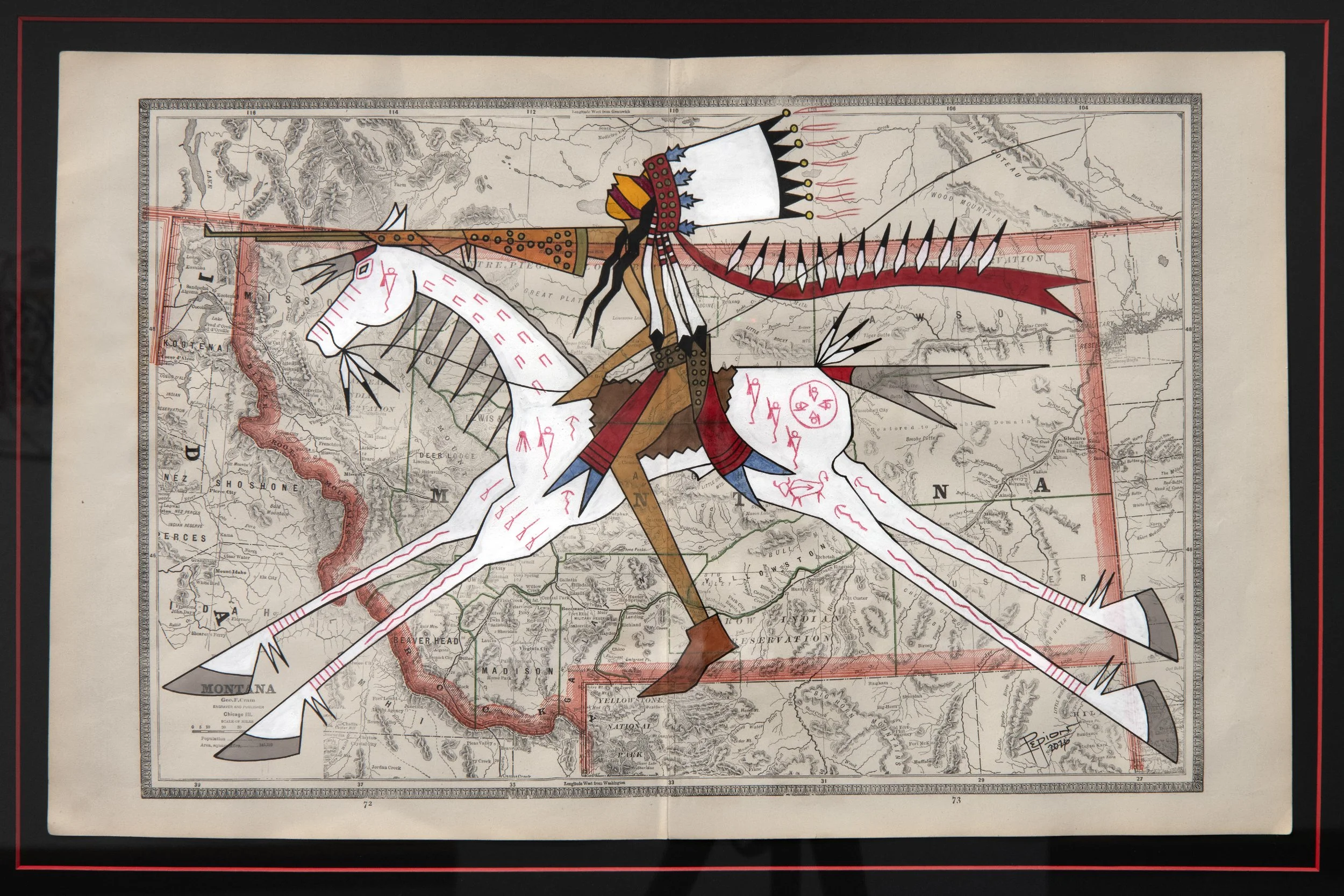
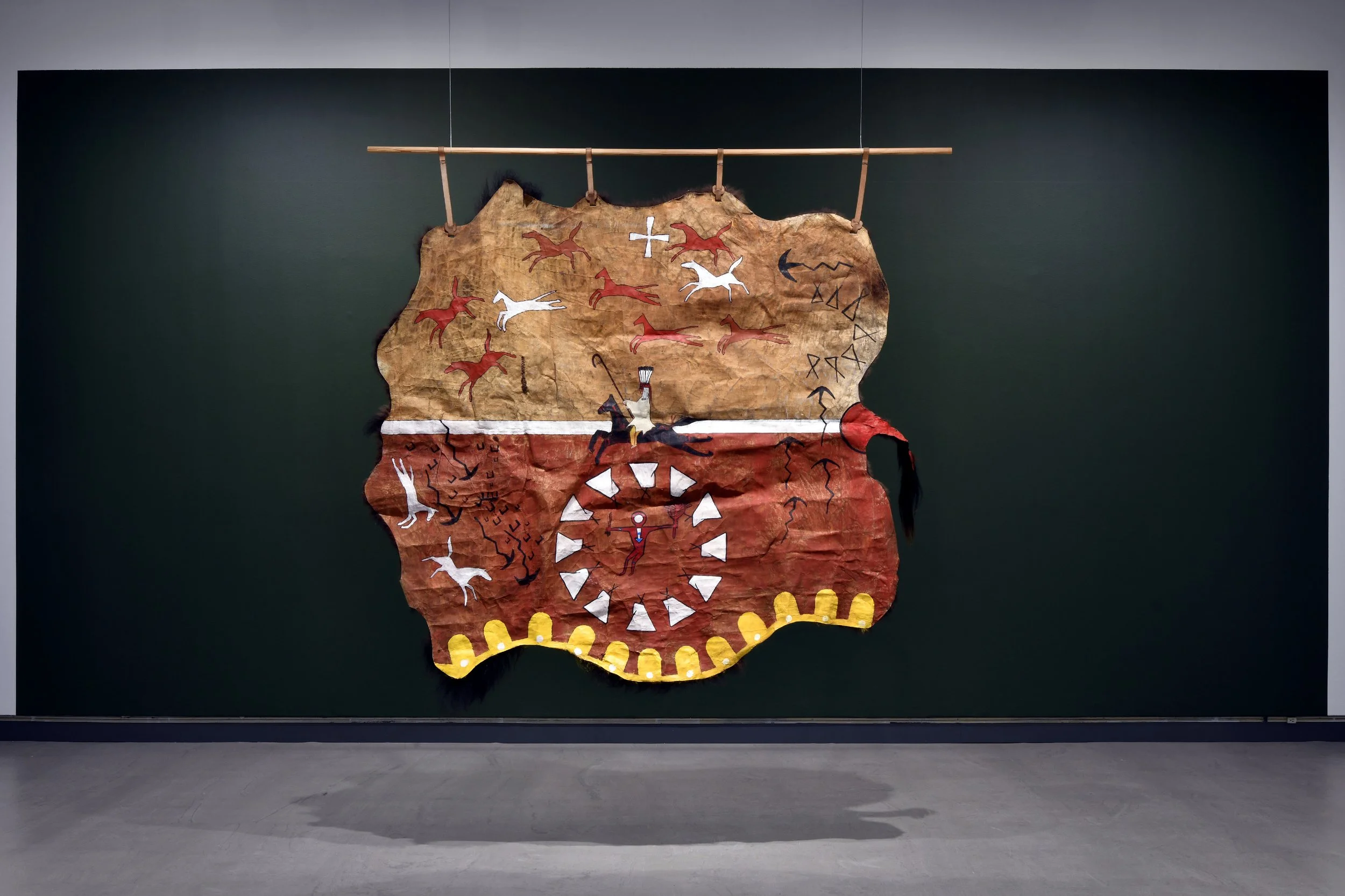
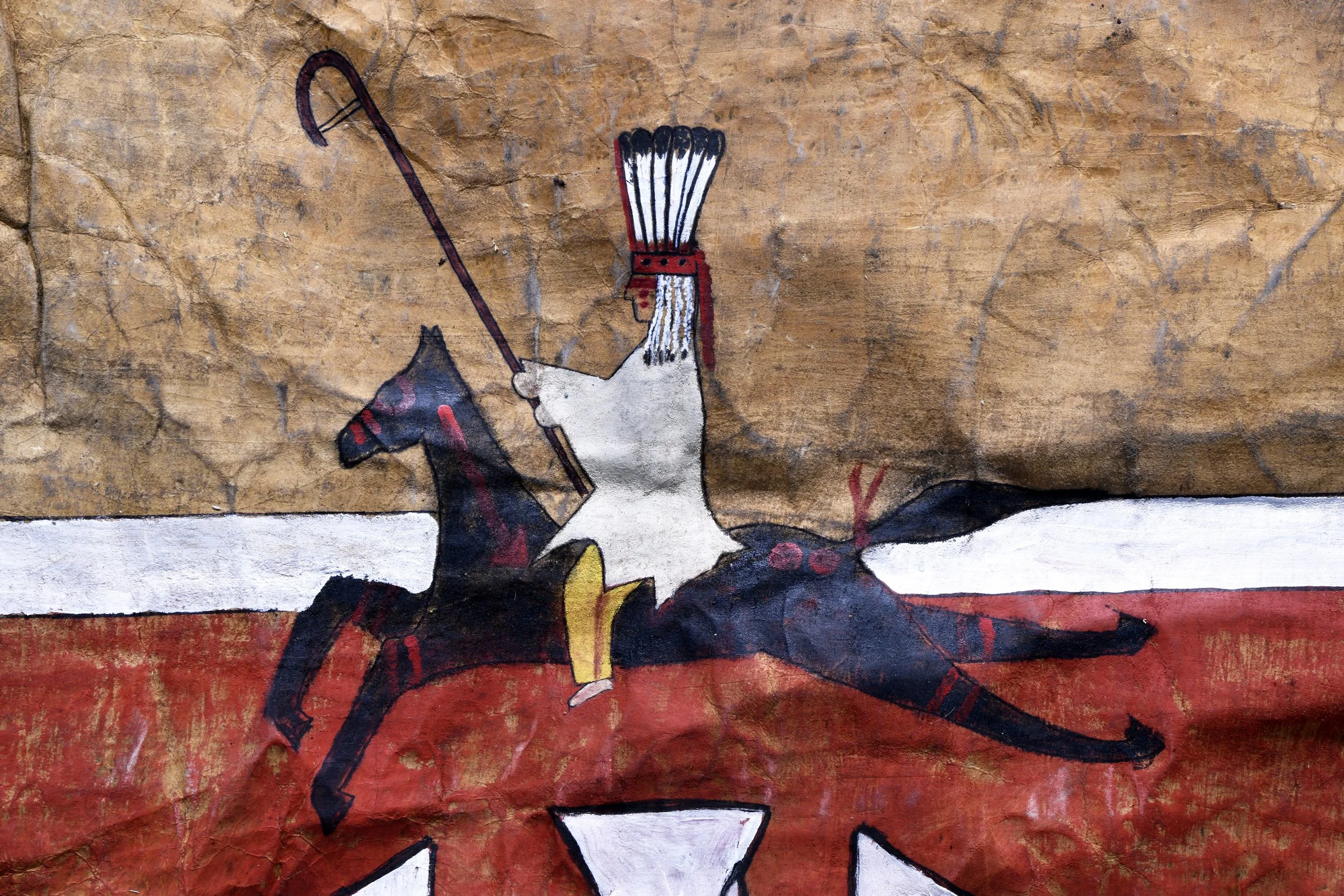
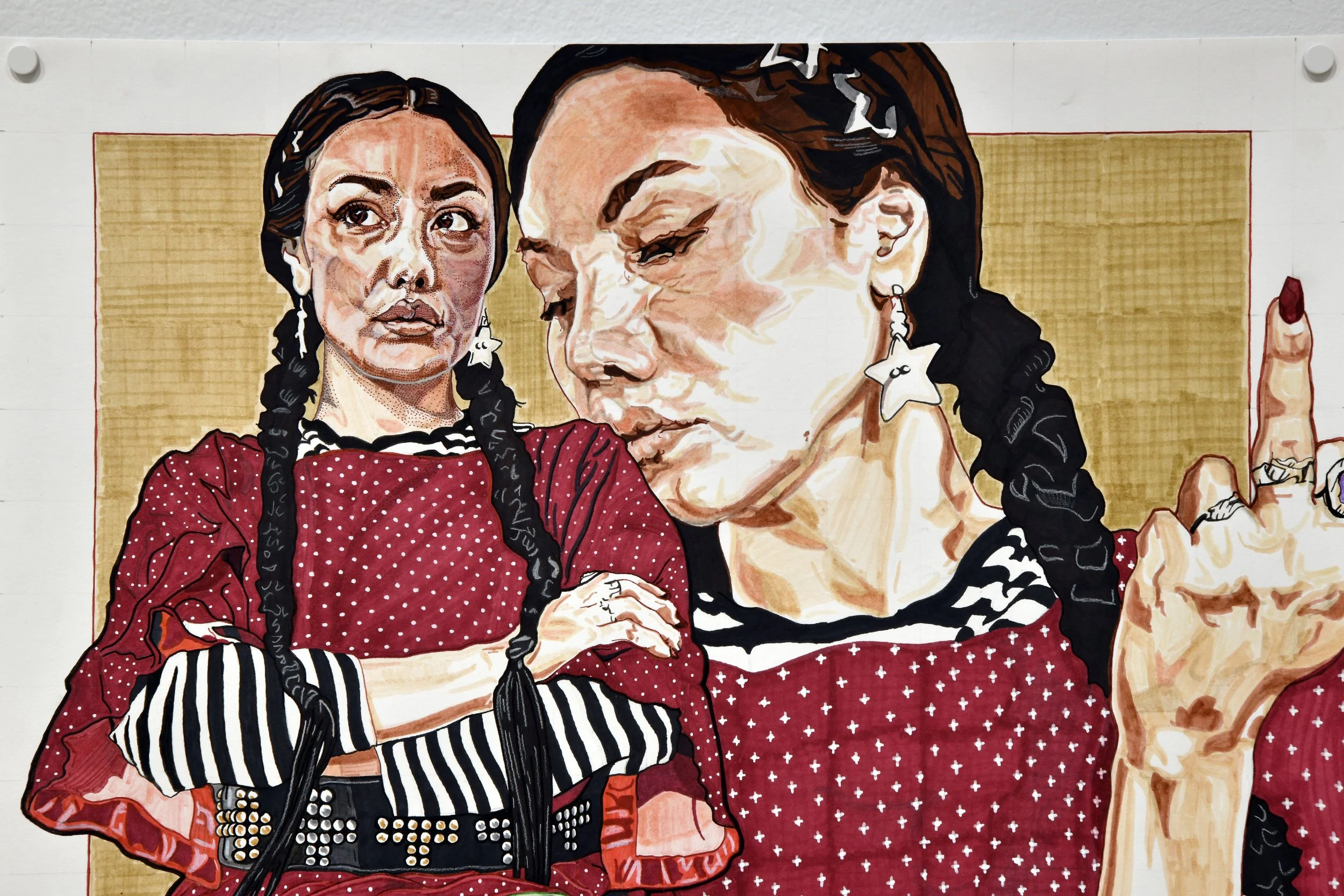
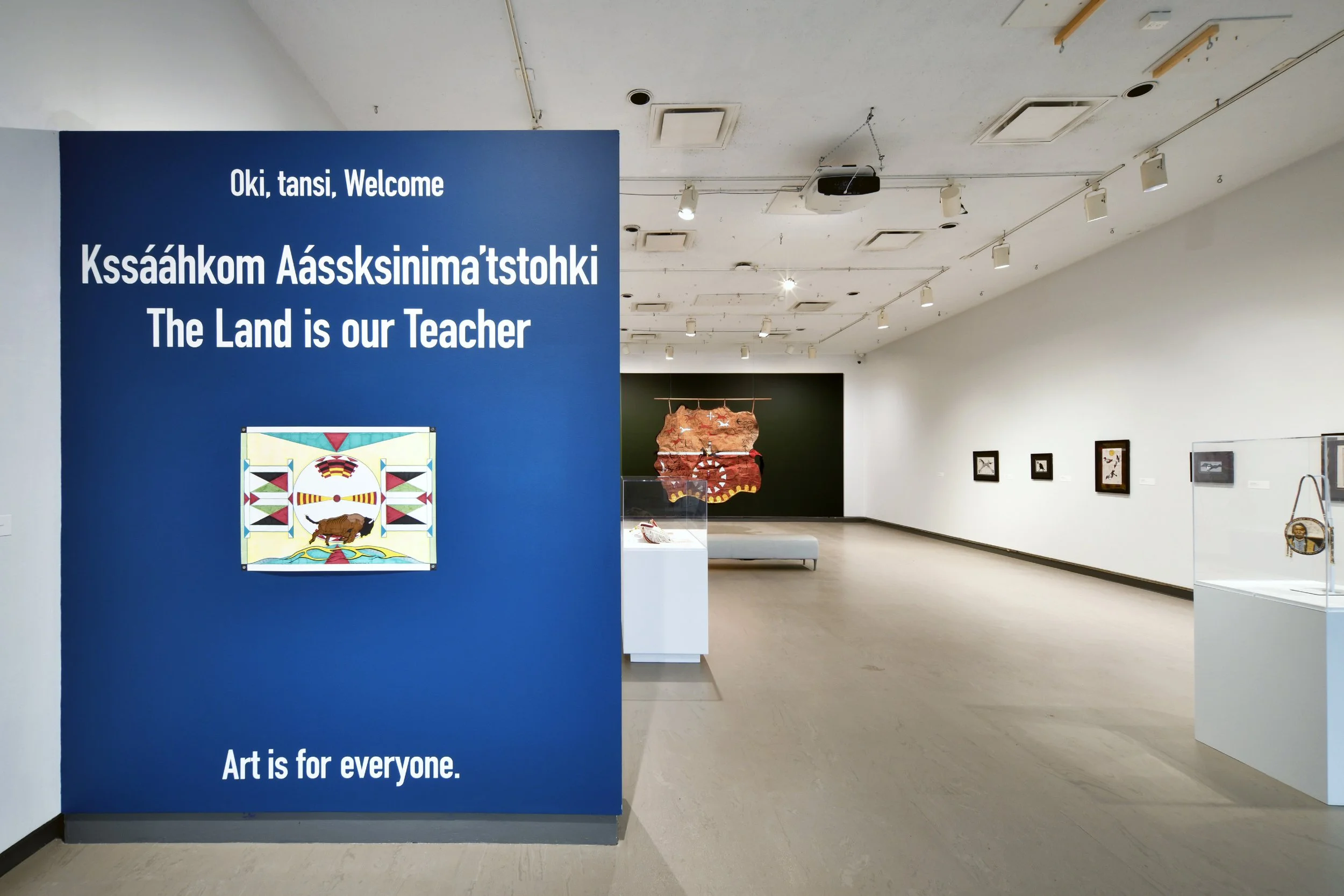
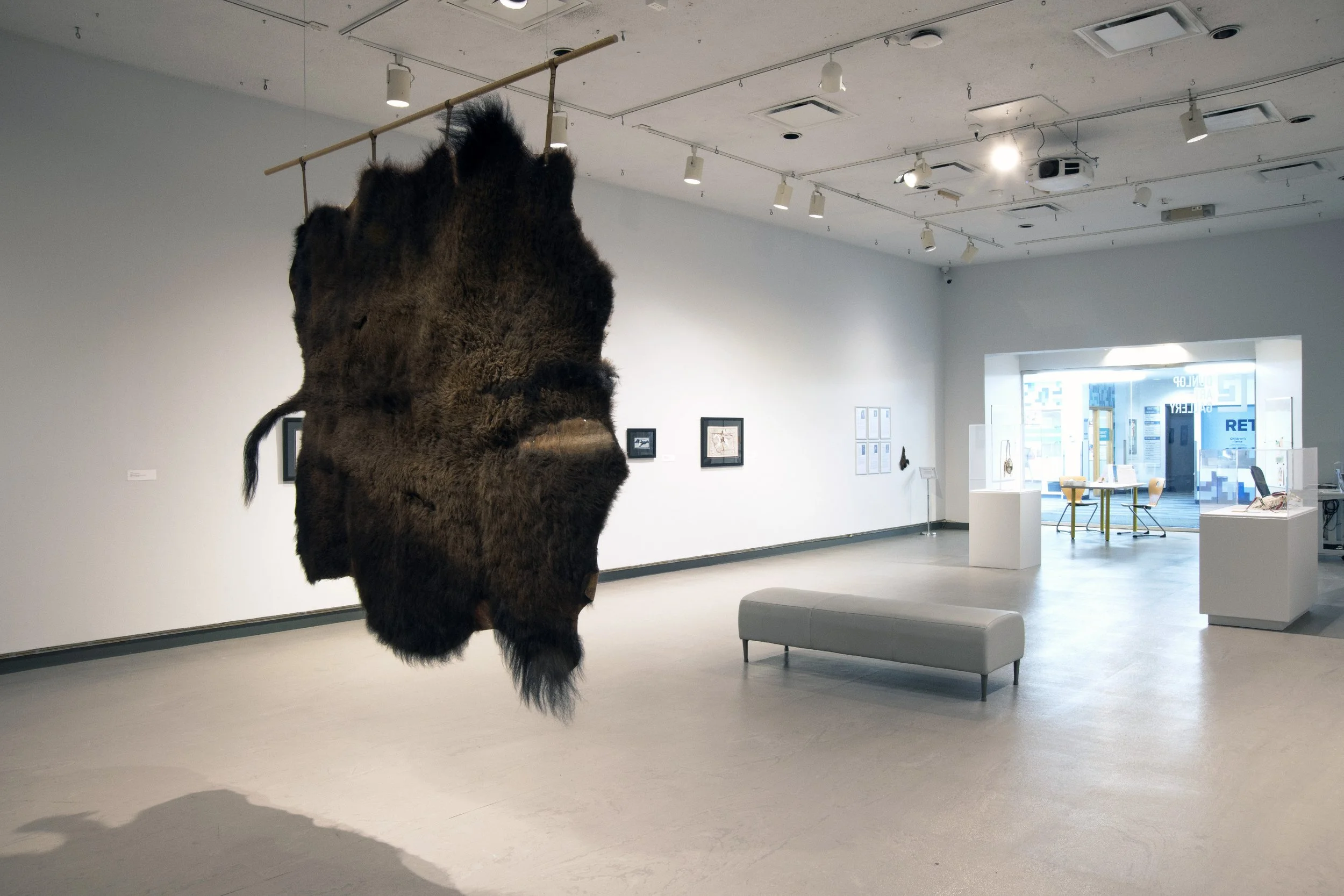
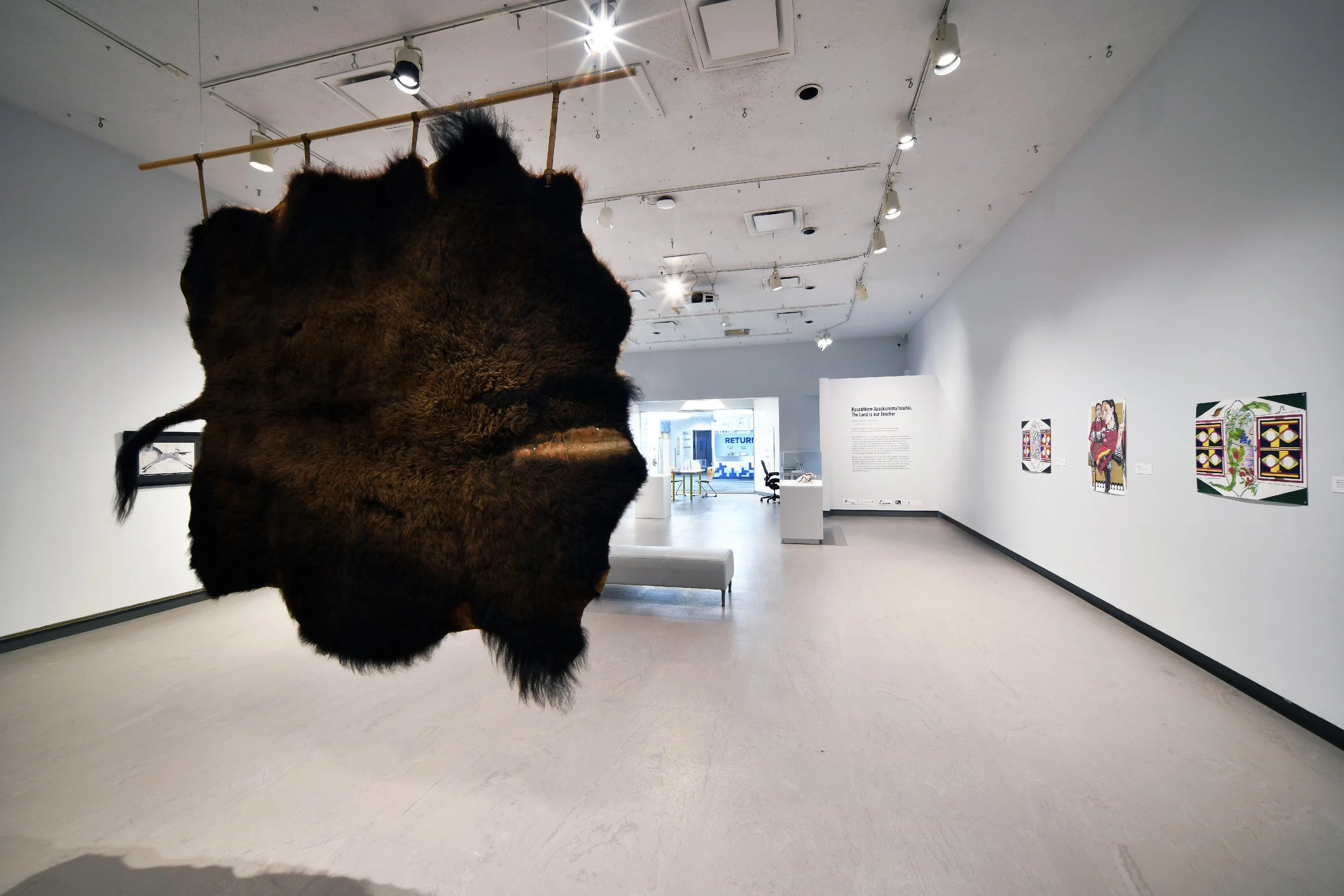
John Isaiah Pepion, Blue Roan, 2026, ink, colour pencil, and acrylic on antique ledger paper.
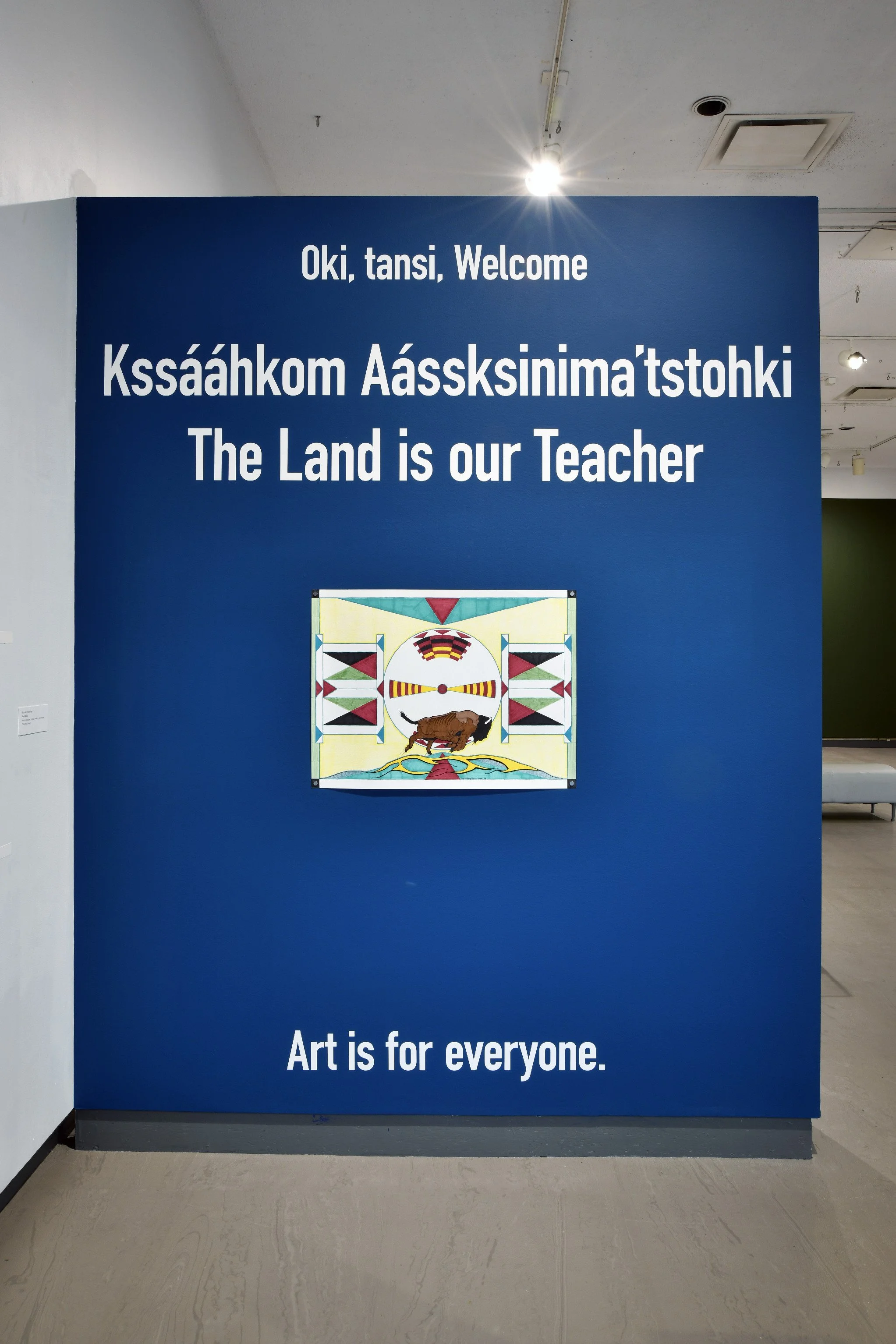
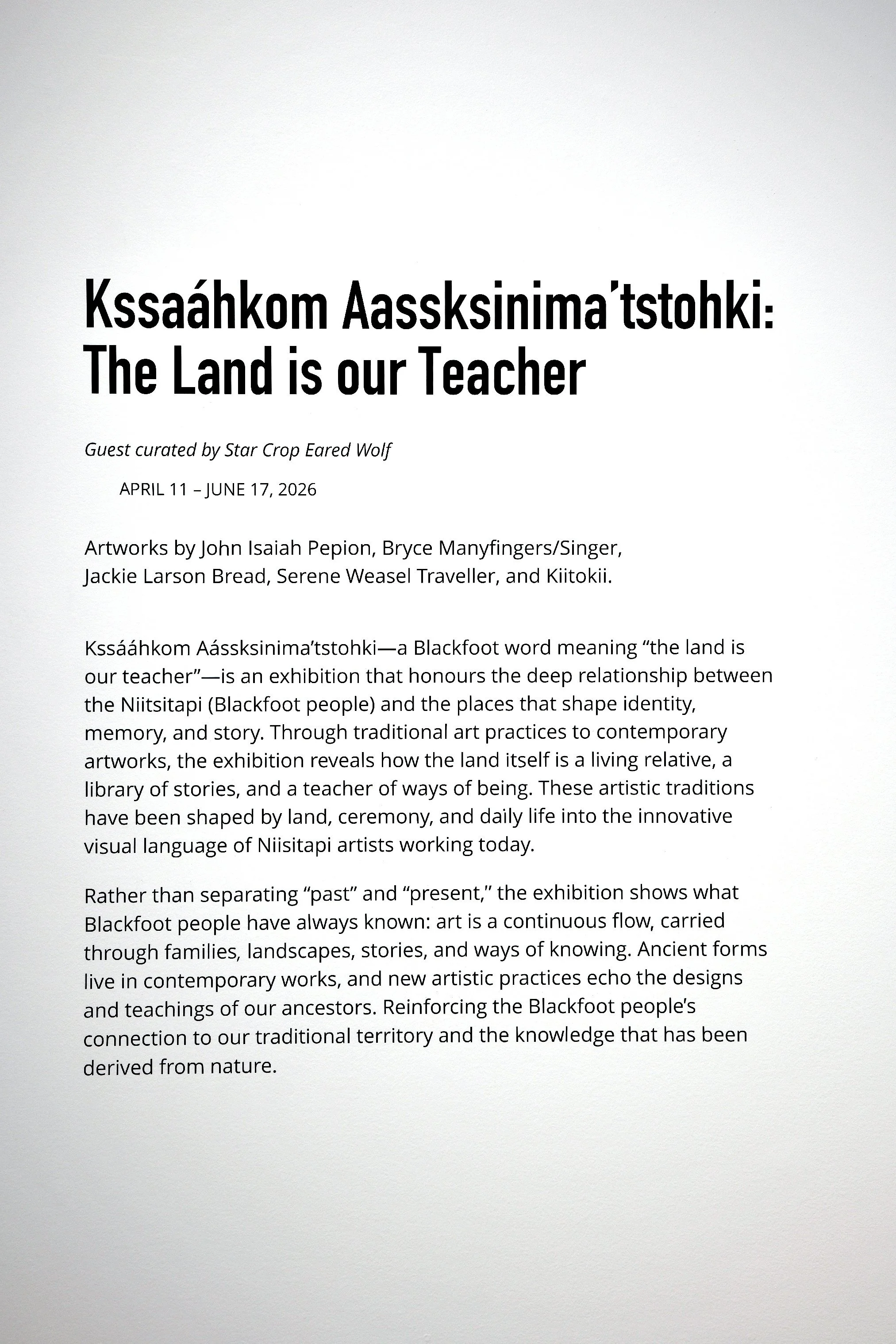
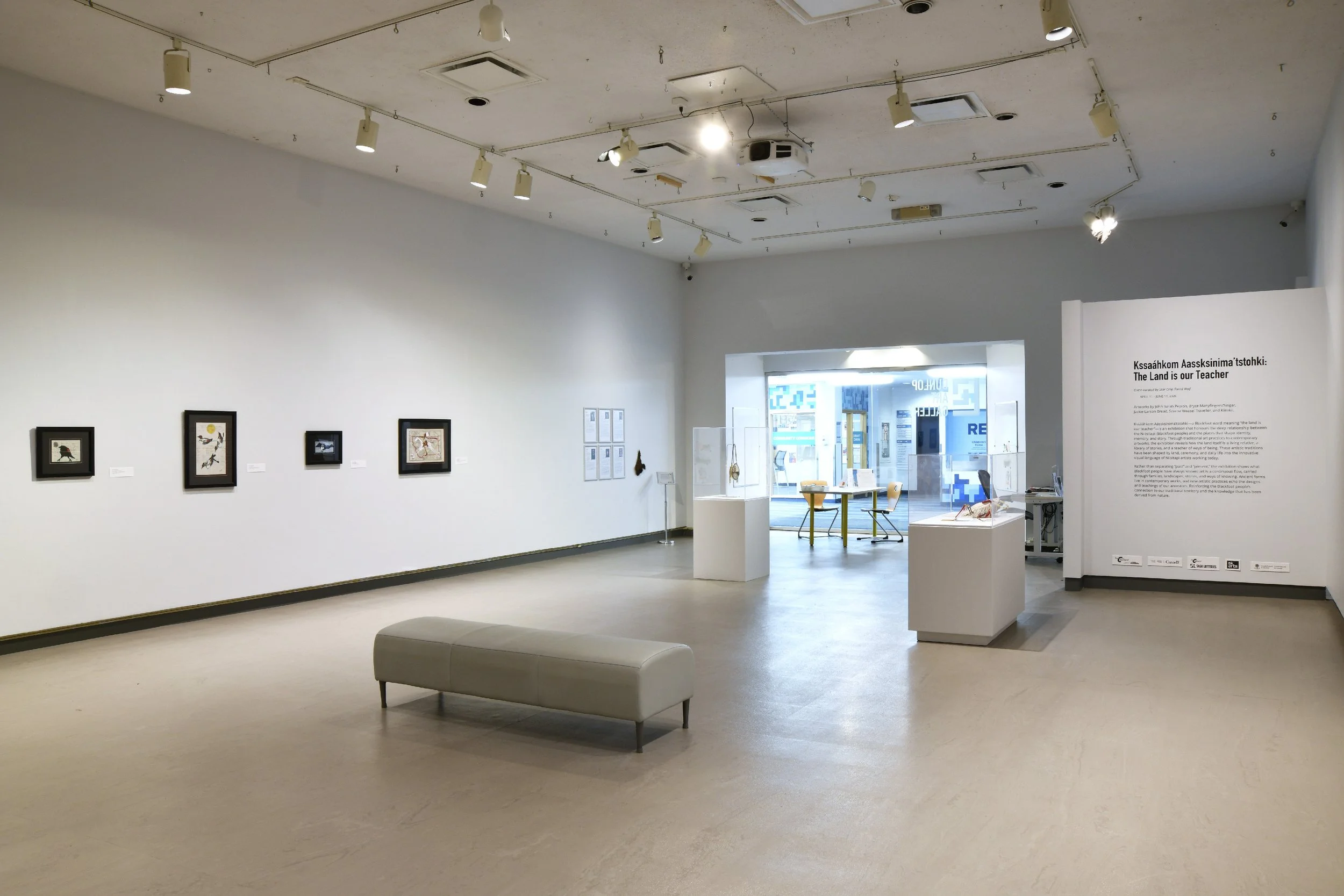
Kssááhkom Áássksinima’tstohki—a Blackfoot word meaning “the land is our teacher”—is an exhibition that honors the deep relationship between the Niitsitapi (Blackfoot people) and the places that shape identity, memory, and story. Through traditional art practices to contemporary artworks, the exhibition reveals how the land itself is a living relative, a library of stories, and a teacher of ways of being. These artistic traditions have been shaped by land, ceremony, and daily life into the innovative visual language of Niisitapi artists working today.
Rather than separating “past” and “present,” the exhibition shows what Blackfoot people have always known: art is a continuous flow, carried through families, landscapes, stories, and ways of knowing. Ancient forms live in contemporary works and new artistic practices echo the designs and teachings of our ancestors, reinforcing the Blackfoot people’s connection to our traditional territory and the knowledge that has been derived from nature.
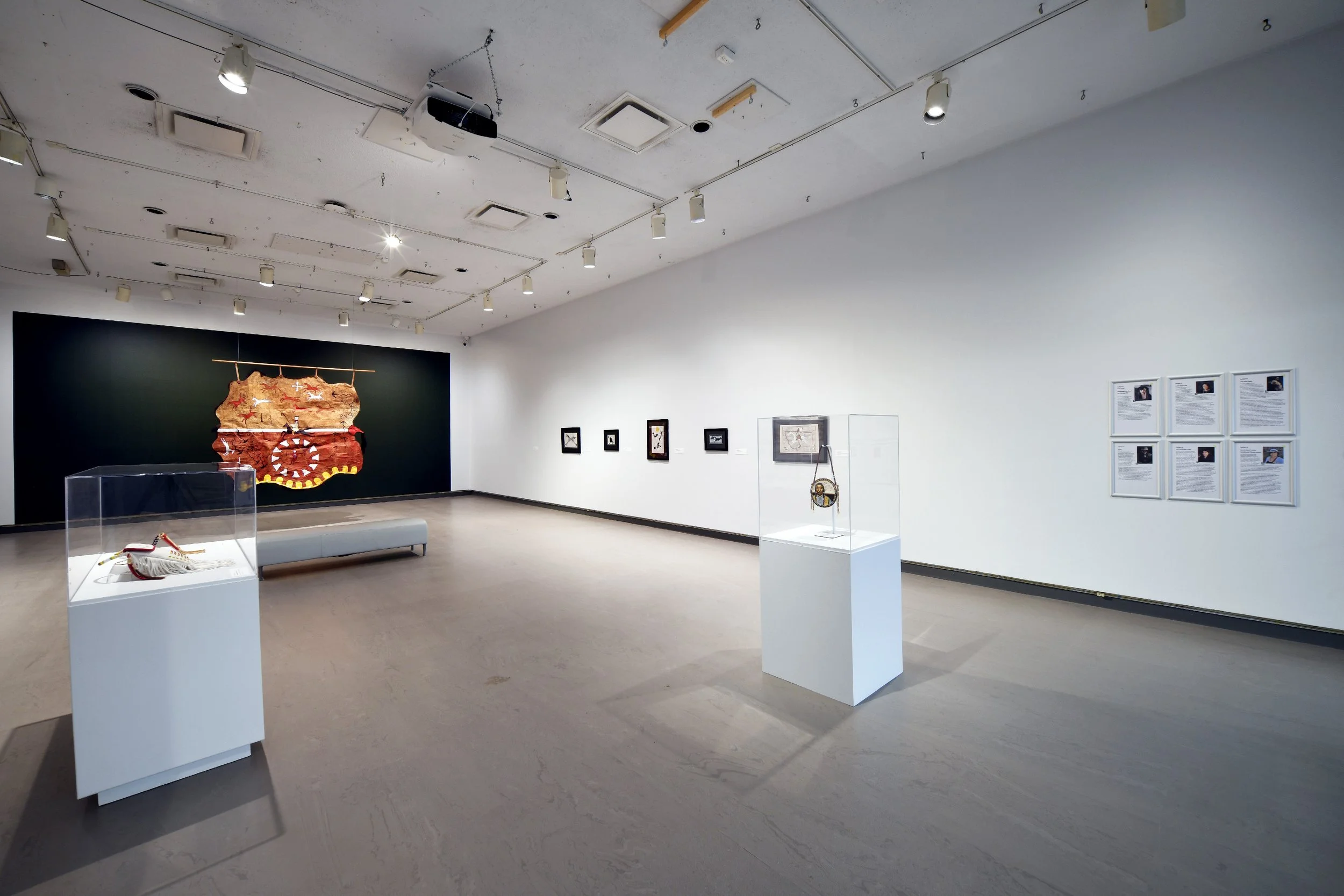
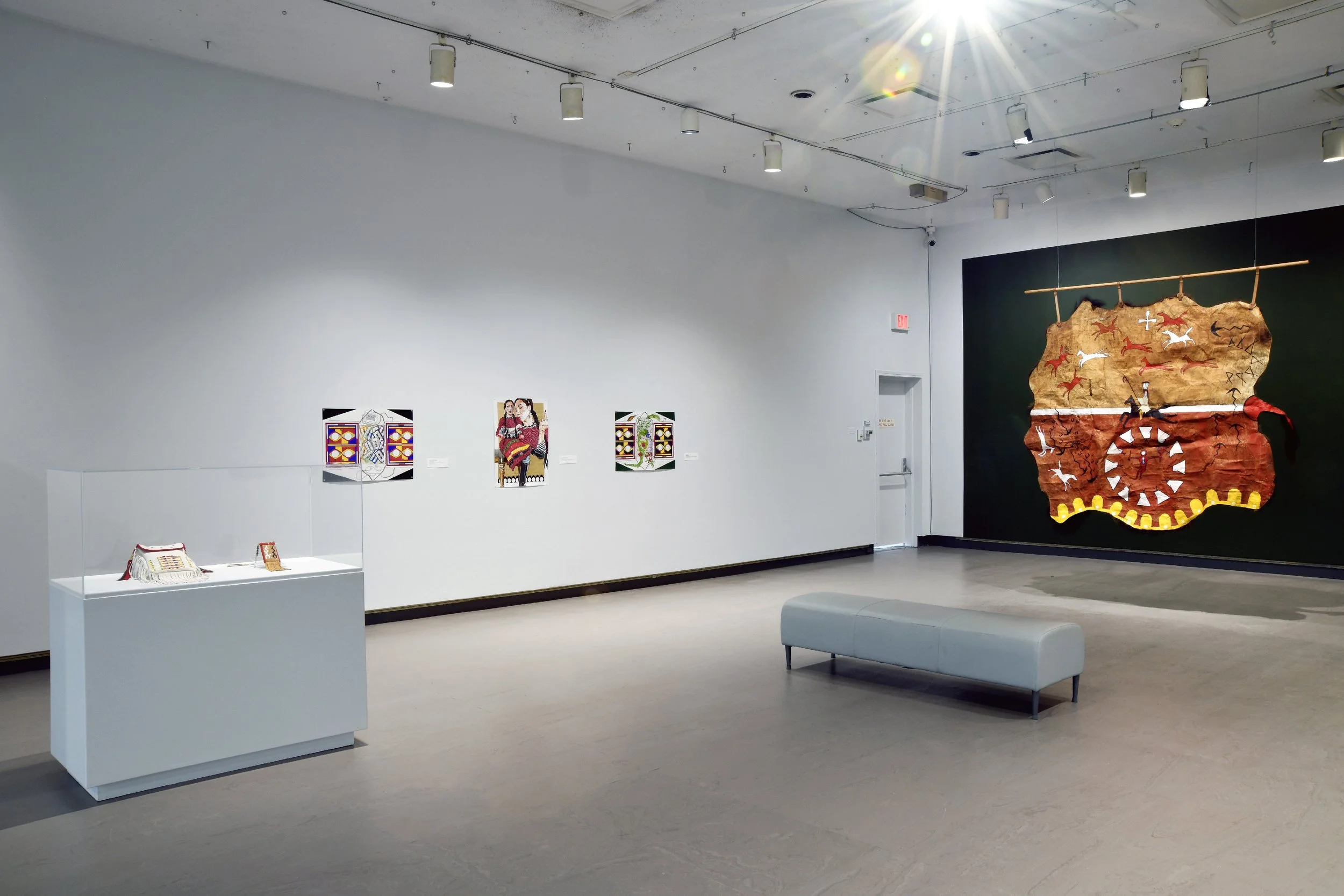
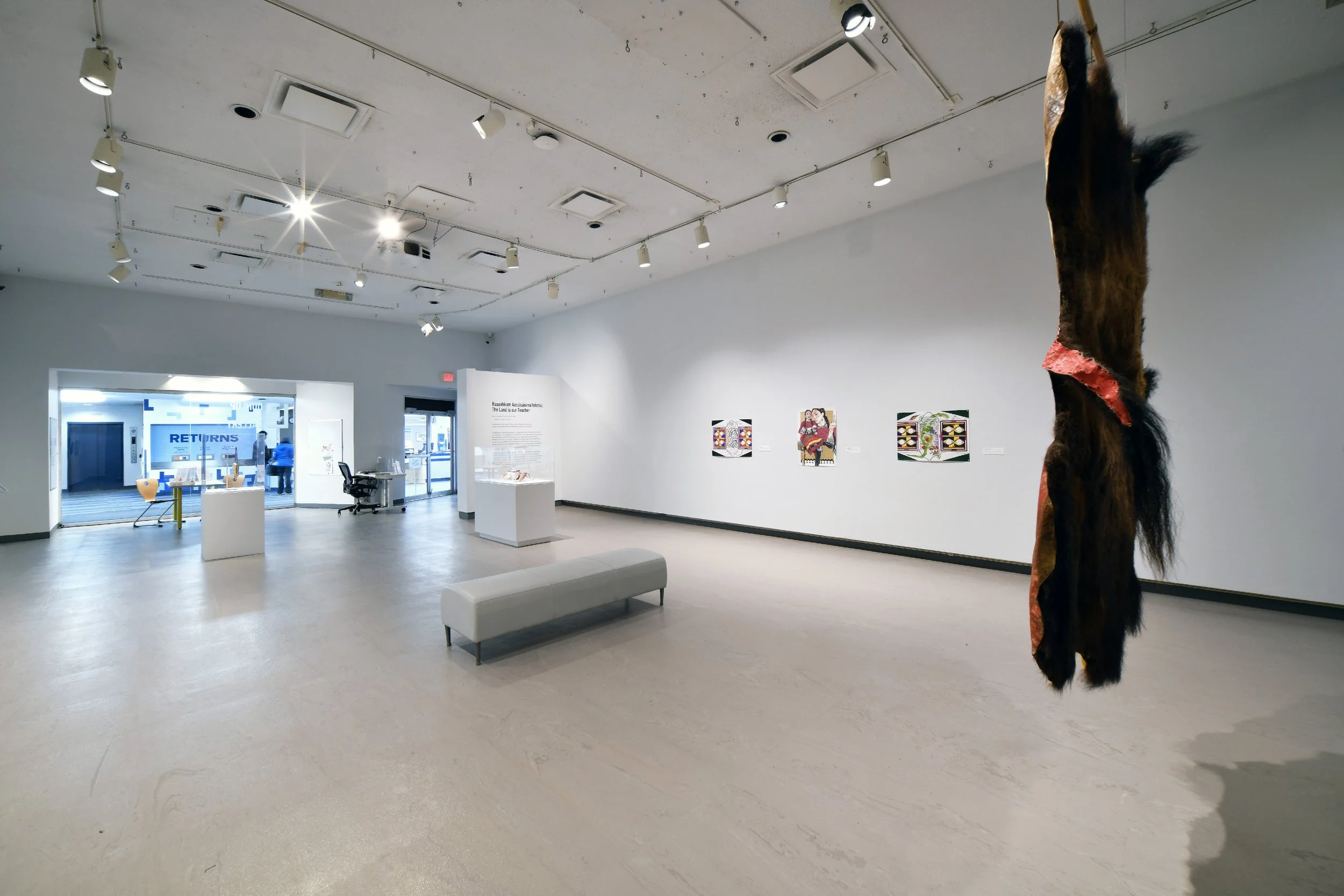
The exhibition gathers Blackfoot artists whose work reflects long-held relationships with the land, animals and cosmos. Through hide painting, ledger art, digital art, beadwork, and quillwork these artists show the land not as scenery but as a storyteller. Niisitapi/Blackfoot art remains rooted in identity, and our close relationship to the environment.
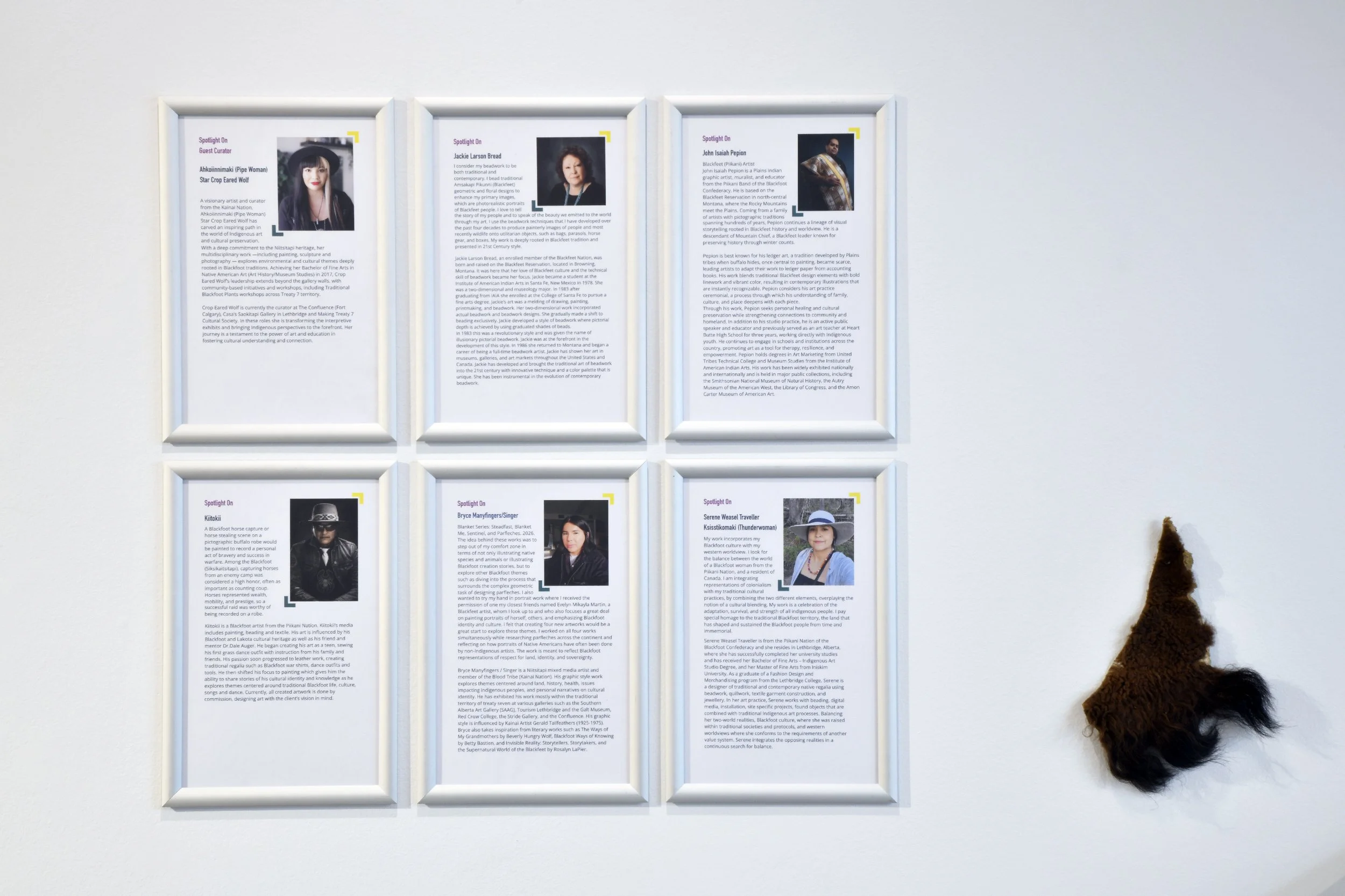
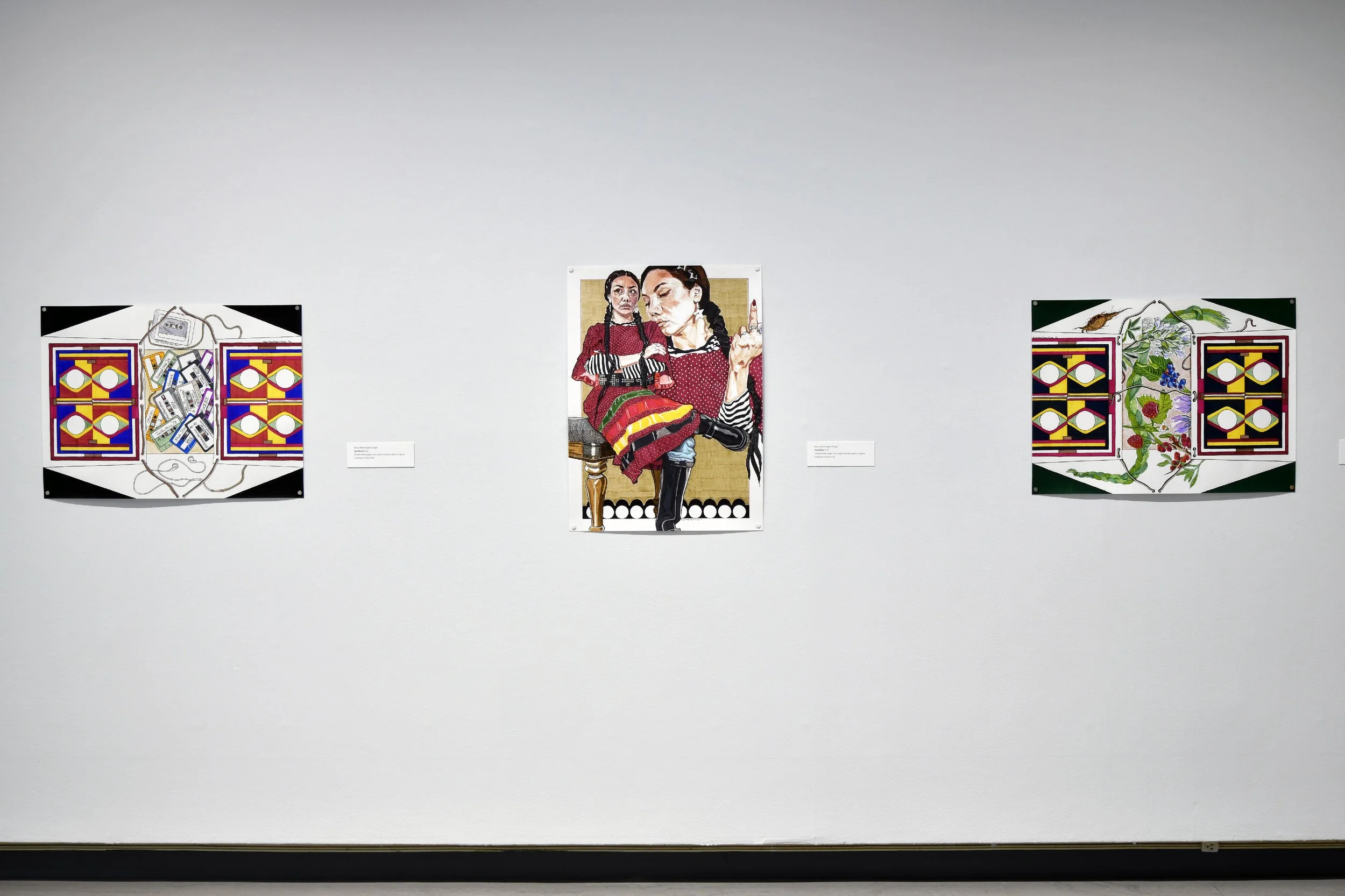
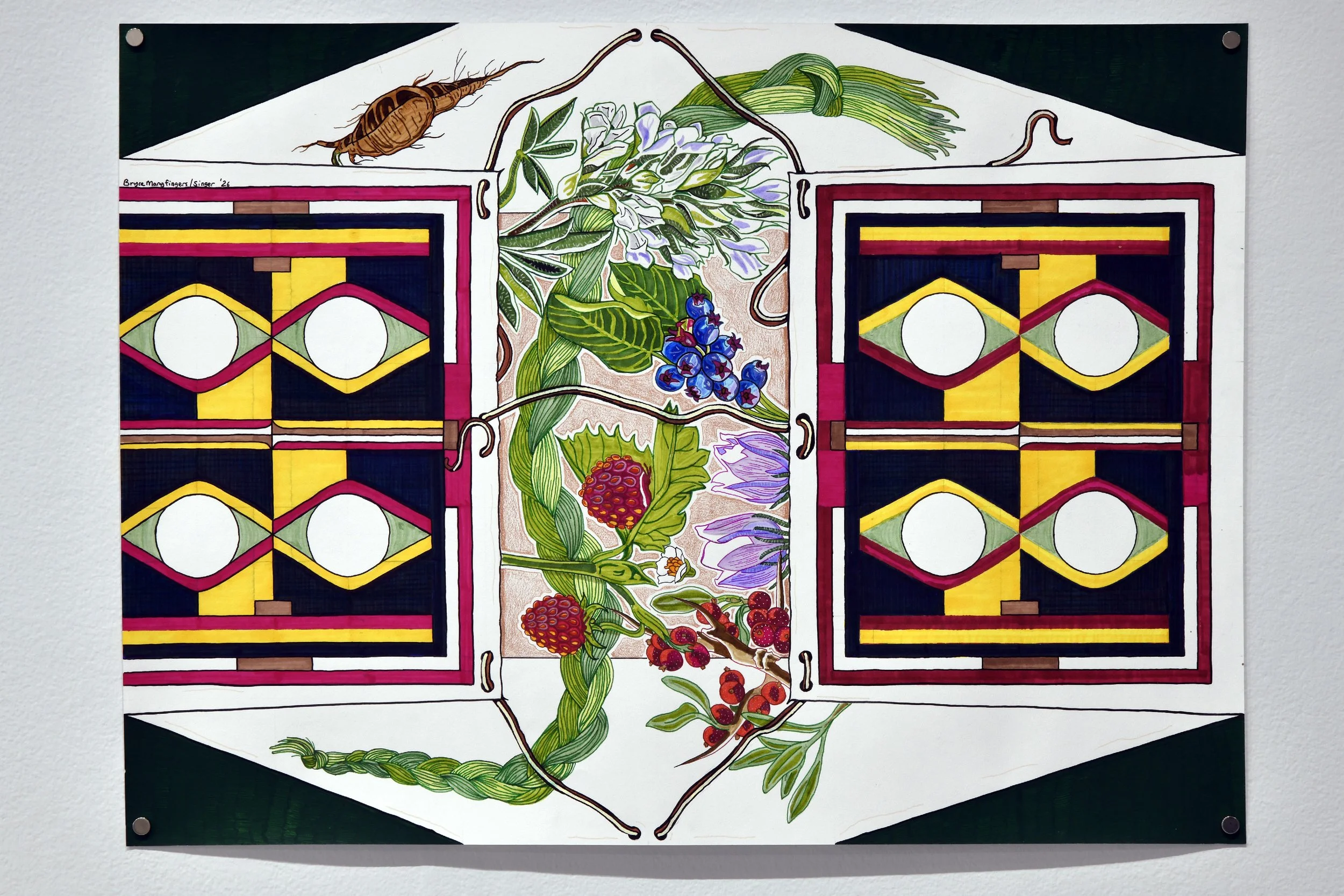
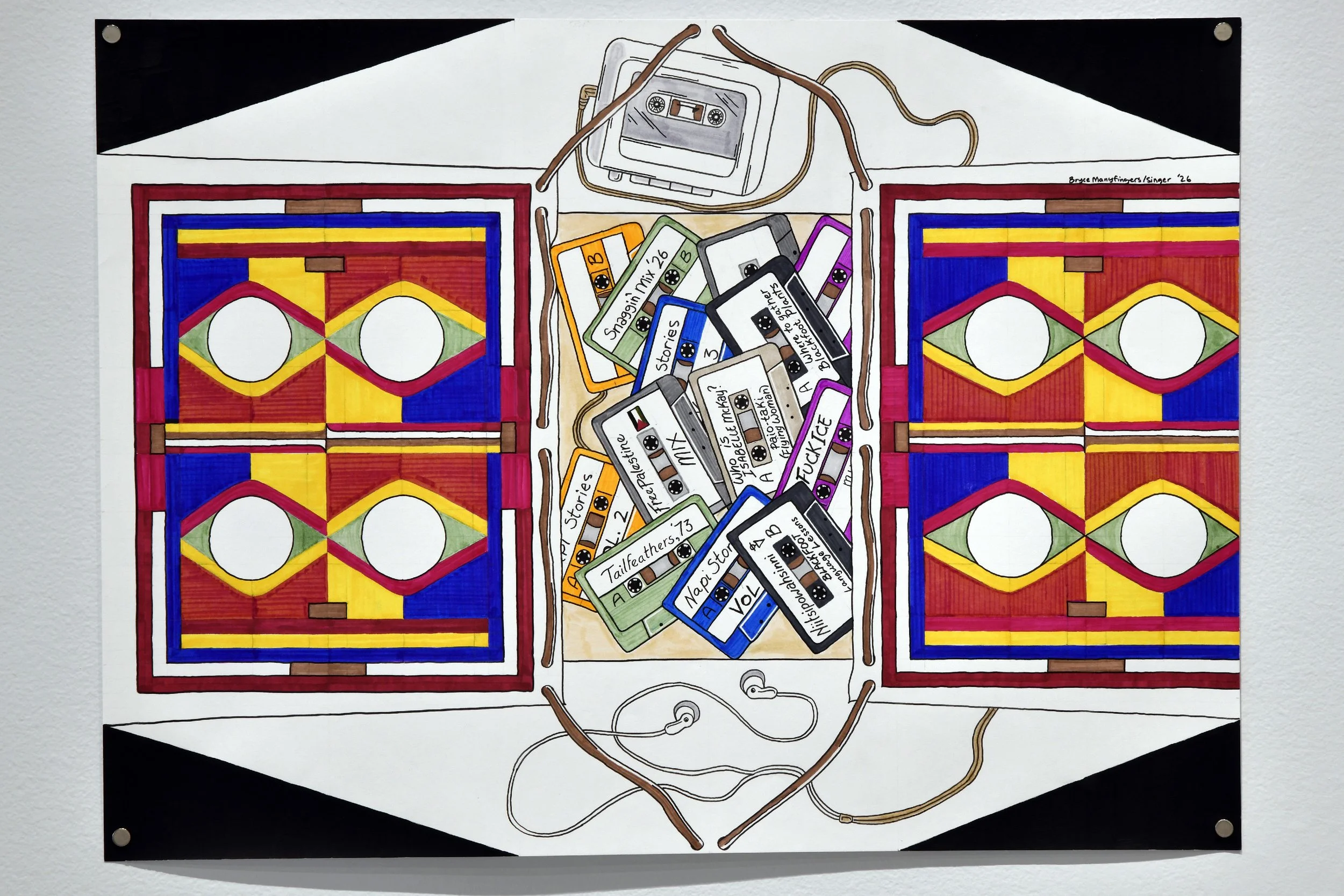
Artworks by John Isaiah Pepion, Bryce Manyfingers/Singer, Jackie Larson Bread, Serene Weasel Traveller, and Kiitokii.
Essay ↑
Kssááhkom Áássksinima’tstohki: The Land is our Teacher
Guest curated and essay written by Star Crop Eared Wolf
Artworks by: John Isaiah Pepion, Bryce Manyfingers/Singer, Jackie Larson Bread, Serene Weasel Traveller, and Kiitokii.
Niitsitapi (Blackfoot) art is deeply rooted in the traditions that reflect and emphasize powerful relationships to the environment. The Land is our Teacher explores the knowledge, identity, and creativity that comes from the close relationship Blackfoot people have with the natural world. For the Blackfoot people, the land is not just a physical space but a living source of guidance, history, and spiritual meaning.
Traditional Blackfoot art draws inspiration from the environment. Animals like buffalo, birds, horses and wolves frequently appear in designs, symbolizing survival, strength, resilience and connection. These artistic expressions are not merely decorative; they carry teachings learned from observing nature—how to live respectfully, adapt to change, and maintain balance.
The phrase “the land is our teacher” also reflects how knowledge is passed down. Skills and stories are shared through generations, often learned outdoors through direct experience with the land. For example, the preparation of hides, the gathering of natural paints, and the creation of patterns all require an intimate understanding of the environment. In this way, art becomes a form of learning and cultural preservation.
In contemporary times, Blackfoot artists continue to honour these traditions while also addressing modern issues such as environmental protection and cultural identity. Their work reminds us that the land holds wisdom, and by listening to it, we can better understand our place in the world. Ultimately, Blackfoot art teaches that creativity is not separate from nature but is born from a respectful relationship with it.
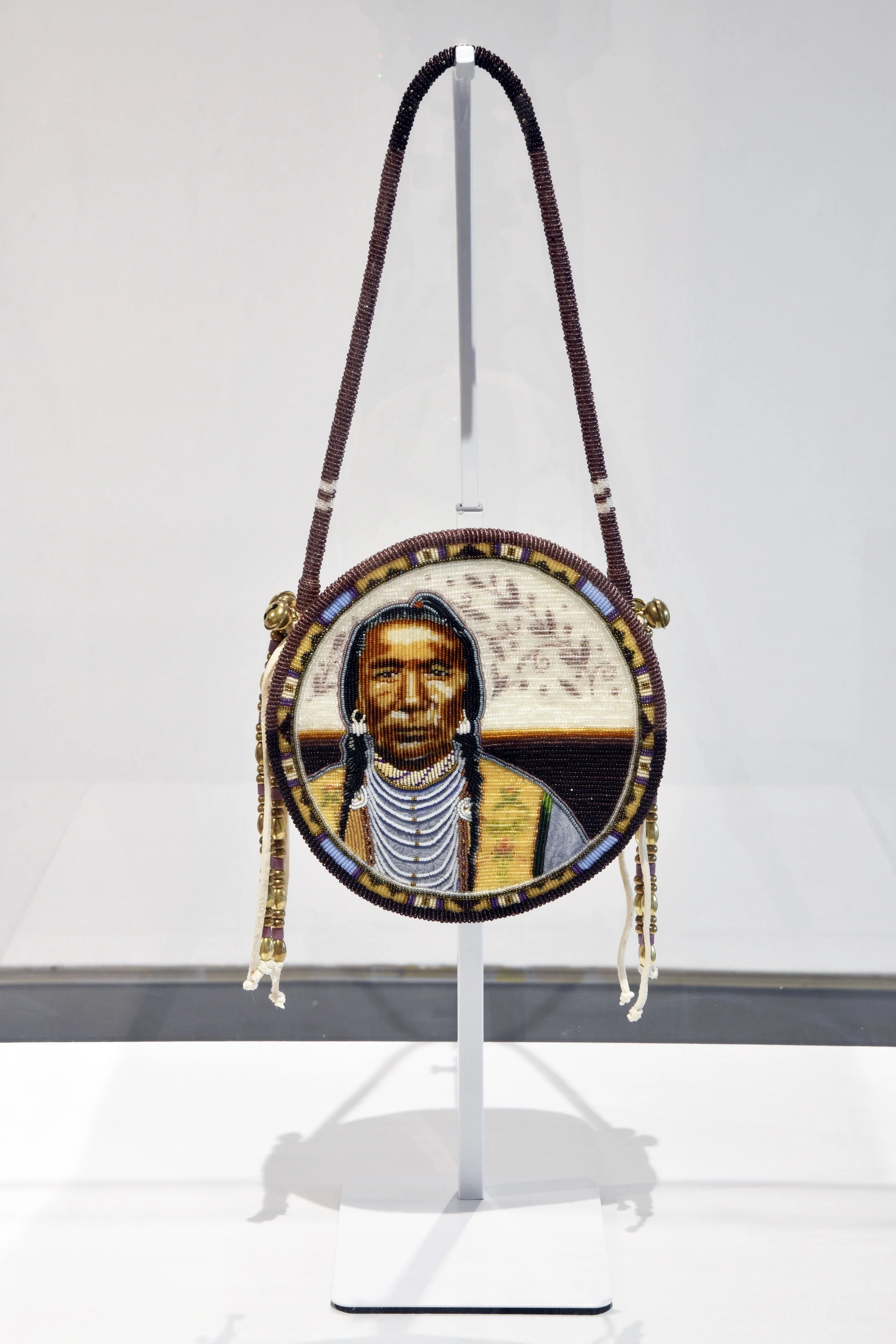
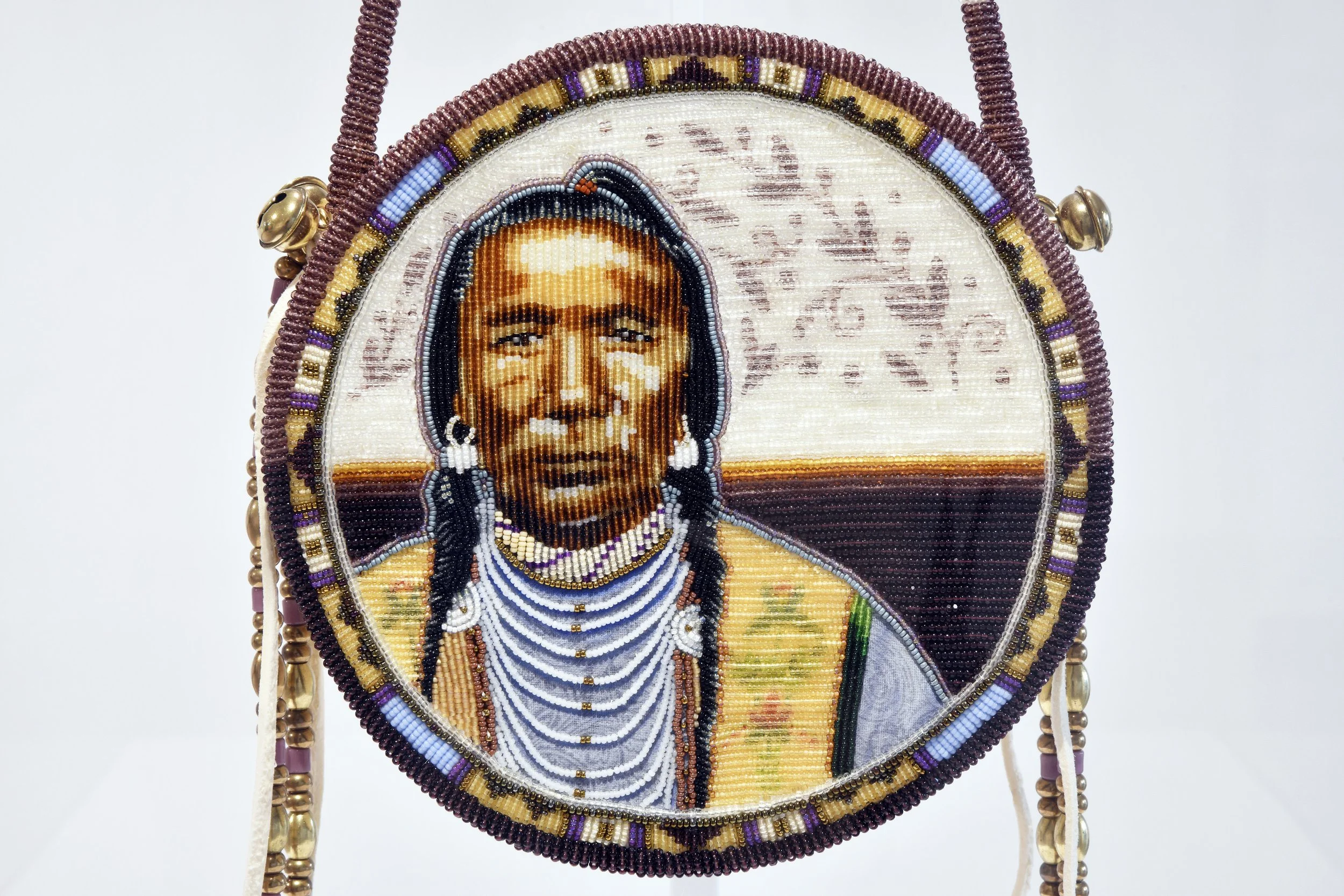
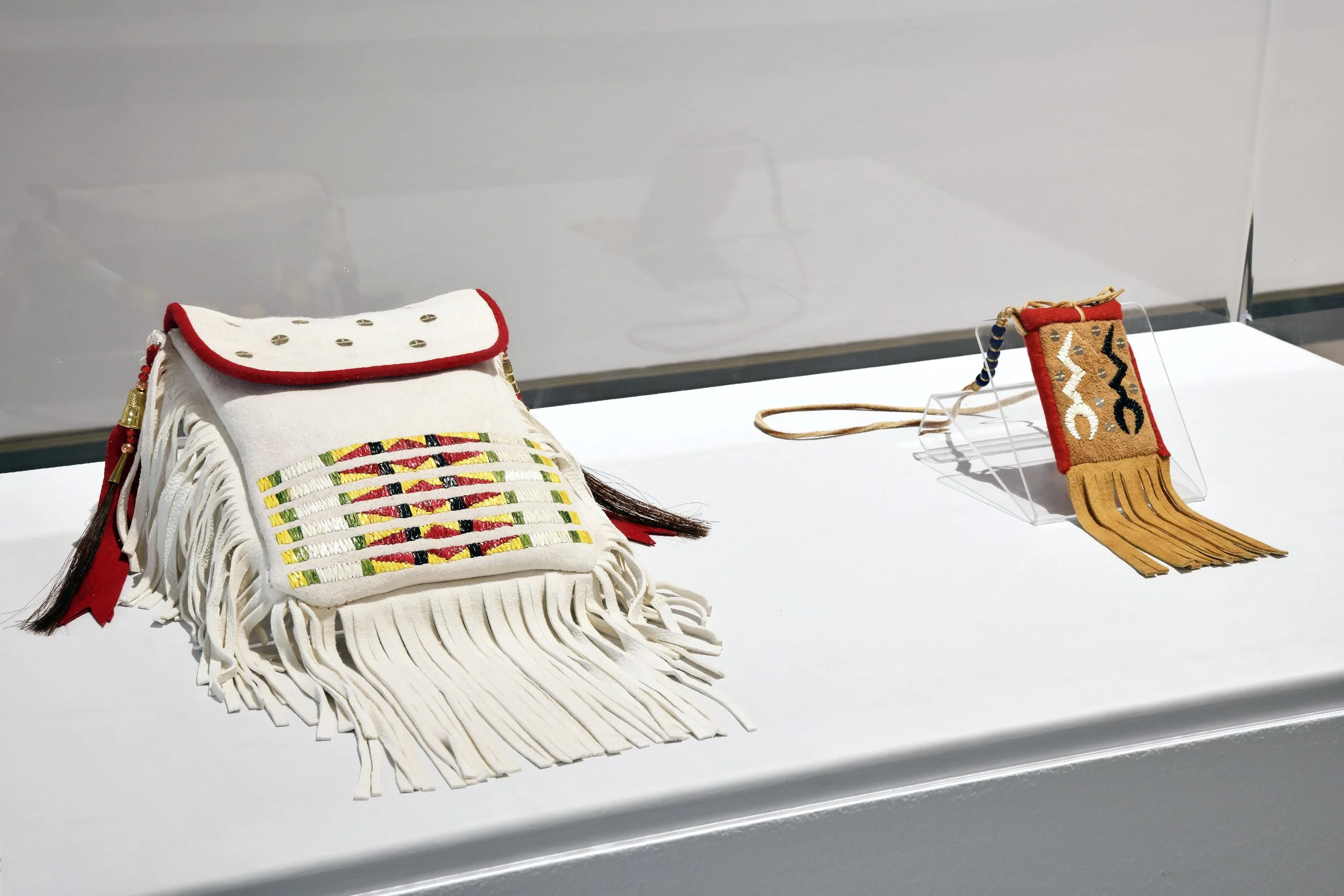
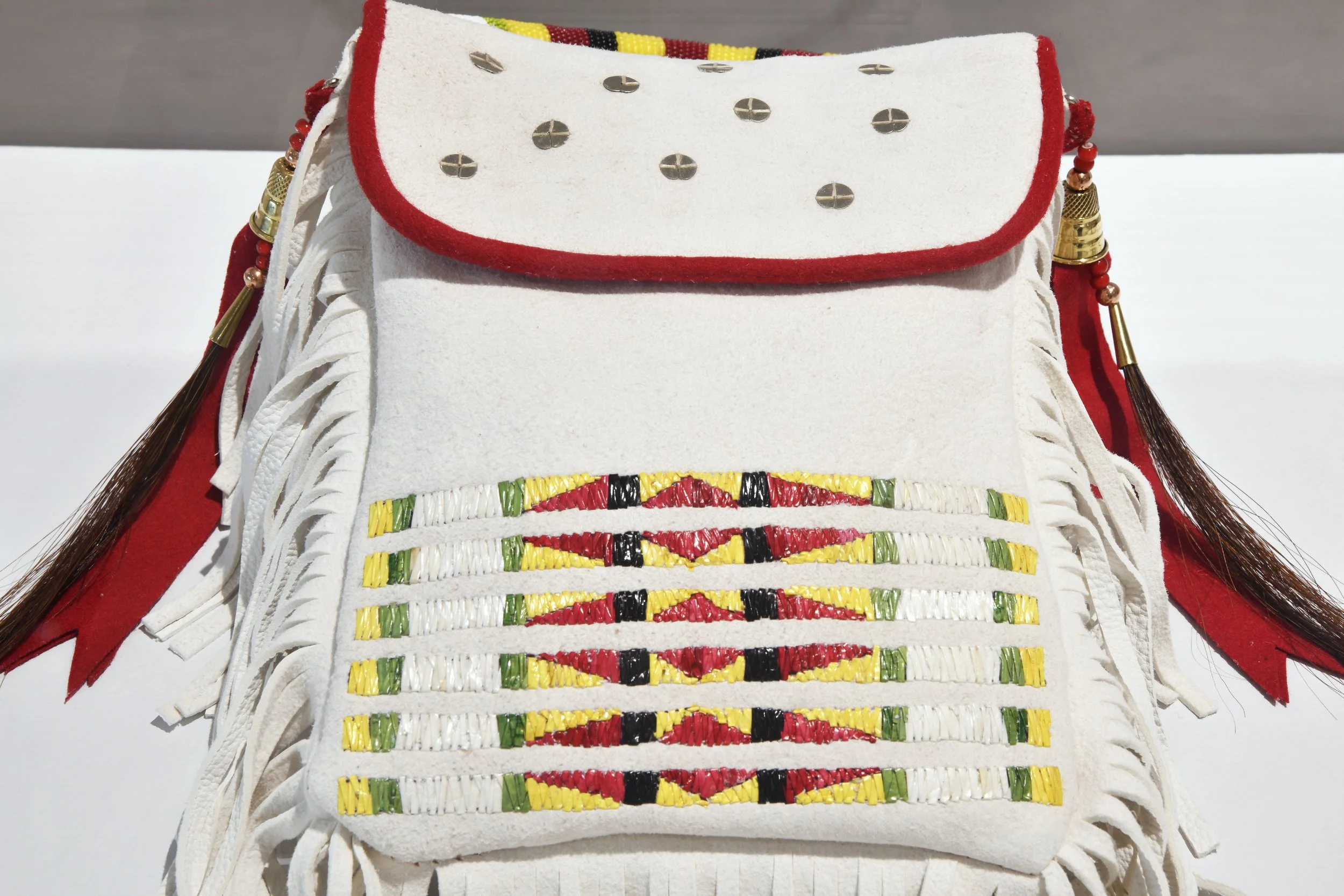
Through beadwork, quillwork, hide painting, ledger art and drawings these five artists translate these lessons into forms that can be held, worn, or displayed, turning observation into technique and memory into meaning.
In Blackfoot art, this rhythm is captured as repeated motifs and scenes, offering viewers a map of relationships: humans to the animals, to the plants, to our ancestors, and to the changes that seasons bring. The artist becomes a translator, taking the land’s language—its textures, scents, and sounds—and rendering them into visible form that can be shared across generations.
The land remains a living syllabus in contemporary Blackfoot art. Pepion, Manyfingers/Singer, Bread, Weasel Traveller, and Kiitokii blend traditional techniques with new media to highlight ancient teachings with renewed relevance.
Across these forms, the core message persists: to know the land is to know one’s place in a web of responsibilities—to honour memory, to sustain healing, and to teach future generations how to listen before they act.
Images ↑
Photos by Don Hall
Media ↑