
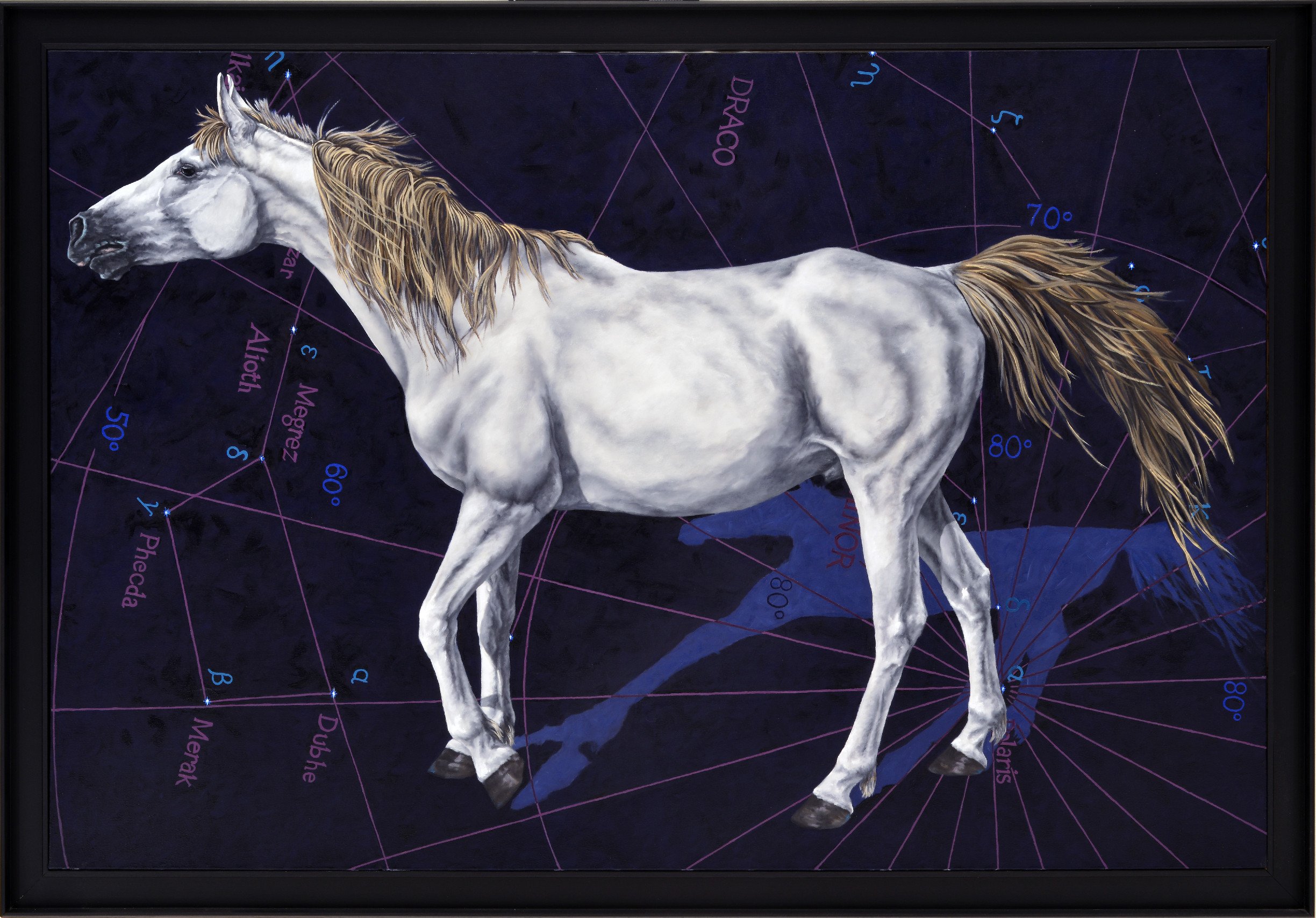
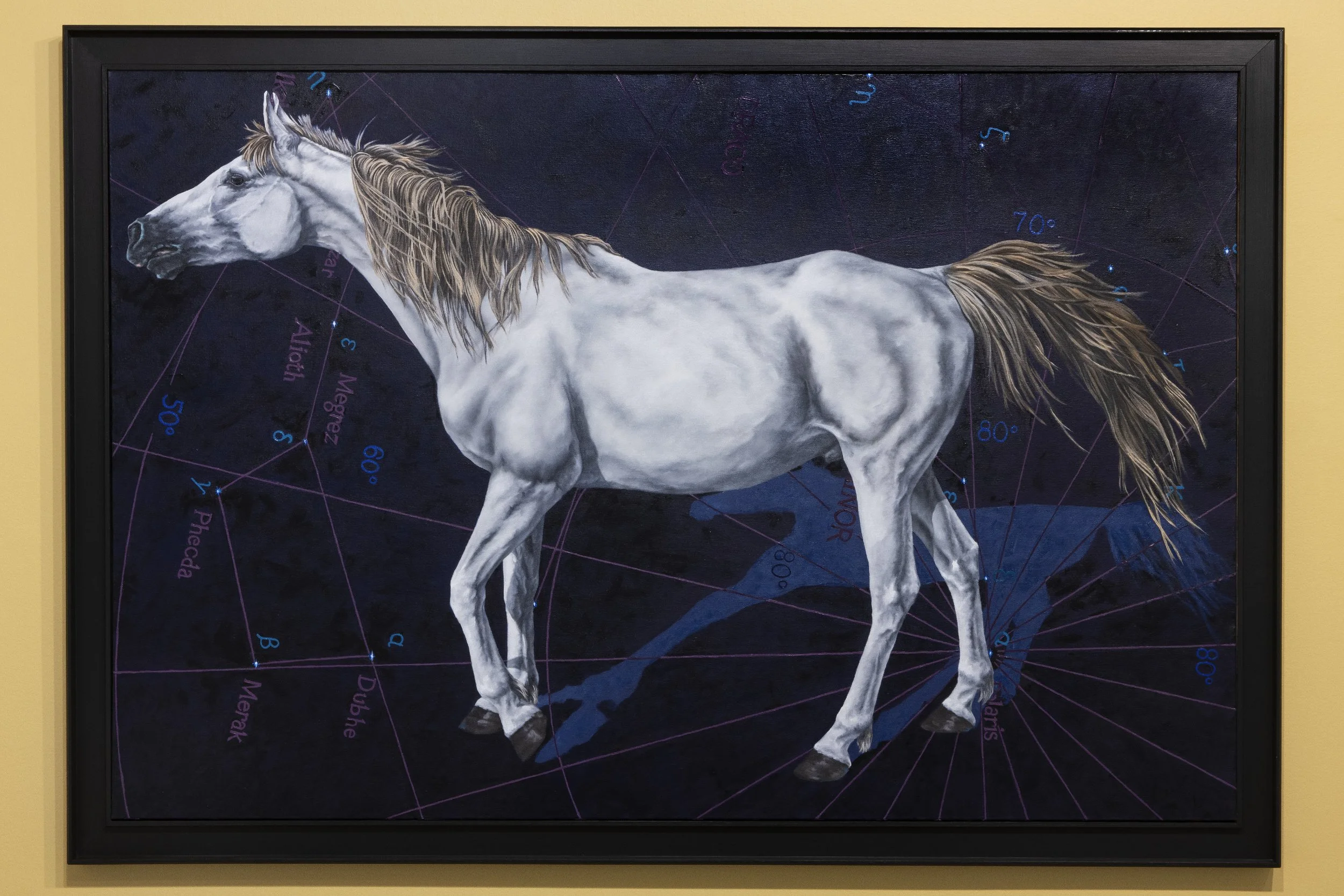
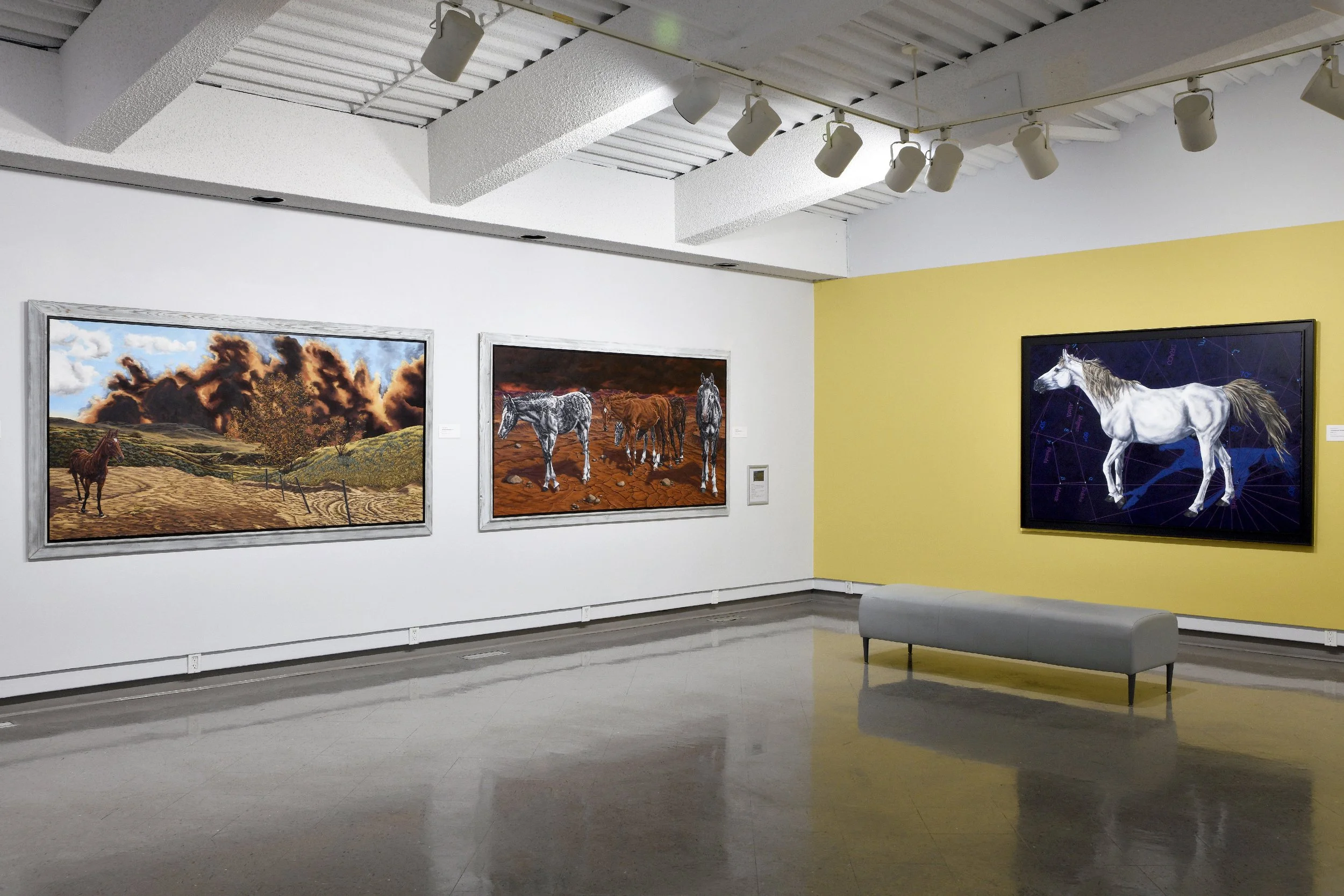
Continental Drift: Herd-Bound And A Long Way From Home, 2010, oil on canvas. Collection of the Regina Public Library Permanant Collection.
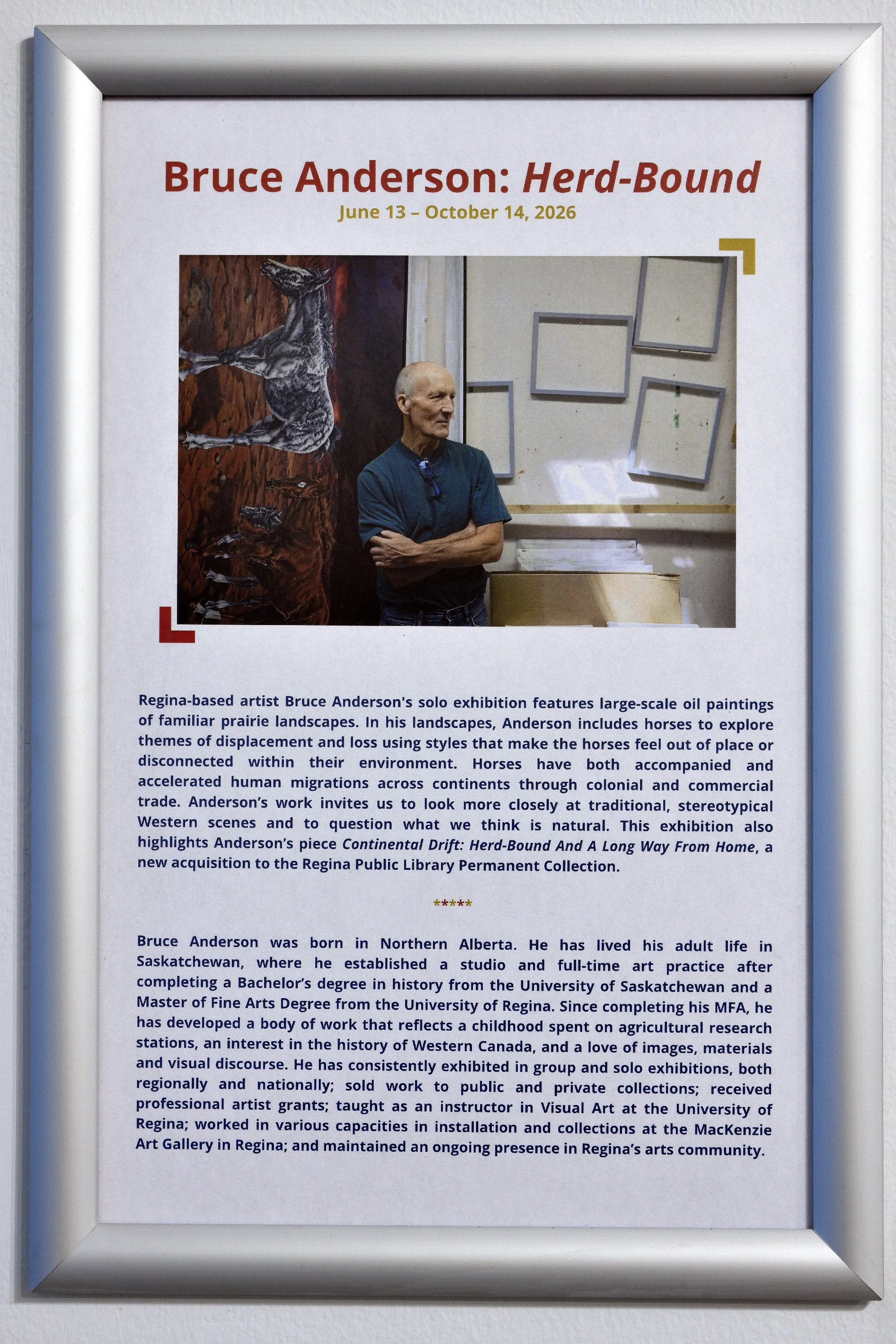
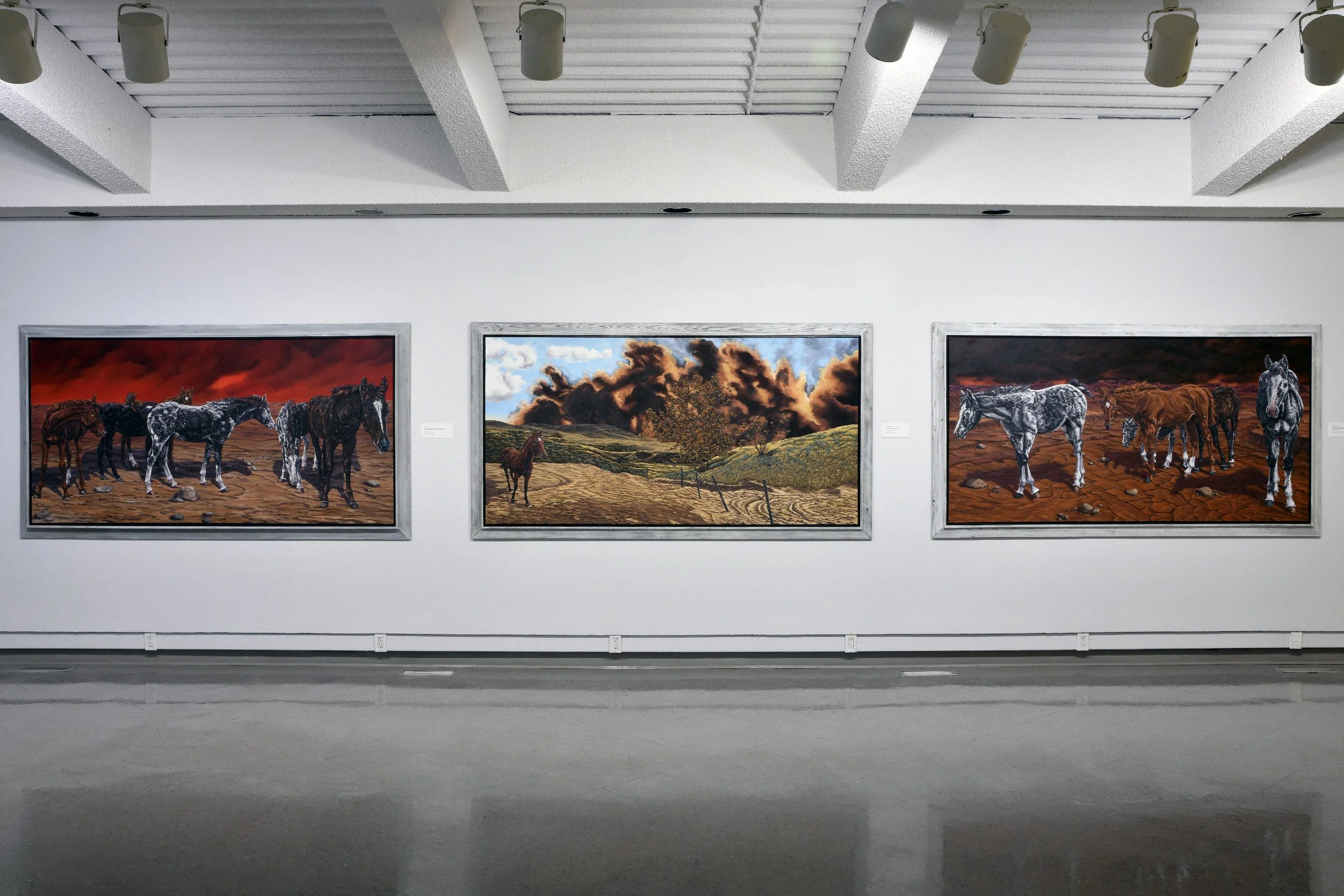
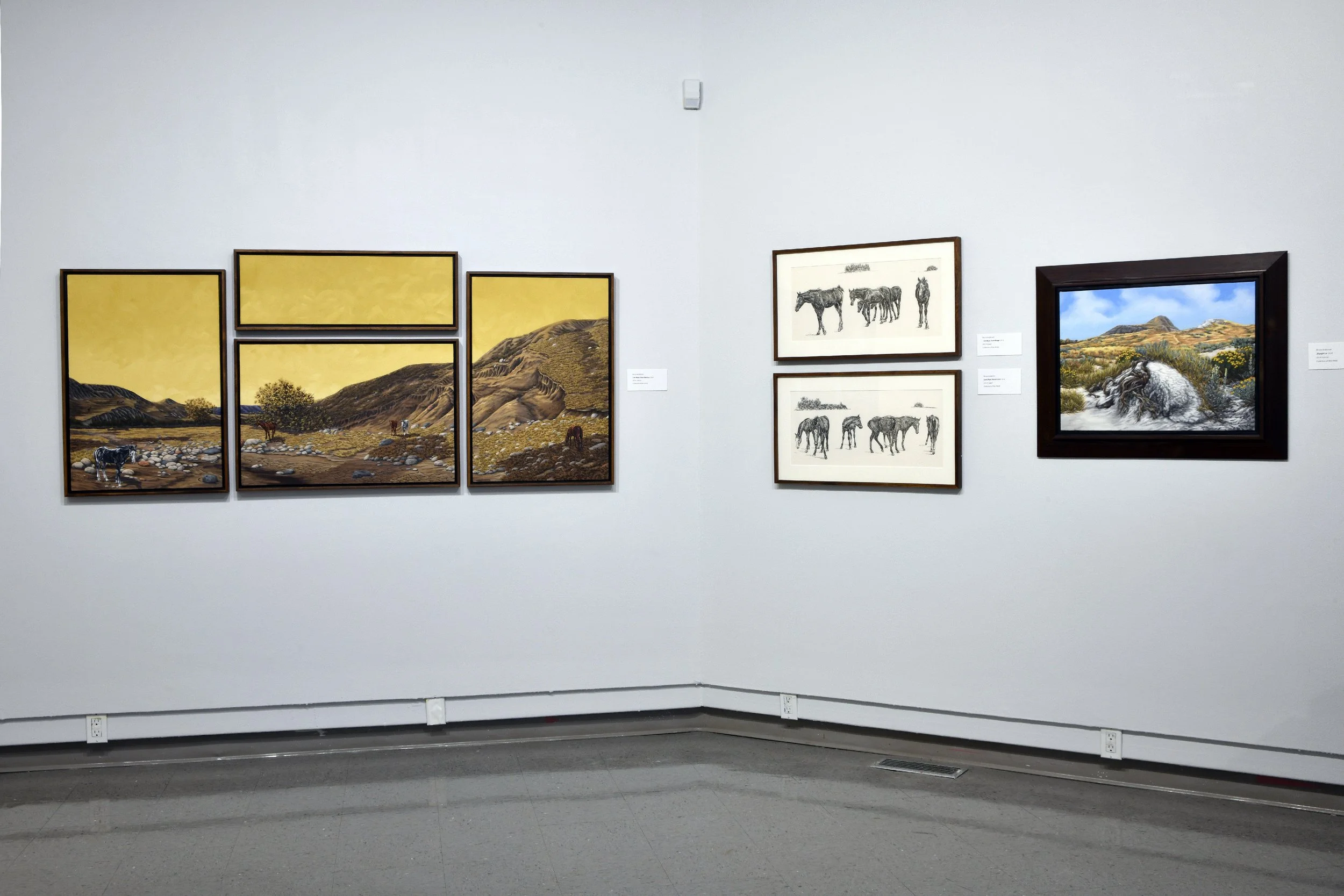
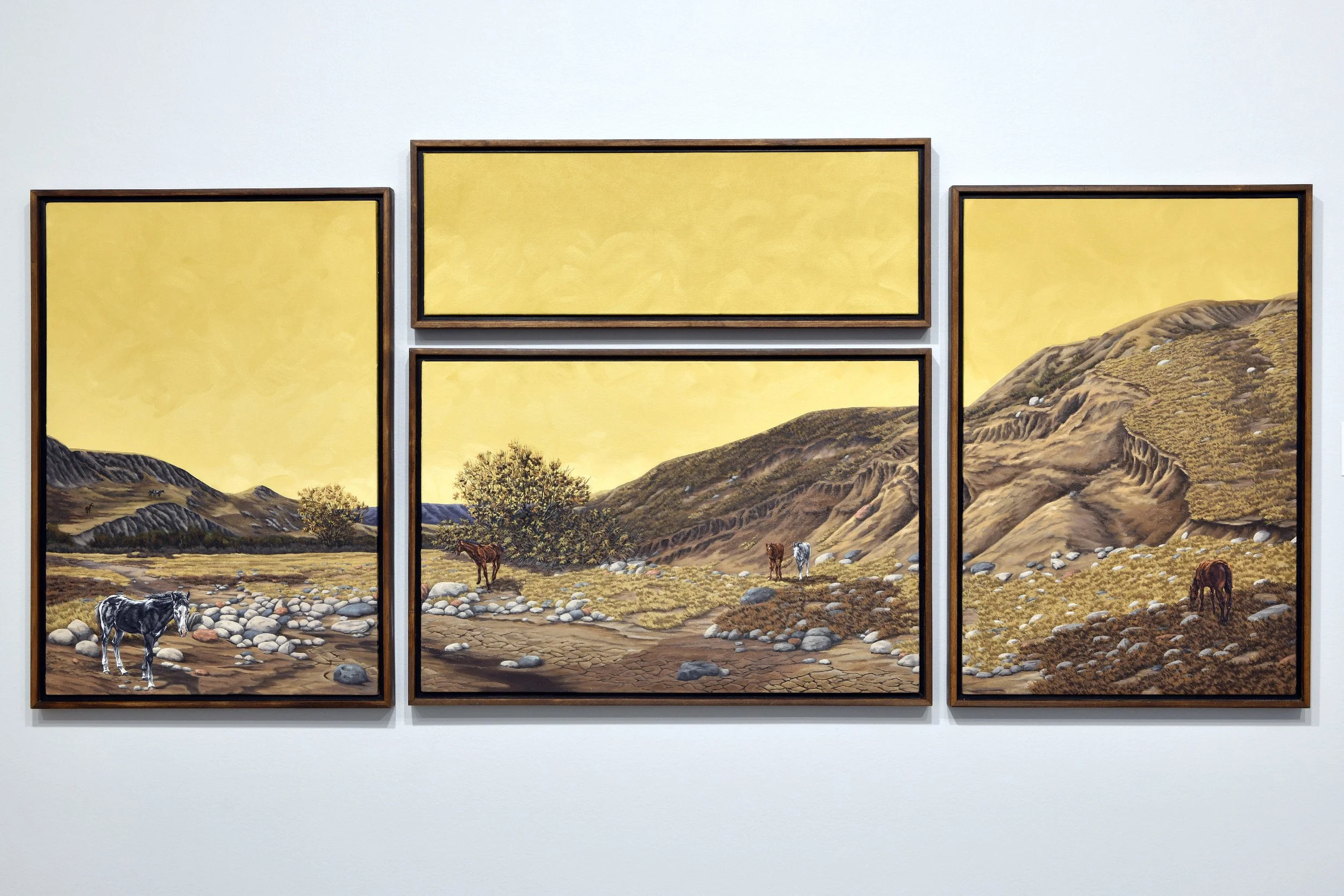
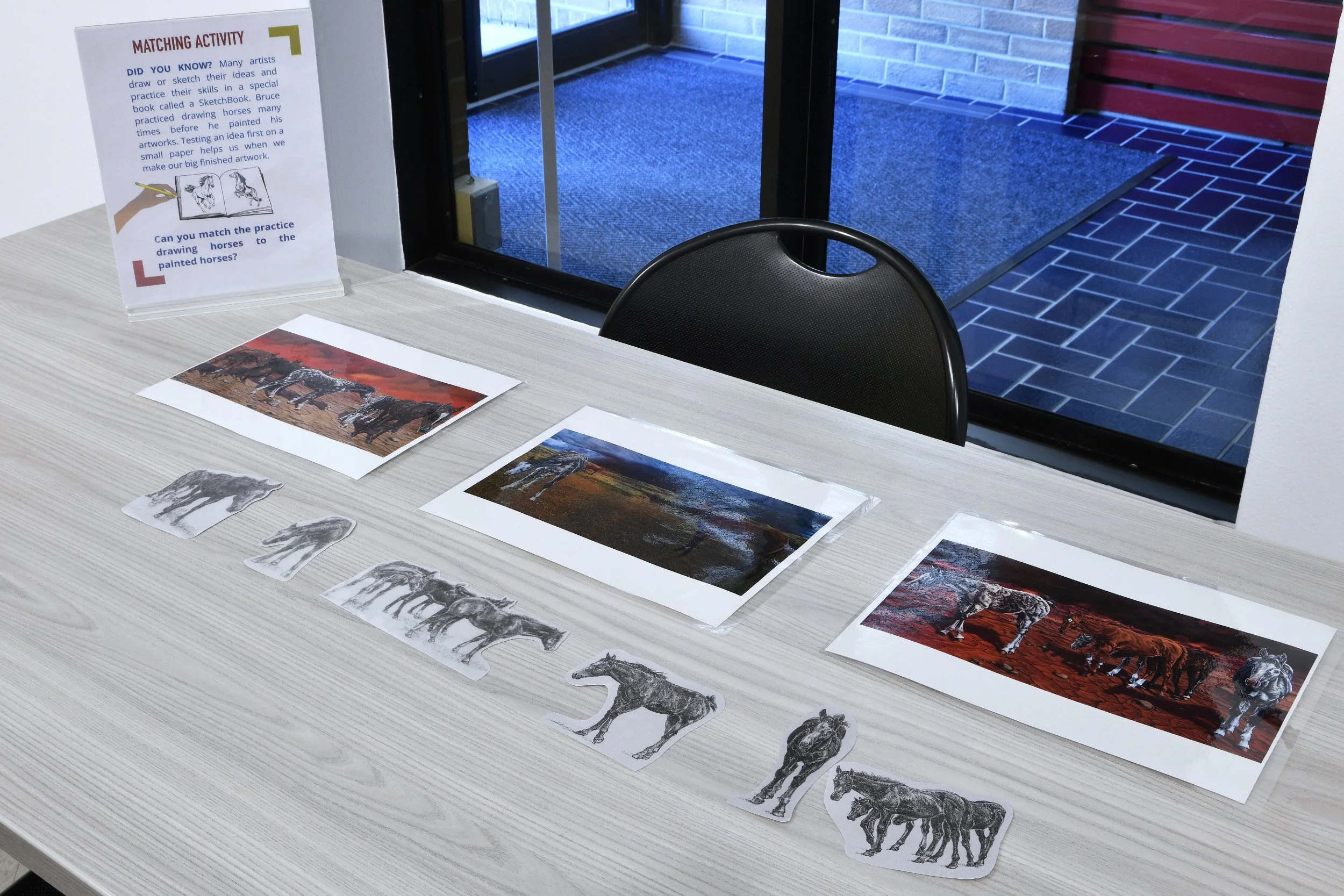
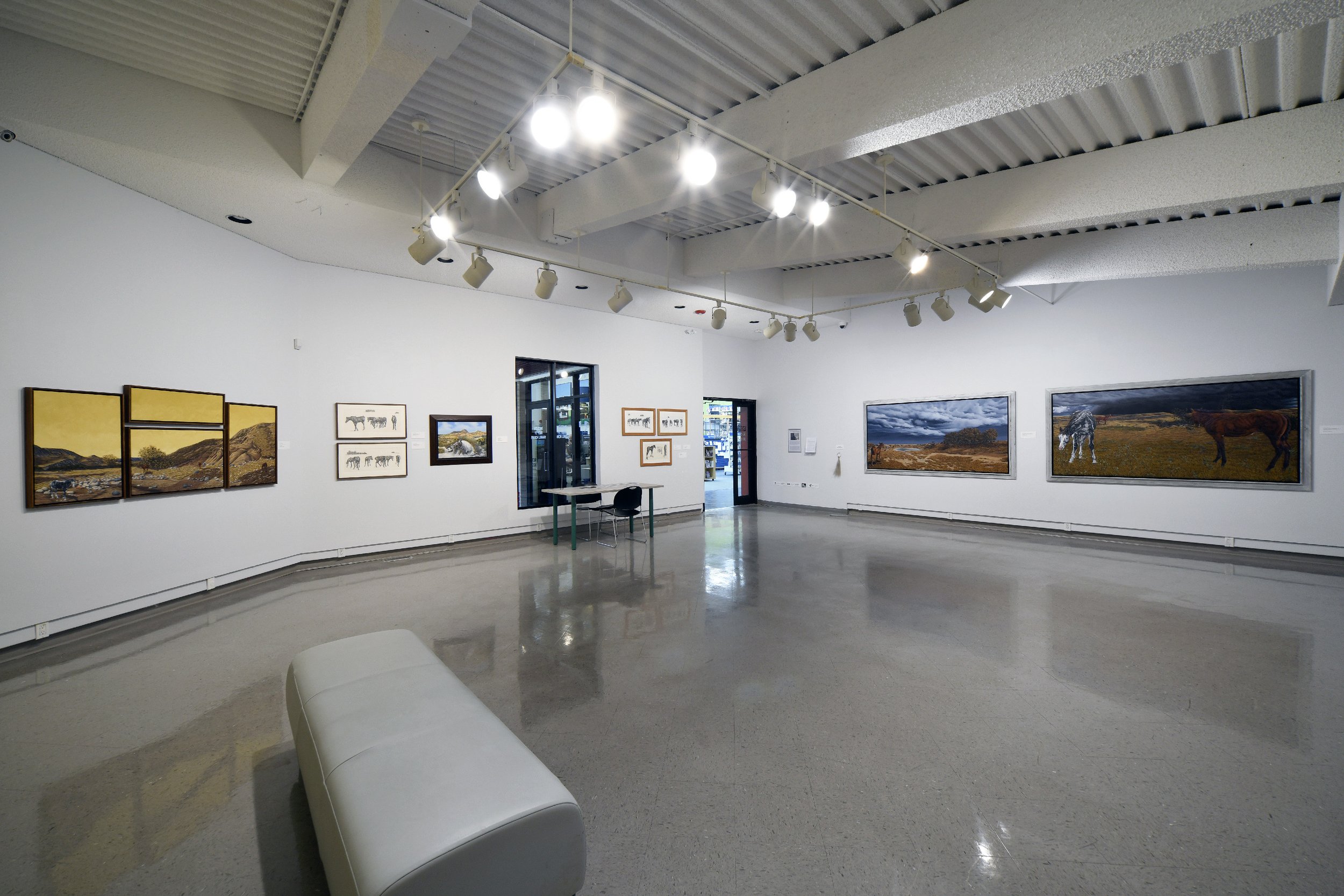
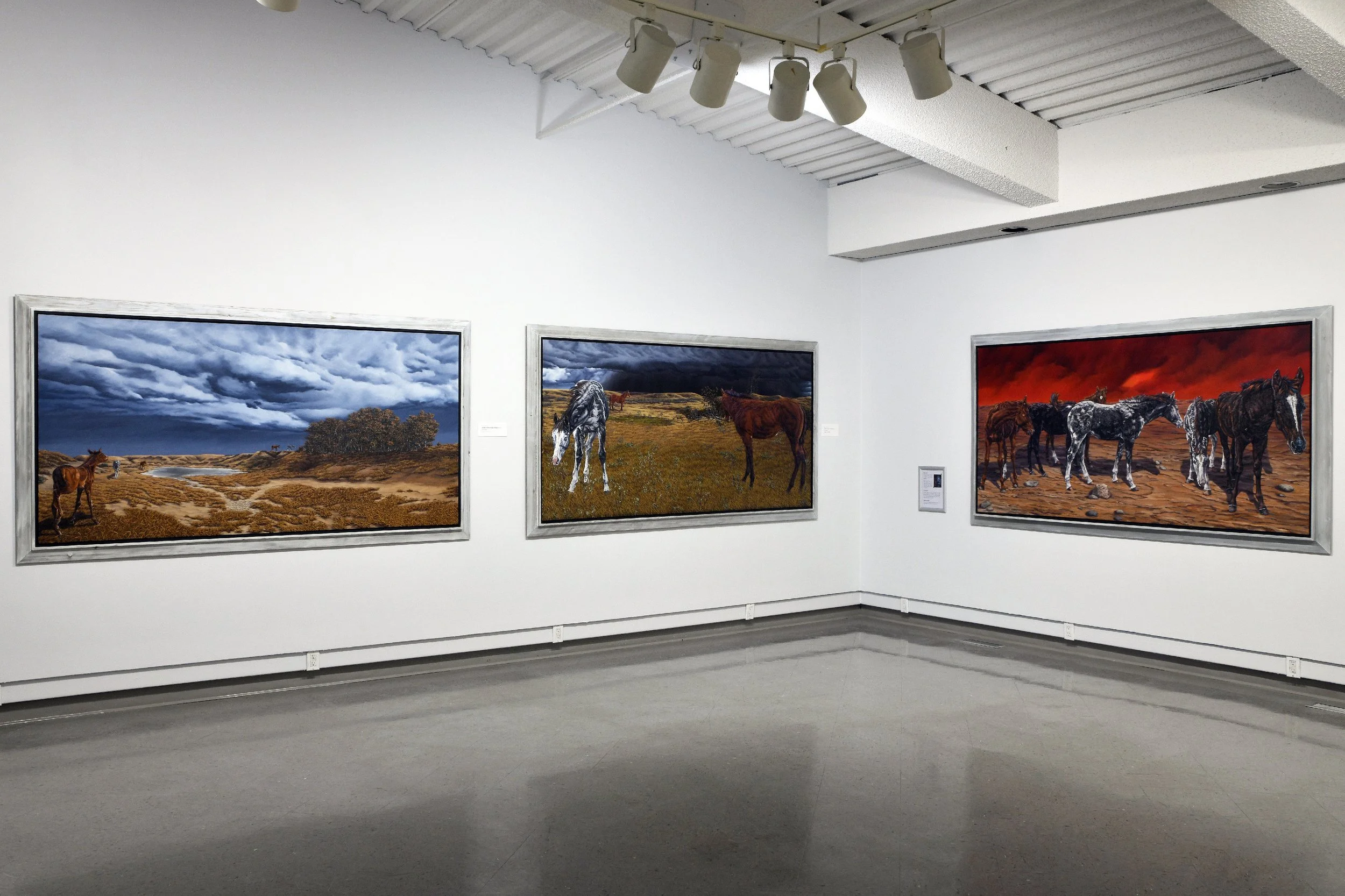
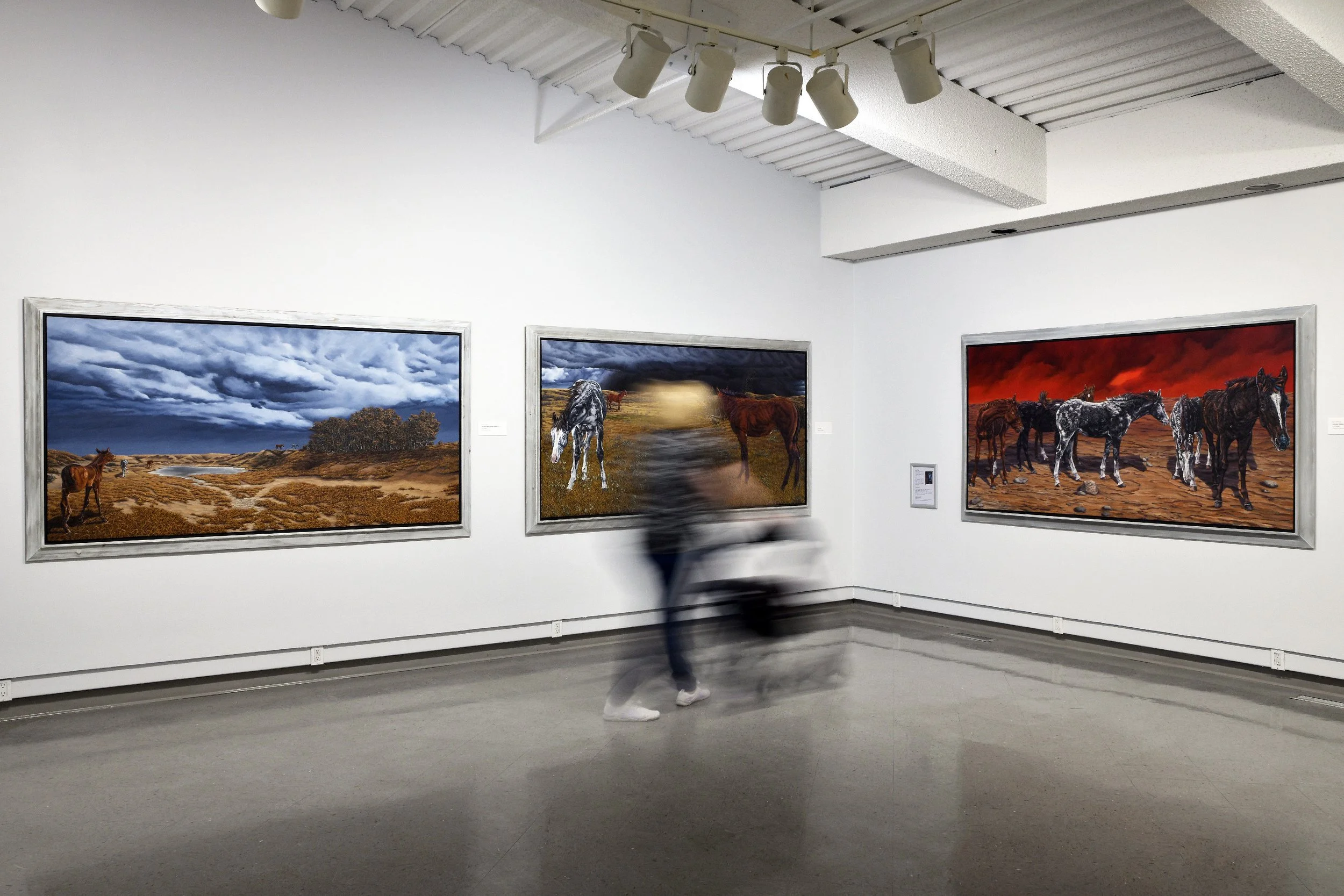
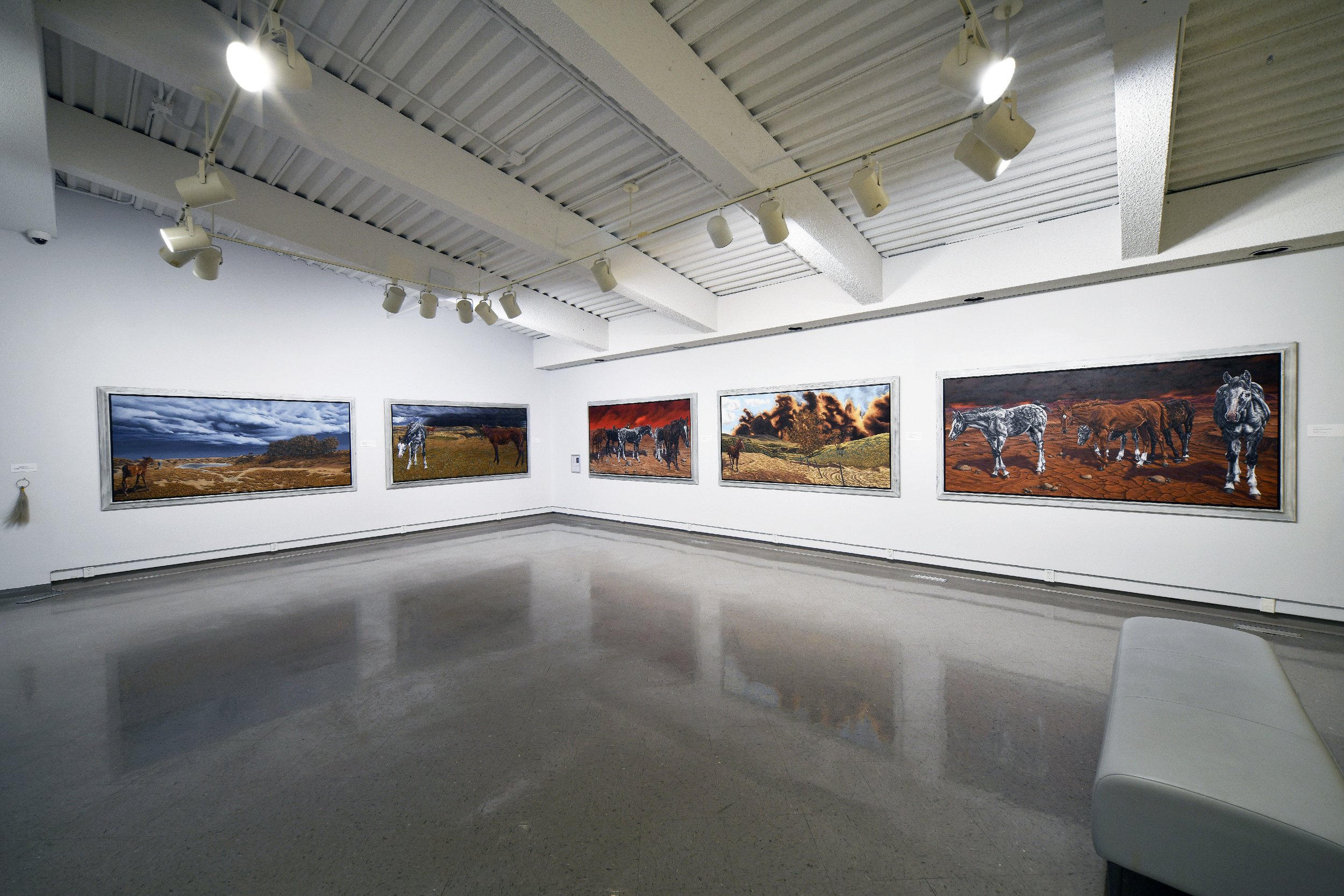
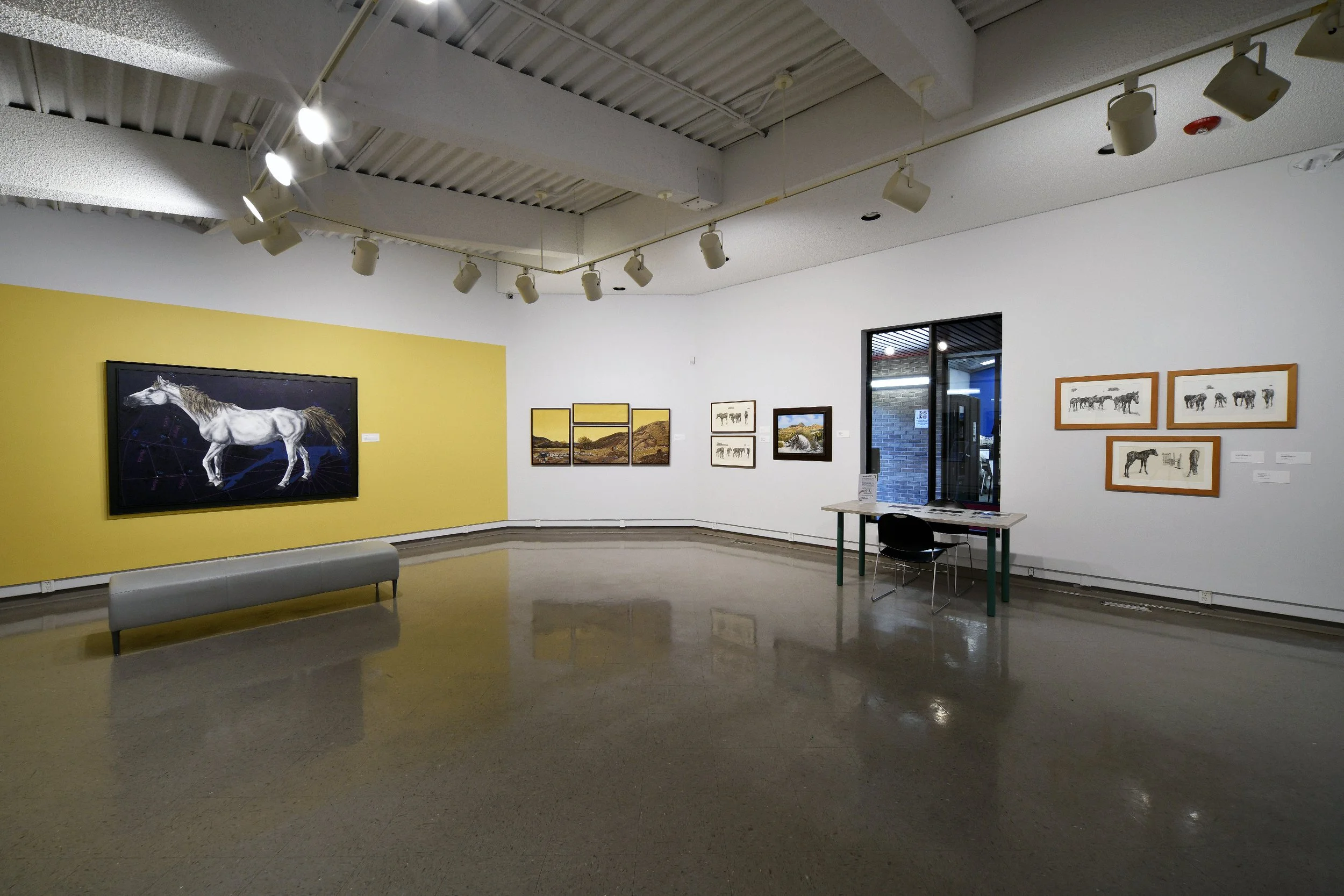
Regina-based artist Bruce Anderson's solo exhibition features large-scale oil paintings of familiar prairie landscapes. In his landscapes, Anderson includes horses to explore themes of displacement and loss using styles that make the horses feel out of place or disconnected within their environment. Horses have both accompanied and accelerated human migrations across continents through colonial and commercial trade. Anderson’s work invites us to look more closely at traditional, stereotypical Western scenes and to question what we think is natural. This exhibition also highlights Anderson’s piece Continental Drift: Herd-Bound And A Long Way From Home, a new acquisition to the Regina Public Library Permanent Collection.
Essay ↑
Landlocked
By Elizabeth Philips
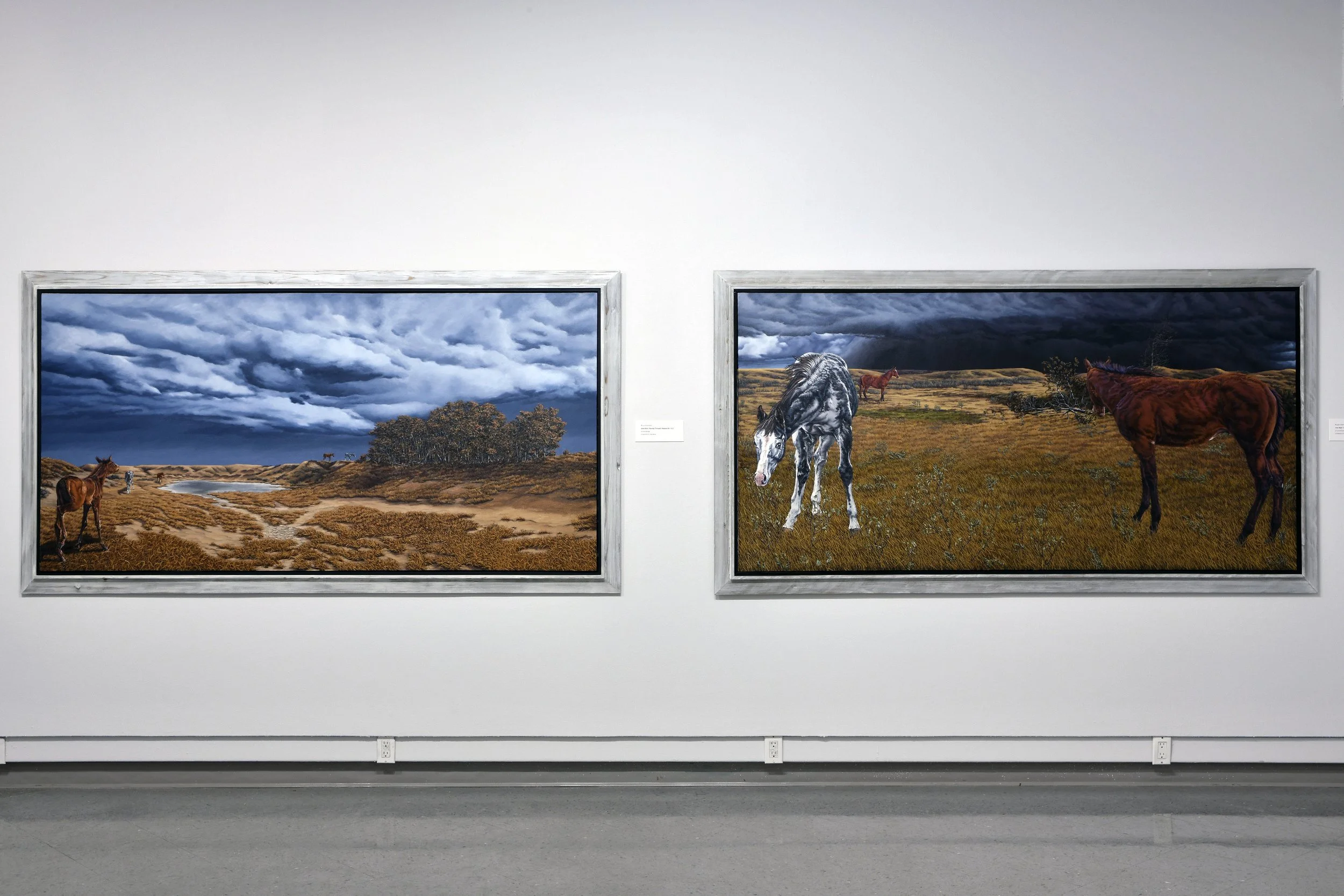
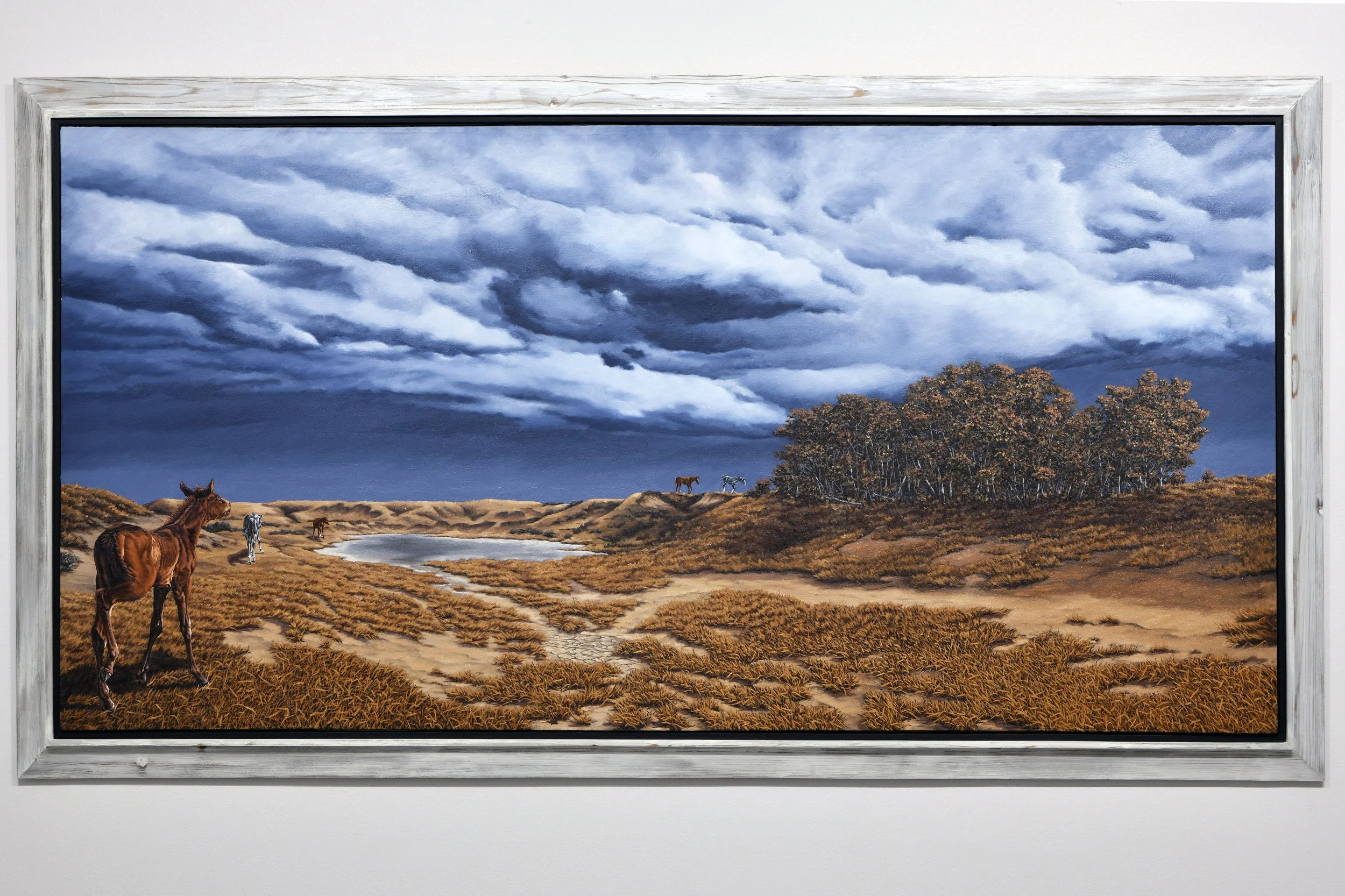
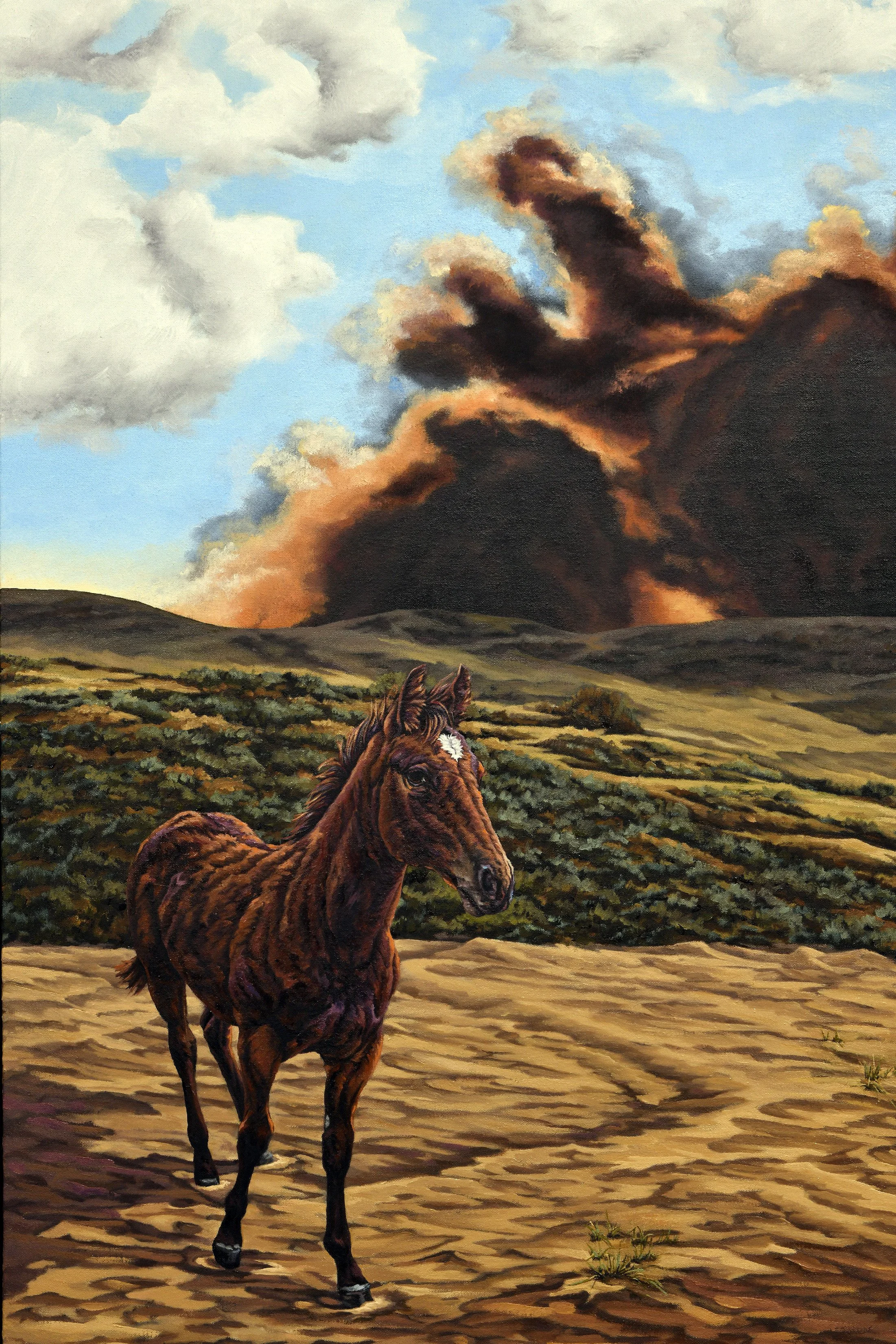
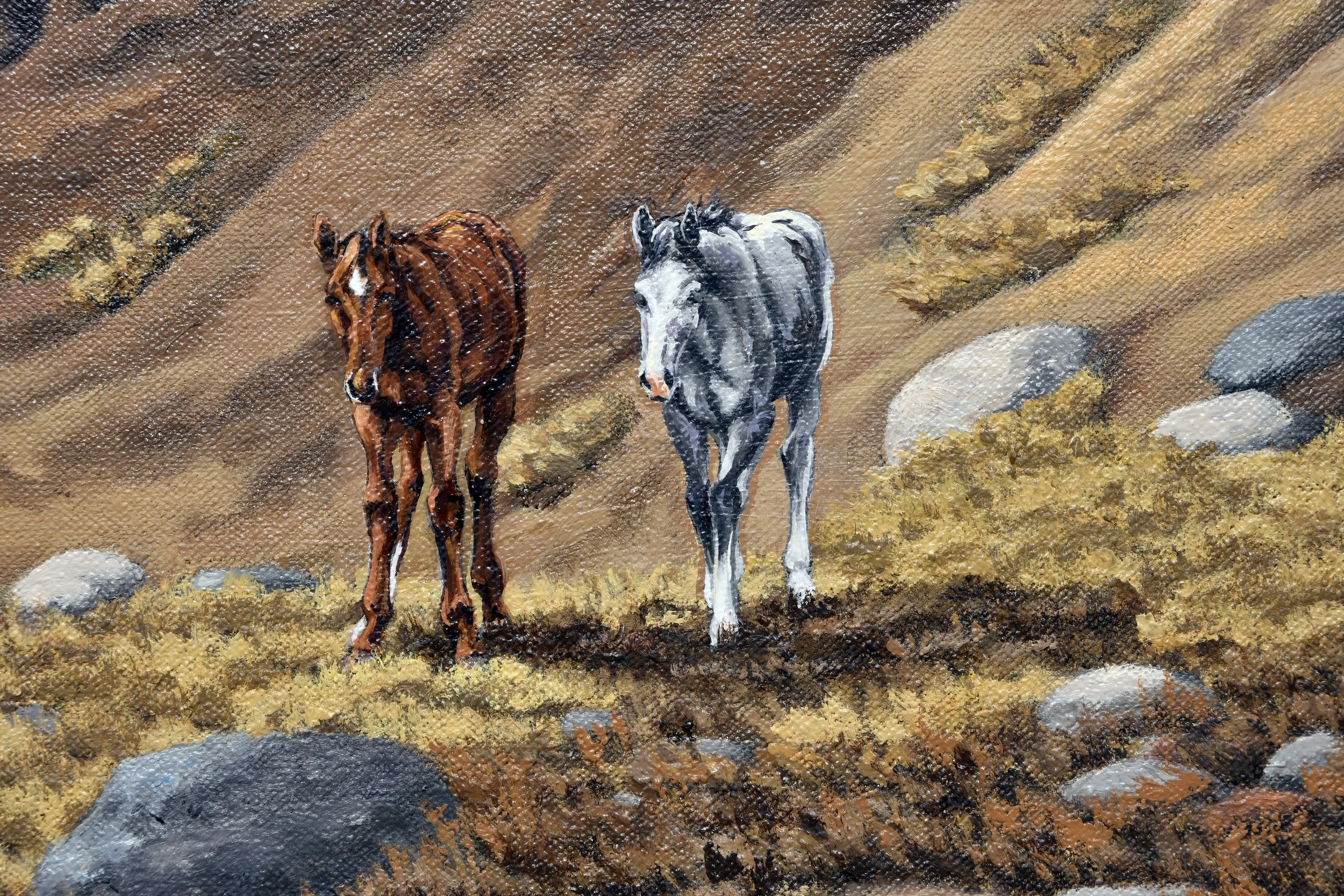
In Bruce Anderson’s paintings, what I find most striking is the implacable presence of the earth. Even where we see traces of human presence—fence posts, or signs that the ground has been disturbed, shaped for human ends—the land beneath these horses’ feet is tenacious. Just as the lowering sky, boiling with clouds that promise but don’t deliver rain, makes the horses’ vulnerability to catastrophic weather palpable. There is no safety, no assurance of shelter, in this place.
*
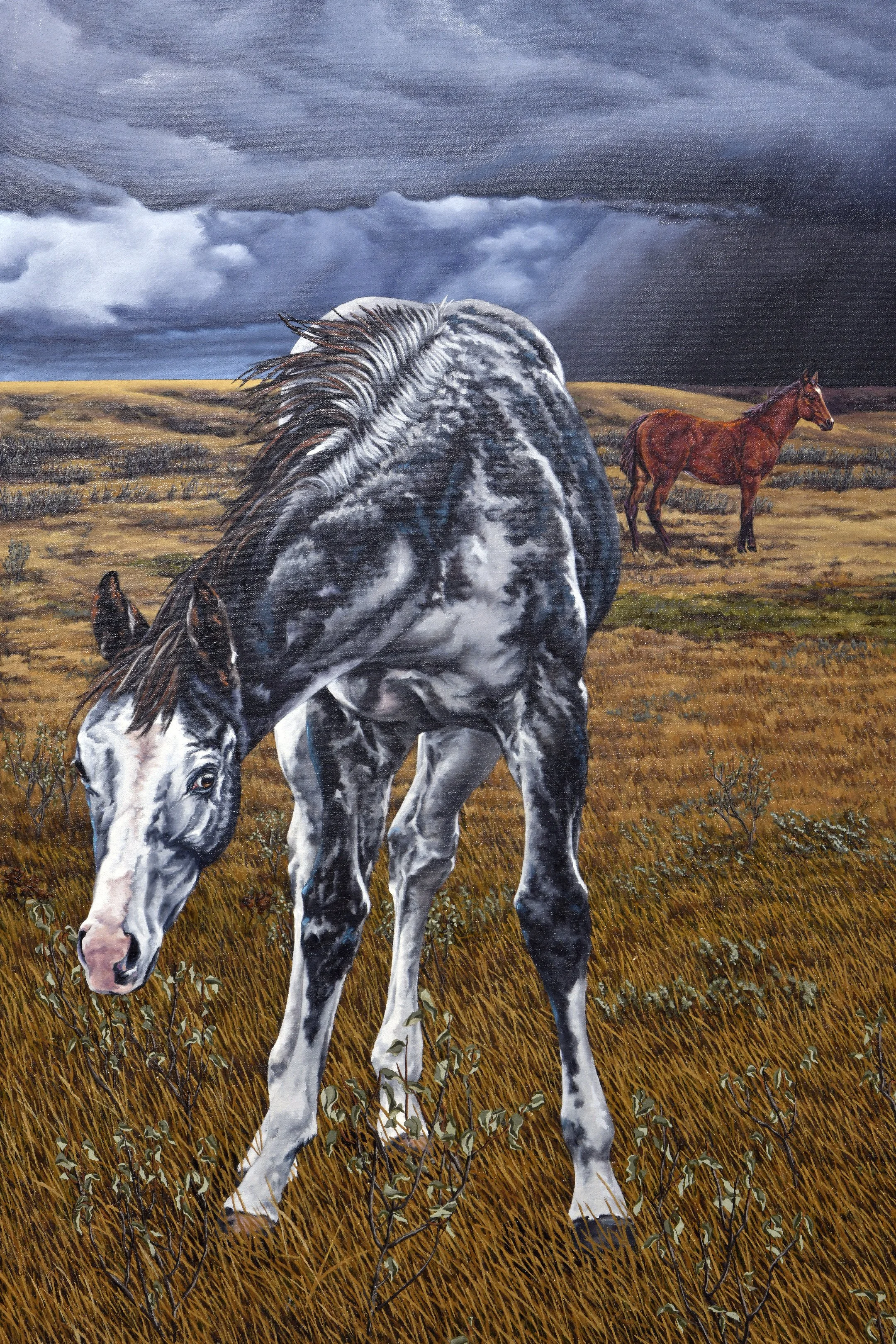
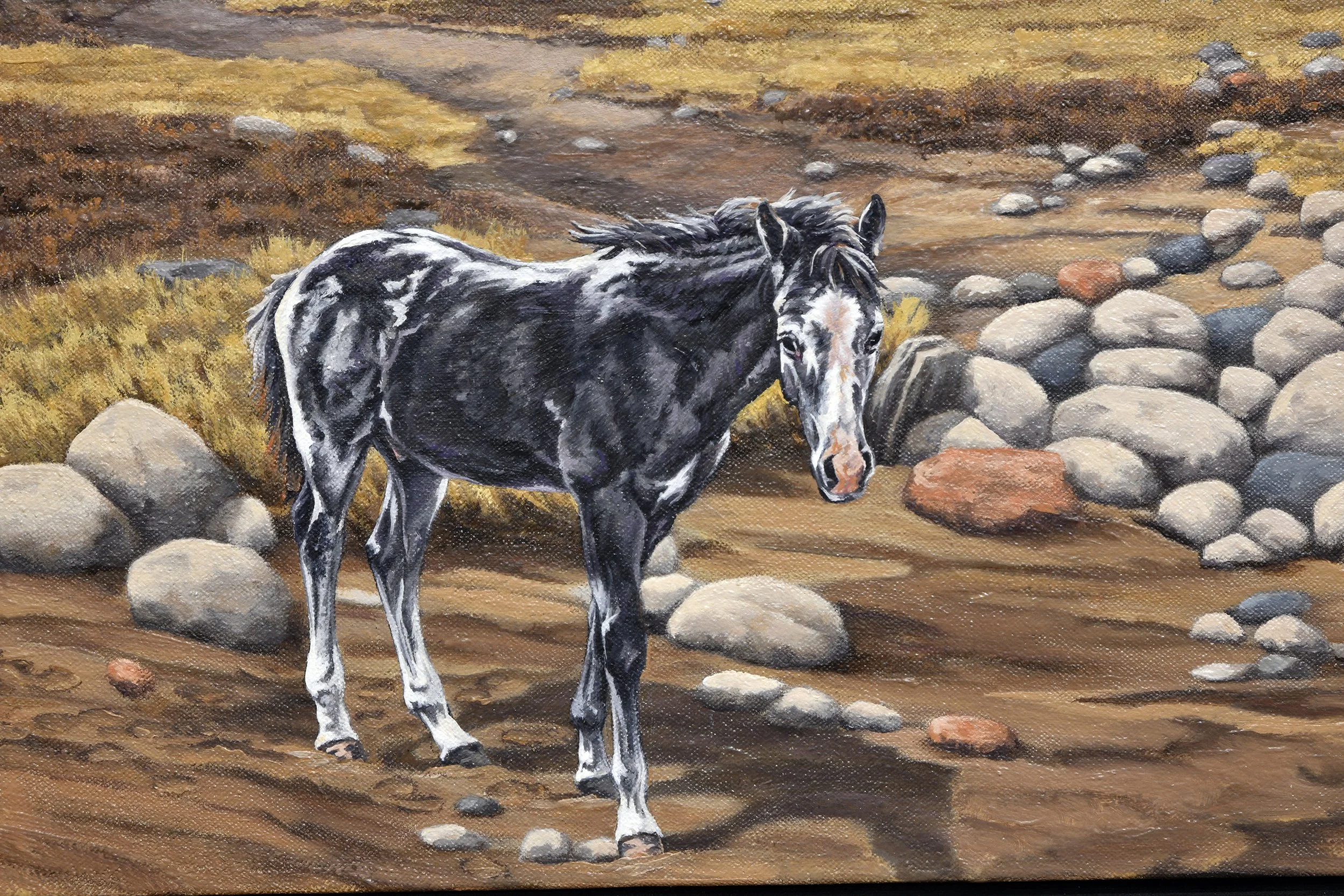
Although there are no humans here, you, the viewer, are close to hand, and usually beheld by at least one horse that is drawn to, and leery of, your approach. There is a buzz of connection. Careful, he might shy away if you make a sudden move.
*
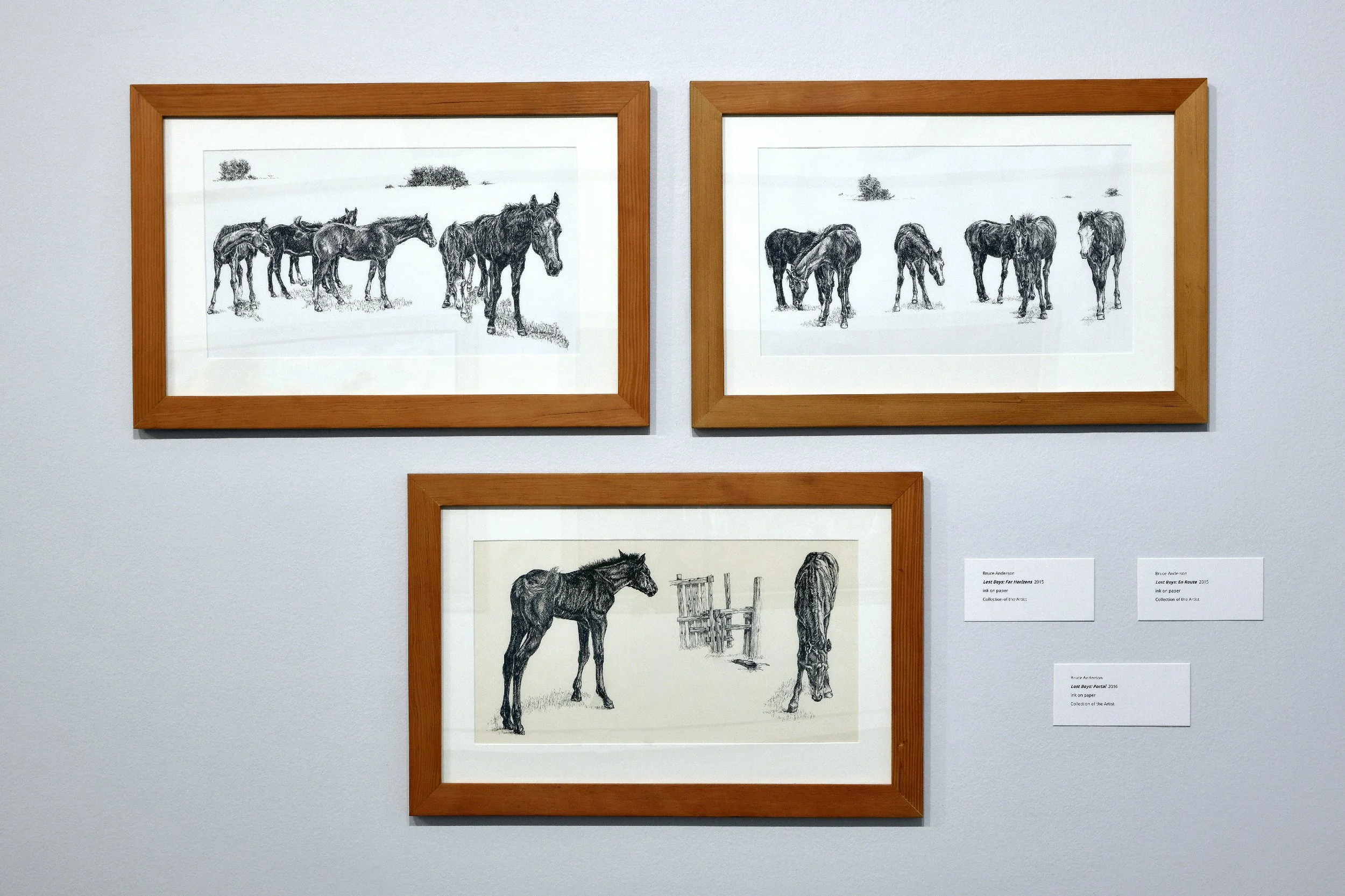
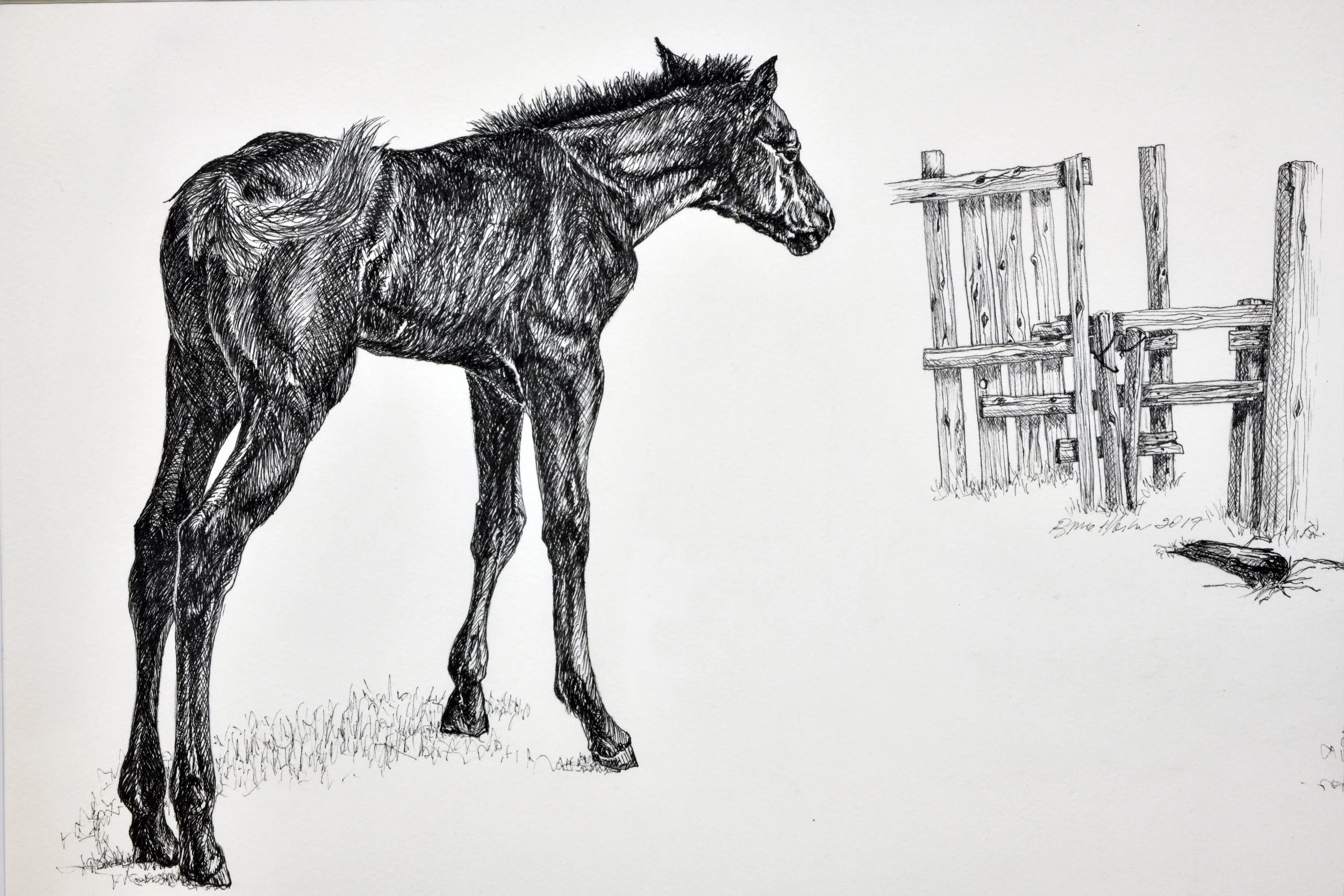
Bruce Anderson’s horses have a question for us. Impossible to know what that question might be, but the nakedly wary gaze of the grey horse in Lost Boys: Caution to the Wind, for instance, might be: what are you doing here? Or more precisely, what do you want with me? And also: do you have anything for me? are we connected? And finally: what have you done?
*
I write this on a late May day in Saskatchewan, as the temperature climbs to 37 degrees Celsius. You can almost feel the fissures opening in the soil as clouds surge overhead, empty palaces that release a scattering of rain and then disperse.
*
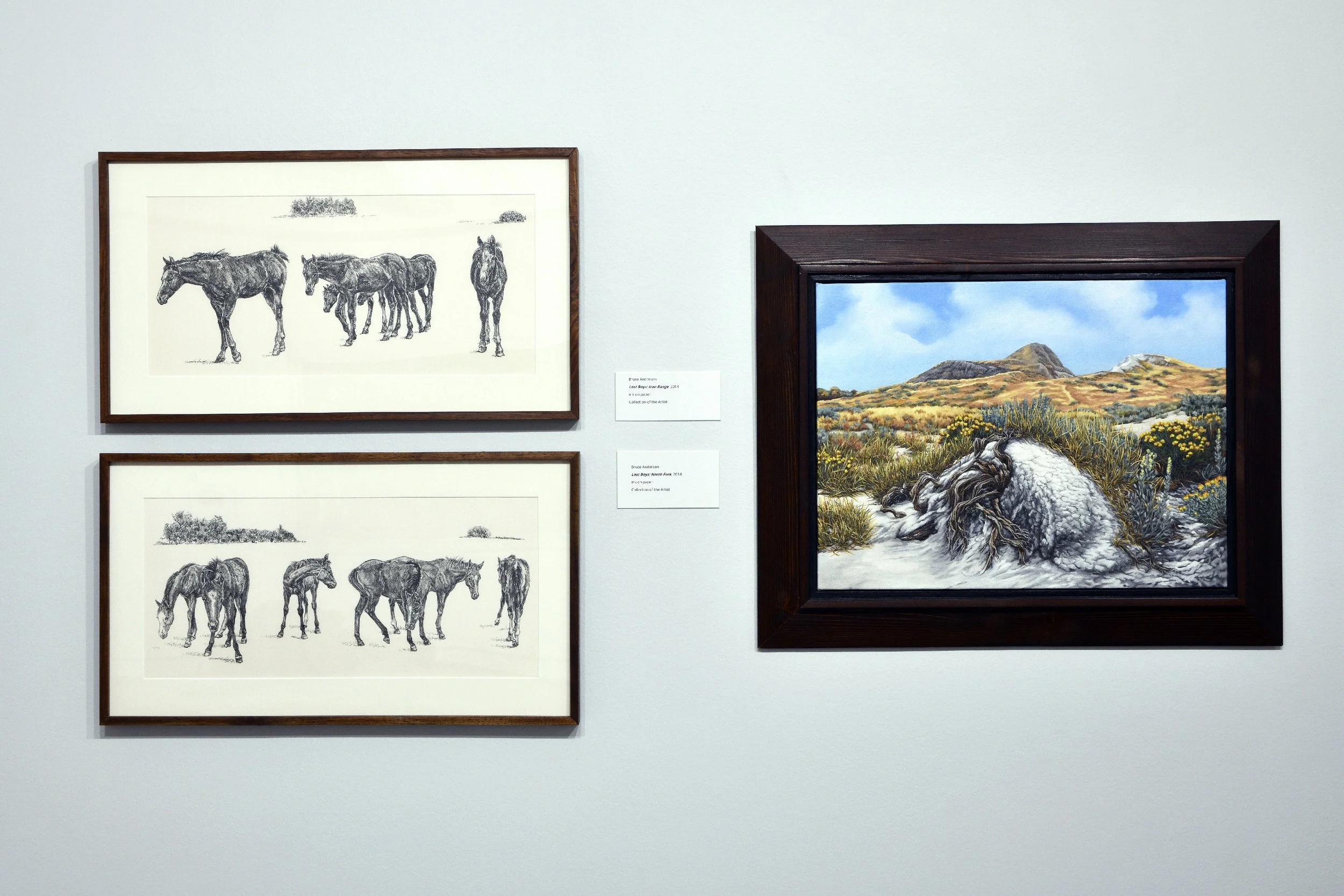
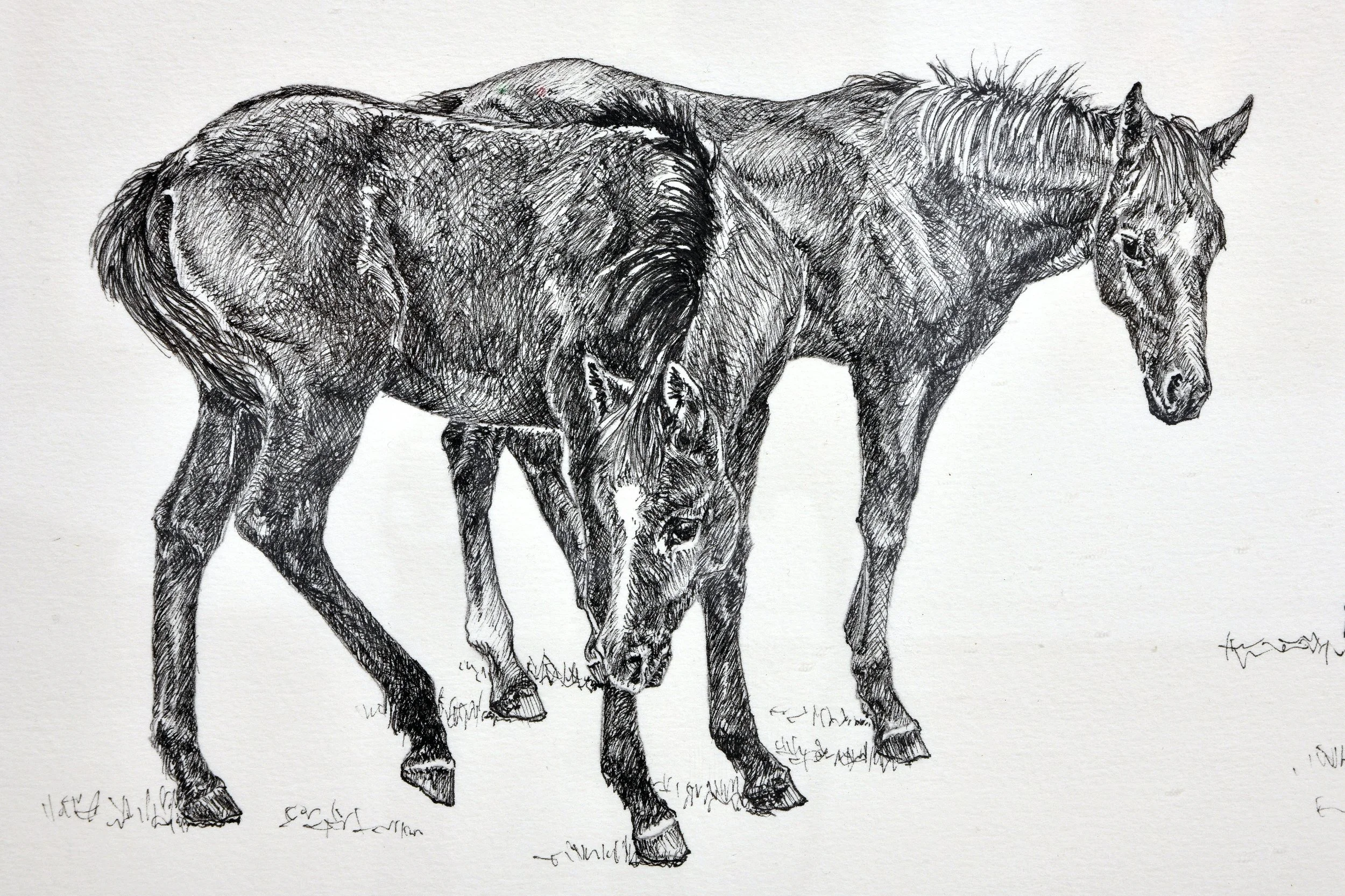
Anderson has been worrying about the scarcity of water, about the diminishing glaciers that feed our rivers, for forty years. Water is scant in these images, and sometimes alkali, undrinkable; there are only a few bluffs to slow down the relentless winds. In the drawings, the earth is barely there, visible only in faint shadows or as distant bluffs; the earth is implied, but also, almost dizzyingly erased.
*
Why horses? Well, horses, Anderson says, are social animals, they function better in a herd, and are also tied to the land. Horses were essential during colonization; that’s how people got around; how settlers broke ground, how they expanded their territory.
*
These quarter horses, bred in North America for ranch work, and to race a fast quarter mile, are post-colonial, abandoned to fend for themselves in a southwestern Saskatchewan landscape that may look natural, with a foreground of low-growing wolf willow, or may be reddened, or under a yellow pall—blasted by whatever apocalyptic light is bearing down on the earth, on the horses, on us.
*
As a poet, I know that the impulse that inspires the first, and sometimes the final draft, is mysterious, unnameable, the poem itself never entirely soluble. What motivates the painter to move his horses around in a threatening, and threatened, landscape, to confine them in a tight herd or to send them searching, half-spooked, over the vast spaces that John Palliser, in 1858, called a “useless desert”? What we see in these paintings may be our own inability to escape drought and violent storm, and possibly even the lostness that divides us, especially when we are inextricably landlocked, in a leaderless “herd.”
*
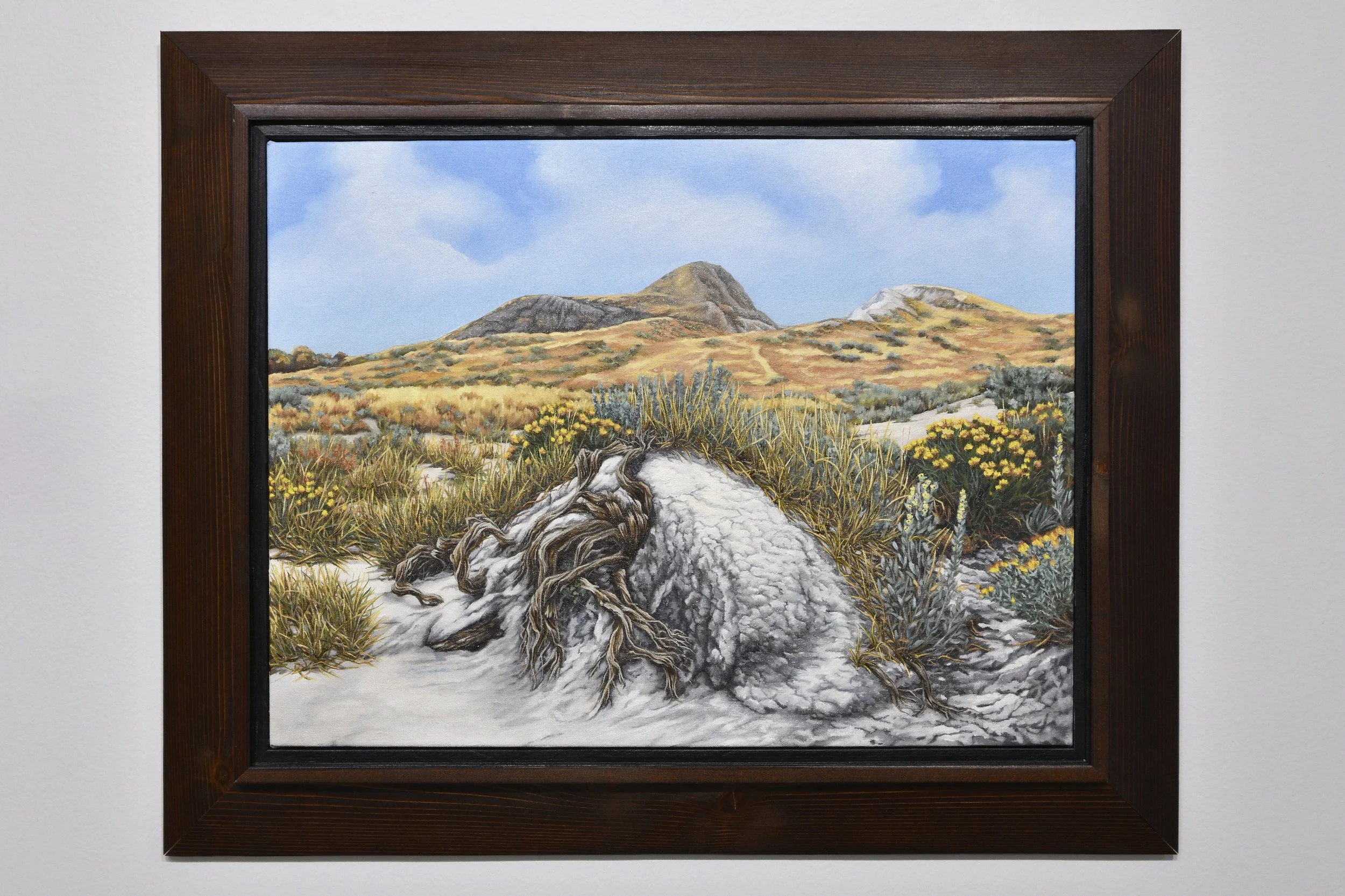
The only painting without horses, Shangri-La, the most recent piece in the exhibition, shows us the scarred hillside where clay was dug out to make bricks. We see how we’ve struggled to live but also how we’ve failed to care for the land, vigorously abloom in this tawny fall landscape. Some of these flowers grow where land has been disturbed—part of our invasive footprint—but also, there must be moisture here, a hidden seep.
*
Only the Arab horse in the painting Herdbound: a Long Way from Home is well-nourished, potent, his strength representative, if not exactly real. He’s groundless, suspended before a map of northern constellations, far from the Arabian Peninsula where his kind originated; he’s exotic, not from here.
*
Notably, the Arab is whinnying, that plaintive call that horses make to one another, and to humans in their sphere. Exile is an existential loneliness that afflicts any being compelled to relocate, often multiple times and senselessly; these are the parallels with humans that Bruce Anderson wonders about when he talks about the title painting. But he’s also doubtful of any strict analysis.
*
Translating images into words: there is always a gap, isn’t there, between the lifting of meaning from one language into another. What is most powerful in this body of work is the undertow, inarticulable and intangible, like the buried streams that sustain the wild grasses—the wild and the domestic life—in a dry place.
Elizabeth Philips is the author of five collections of poetry, including Torch River (Brick Books) and in spring, 2026, The Time of the Great Singing (Freehand Books). In 2015, she published her first novel, The Afterlife of Birds, winner of the City of Saskatoon Book Award and a finalist for the Amazon.ca First Novel Award. She was the director of the Banff Centre’s Emerging Writer Intensive for eight years. She lives in Saskatoon, Saskatchewan, where she is Acquisitions Editor and Editorial Director for Thistledown Press.
Artist ↑
Images ↑
Photos by Don Hall
Media ↑